
About Garrett Birkhoff
Lived 1911 – 1996 (aged 85). Garrett Birkhoff was an American mathematician and university teacher, known for Lattice theory and Quantum logic.
Garrett Birkhoff (January 19, 1911 – November 22, 1996) was an American mathematician. He is best known for his work in lattice theory and universal algebra.
Life The son of the mathematician George David Birkhoff, Garrett was born in Princeton, New Jersey. He began the Harvard University's BA course in 1928 after less than seven years of prior formal education. Upon completing his Harvard BA in 1932, he went to Cambridge University to study mathematical physics but switched to studying abstract algebra under Philip Hall. While visiting the Ludwig-Maximilians-Universität München, he met Constantin Carathéodory who pointed him towards two important texts, Van der Waerden on abstract algebra and Speiser on group theory.
Birkhoff held no Ph.D., a qualification British higher education did not emphasize at that time, and did not obtain an M.A. Nevertheless, after being a member of Harvard's Society of Fellows, 1933–36, he spent the rest of his career teaching at Harvard.
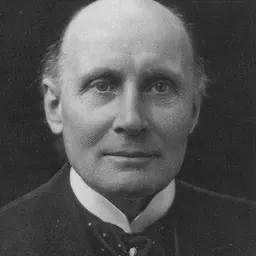
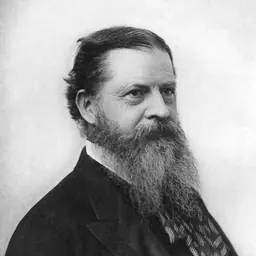
During the 1930s, Birkhoff, along with his Harvard colleagues Marshall Stone and Saunders Mac Lane, substantially advanced American teaching and research in abstract algebra. In 1941, he and Mac Lane published A Survey of Modern Algebra, the second undergraduate textbook in English on the subject (Cyrus Colton MacDuffee's An Introduction to Abstract Algebra was published in 1940). Mac Lane and Birkhoff's Algebra (1967) is a more advanced text on abstract algebra. A number of papers he wrote in the 1930s, culminating in his monograph, Lattice Theory (1940; the third edition remains in print), turned lattice theory into a major branch of abstract algebra. His 1935 paper, "On the Structure of Abstract Algebras" founded a new branch of mathematics, universal algebra. Birkhoff's approach to this development of universal algebra and lattice theory acknowledged prior ideas of Charles Sanders Peirce, Ernst Schröder, and Alfred North Whitehead; in fact, Whitehead had written an 1898 monograph entitled Universal Algebra.
During and after World War II, Birkhoff's interests gravitated towards what he called "engineering" mathematics. During the war, he worked on radar aiming and ballistics, including the bazooka. In the development of weapons, mathematical questions arose, some of which had not yet been addressed by the literature on fluid dynamics. Birkhoff's research was presented in his texts on fluid dynamics, Hydrodynamics (1950) and Jets, Wakes and Cavities (1957).
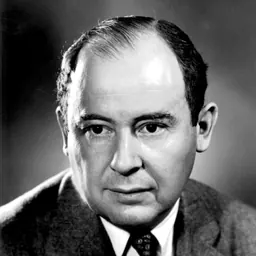
Birkhoff, a friend of John von Neumann, took a close interest in the rise of the electronic computer. Birkhoff supervised the Ph.D. thesis of David M. Young on the numerical solution of the partial differential equation of Poisson, in which Young proposed the successive over-relaxation (SOR) method. Birkhoff then worked with Richard S. Varga, a former student, who was employed at Bettis Atomic Power Laboratory of the Westinghouse Electronic Corporation in Pittsburgh and was helping to design nuclear reactors. Extending the results of Young, the Birkhoff–Varga collaboration led to many publications on positive operators and iterative methods for p-cyclic matrices.
Birkhoff's research and consulting work (notably for General Motors) developed computational methods besides numerical linear algebra, notably the representation of smooth curves via cubic splines.
Birkhoff published more than 200 papers and supervised more than 50 Ph.D.s. He was a member of the National Academy of Sciences, the American Philosophical Society, and the American Academy of Arts and Sciences. He was a Guggenheim Fellow for the academic year 1948–1949 and the president of the Society for Industrial and Applied Mathematics for 1966–1968. He won a Lester R. Ford Award in 1974.
Selected books
2015 pbk reprint of 1960 2nd edition
Don’t just read it —
keep it.
Full-length biographies made to live with: read them, listen on the way to work, watch them tonight.
- E-book
- Audio
- Video
Instant download · yours to keep · every purchase keeps this site free
Important facts
People in Garrett Birkhoff's life
Named in this biography and alive at the same time




Related people
Same field, nearest in time

Contemporaries
People whose lives overlapped Garrett Birkhoff's






Frequently asked questions
Who was Garrett Birkhoff?
American mathematician (1911–1996)
When was Garrett Birkhoff born?
Garrett Birkhoff was born on 19 January 1911 in Princeton.
When did Garrett Birkhoff die?
Garrett Birkhoff died on 20 November 1996 in Water Mill.
What was Garrett Birkhoff's occupation?
Garrett Birkhoff was a mathematician and university teacher.
What was Garrett Birkhoff known for?
Garrett Birkhoff was known for Lattice theory and Quantum logic.
What nationality was Garrett Birkhoff?
Garrett Birkhoff was American.
Sources & further reading
Cite this page
APA: Biography.guide. (2026). Garrett Birkhoff. https://biography.guide/garrett-birkhoff/
MLA: "Garrett Birkhoff." Biography.guide, https://biography.guide/garrett-birkhoff/.
Chicago: "Garrett Birkhoff." Biography.guide. https://biography.guide/garrett-birkhoff/.
Data last updated: 2026-09-20 · Spot an error? Report a correction.
Page generated 2026-09-27 05:22 UTC