
Alfred North Whitehead
English mathematician and philosopher
About Alfred North Whitehead
Lived 1861 – 1947 (aged 86). Alfred North Whitehead was a British philosopher, mathematician, physicist, theologian, writer and logician.
Alfred North Whitehead (15 February 1861 – 30 December 1947) was an English mathematician and philosopher. He created the philosophical school known as process philosophy, which has been applied in a wide variety of disciplines, including ecology, theology, education, physics, biology, economics, and psychology.
In his early career Whitehead wrote primarily on mathematics, logic, and physics. He wrote the three-volume Principia Mathematica (1910–1913), with his former student Bertrand Russell. Principia Mathematica is considered one of the twentieth century's most important works in mathematical logic, and placed 23rd in a list of the top 100 English-language nonfiction books of the twentieth century by Modern Library.
Beginning in the late 1910s and early 1920s, Whitehead gradually turned his attention from mathematics to philosophy of science, and finally to metaphysics. He developed a comprehensive metaphysical system which radically departed from most of Western philosophy. Whitehead argued that reality consists of processes rather than material objects, and that processes are best defined by their relations with other processes, thus rejecting the theory that reality is fundamentally constructed by bits of matter that exist independently of one another. Whitehead's philosophical works – particularly Process and Reality – are regarded as the foundational texts of process philosophy.
Whitehead's process philosophy argues that "there is urgency in coming to see the world as a web of interrelated processes of which we are integral parts, so that all of our choices and actions have consequences for the world around us."
Biography Early and education Whewell's Court north range at Trinity College, Cambridge. Whitehead spent thirty years at Trinity, five as a student and twenty-five as a senior lecturer. Alfred North Whitehead was born in Ramsgate, Kent, England, in 1861. His father, Alfred Whitehead, became an Anglican minister after being headmaster of Chatham House Academy, a school for boys previously headed by Alfred's father, Thomas Whitehead. Whitehead himself recalled both of them as being very successful schoolmasters, with his grandfather being the more "remarkable" man. Whitehead does not appear to have been close to his mother, although he and Evelyn (full name: Evelyn Ada Maud Rice Willoughby Wade), whom he married in 1890, are recorded in the English Census of 1891 as living with Alfred's mother and father. Lowe notes that there appears to have been mutual dislike between Whitehead's wife, Evelyn, and his mother, Maria.
Griffin relates how Bertrand Russell, a colleague and collaborator of Whitehead, was a very close friend of Whitehead and of his wife, Evelyn. Griffin retells Russell's story of how, one evening in 1901, "they found Evelyn Whitehead in the middle of what appeared to be a dangerous and acutely painful angina attack. ... [but] It seems that she suffered from a psychosomatic disorder ... [and] the danger was illusory." Griffin posits that Russell exaggerated the drama of her illness, and that both Evelyn and Russell were habitually given to melodrama. Intensity of emotion was encouraged by their avant-garde associates in the turbulent Bloomsbury Group which "discussed aesthetic and philosophical questions in a spirit of agnosticism and were strongly influenced by G.E. Moore's Principia Ethica (1903) and by A. N. Whitehead's and Bertrand Russell's Principia Mathematica (1910–13), in the light of which they searched for definitions of the good, the true, and the beautiful".
Alfred's brother Henry became Bishop of Madras and wrote the closely observed ethnographic account Village Gods of South-India (Calcutta: Association Press, 1921).
Whitehead was educated at Sherborne, a prominent English public school, where he excelled in sports and mathematics and was head prefect of his class.
In 1880, he began attending Trinity College, Cambridge, and studied mathematics. His academic advisor was Edward Routh. He earned his B.A. from Trinity in 1884, writing his dissertation on James Clerk Maxwell's A Treatise on Electricity and Magnetism, and graduated as fourth wrangler.
Academic career Elected a fellow of Trinity in 1884, Whitehead would teach and write on mathematics and physics at the college until 1910, spending the 1890s writing his Treatise on Universal Algebra (1898), and the 1900s collaborating with his former pupil, Bertrand Russell, on the first edition of Principia Mathematica. He was a Cambridge Apostle. thumb Bertrand Russell in 1907. Russell was a student of Whitehead's at Trinity College, and a longtime collaborator and friend. In 1910, Whitehead resigned his senior lectureship in mathematics at Trinity and moved to London without first obtaining another job. After being unemployed for a year, he accepted a position as lecturer in applied mathematics and mechanics at University College London but was passed over a year later for the Goldsmid Chair of Applied Mathematics and Mechanics, a position for which he had hoped to be seriously considered.
In 1914, Whitehead accepted a position as professor of applied mathematics at the newly chartered Imperial College London, where his old friend Andrew Forsyth had recently been appointed chief professor of mathematics.
In 1918, Whitehead's academic responsibilities began to seriously expand as he accepted a number of high administrative positions within the University of London system (of which Imperial College London was a member at the time). He was elected dean of the Faculty of Science at the University of London in late 1918 (a post he held for four years), a member of the University of London's Senate in 1919, and chairman of the Senate's Academic (leadership) Council in 1920, a post which he held until he departed for America in 1924.
Toward the end of his time in England, Whitehead turned his attention to philosophy. Though he had no advanced training in philosophy, his philosophical work soon became highly regarded. After publishing The Concept of Nature in 1920, he served as president of the Aristotelian Society from 1922 to 1923.
Move to the United States, 1924 In 1924, Henry Osborn Taylor invited the 63-year-old Whitehead to join the faculty at Harvard University as a professor of philosophy. The Whiteheads would spend the rest of their lives in the United States.
During his time at Harvard, Whitehead produced some of his most important philosophical contributions. In 1925, he wrote Science and the Modern World, which was immediately hailed as an alternative to the Cartesian dualism then prevalent in popular science. He was elected to the American Academy of Arts and Sciences that same year. He was elected to the American Philosophical Society in 1926. Lectures from 1927 to 1928 were published in 1929 as a book named Process and Reality, which has been compared to Immanuel Kant's Critique of Pure Reason.
Mathematics and logic In addition to numerous articles on mathematics, Whitehead wrote three major books on the subject: A Treatise on Universal Algebra (1898), Principia Mathematica (co-written with Bertrand Russell and published in three volumes between 1910 and 1913), and An Introduction to Mathematics (1911). The former two books were aimed exclusively at professional mathematicians, while the latter book was intended for a larger audience, covering the history of mathematics and its philosophical foundations. Principia Mathematica in particular is regarded as one of the most important works in mathematical logic of the 20th century.
In addition to his legacy as a co-writer of Principia Mathematica, Whitehead's theory of "extensive abstraction" is considered foundational for the branch of ontology and computer science known as "mereotopology," a theory describing spatial relations among wholes, parts, parts of parts, and the boundaries between parts.
A Treatise on Universal Algebra In A Treatise on Universal Algebra (1898), the term universal algebra had essentially the same meaning that it has today: the study of algebraic structures themselves, rather than examples ("models") of algebraic structures. Whitehead credits William Rowan Hamilton and Augustus De Morgan as originators of the subject matter, and James Joseph Sylvester with coining the term itself.
At the time, structures such as Lie algebras and hyperbolic quaternions drew attention to the need to expand algebraic structures beyond the associatively multiplicative class. In a review Alexander Macfarlane wrote: "The main idea of the work is not unification of the several methods, nor generalization of ordinary algebra so as to include them, but rather the comparative study of their several structures." In a separate review, G. B. Mathews wrote, "It possesses a unity of design which is really remarkable, considering the variety of its themes."
A Treatise on Universal Algebra sought to examine Hermann Grassmann's theory of extension ("Ausdehnungslehre"), Boole's algebra of logic, and Hamilton's quaternions (this last number system was to be taken up in Volume II, which was never finished due to Whitehead's work on Principia Mathematica). Whitehead wrote in the preface:
Whitehead, however, had no results of a general nature.
Principia Mathematica
Principia Mathematica (1910–1913) is Whitehead's most famous mathematical work. Written with former student Bertrand Russell, Principia Mathematica is considered one of the twentieth century's most important works in mathematics and placed 23rd in a list of the top 100 English-language nonfiction books of the twentieth century by Modern Library.
Whitehead and Russell had thought originally that Principia Mathematica would take a year to complete; it ended up taking them ten years. When it came time for publication, the three-volume work was so long (more than 2,000 pages) and its audience so narrow (professional mathematicians) that it was initially published at a loss of 600 pounds, 300 of which was paid by Cambridge University Press, 200 by the Royal Society of London, and 50 apiece by Whitehead and Russell themselves.
Principia Mathematica'''s legacy is mixed. It is generally accepted that Kurt Gödel's incompleteness theorem of 1931 definitively demonstrated that, for any set of axioms and inference rules proposed to encapsulate mathematics, there would in fact be some truths of mathematics that could not be deduced from them, and hence that Principia Mathematica could never achieve its aims. However, Gödel could not have come to this conclusion without Whitehead and Russell's book. In this way, Principia Mathematica legacy might be described as its key role in disproving the possibility of achieving its own stated goals. But beyond this somewhat ironic legacy, the book popularized modern mathematical logic and drew important connections between logic, epistemology, and metaphysics.
An Introduction to Mathematics Unlike Whitehead's previous two books on mathematics, An Introduction to Mathematics (1911) was not aimed exclusively at professional mathematicians but was intended for a larger audience. The book covered the nature of mathematics, its unity and internal structure, and its applicability to nature.
The book can be seen as an attempt to understand the growth in unity and interconnection of mathematics as a whole, as well as an examination of the mutual influence of mathematics and philosophy, language, and physics. Although the book is little-read, in some ways it prefigures certain points of Whitehead's later work in philosophy and metaphysics.
Philosophy Richard Rummell's 1906 watercolor landscape view of Harvard University, facing northeast. Whitehead taught at Harvard from 1924 to 1937. Whitehead did not begin his career as a philosopher. Ironically, in later life, Whitehead would become one of the 20th century's foremost metaphysicians.
However, interest in metaphysics – the philosophical investigation of the nature of the universe and existence – had become unfashionable by the time Whitehead began writing in earnest about it in the 1920s. The ever-more impressive accomplishments of empirical science had led to a general consensus in academia that the development of comprehensive metaphysical systems was a waste of time because they were not subject to empirical testing.
Whitehead was unimpressed by this objection. In the notes of one of his students for a 1927 class, Whitehead was quoted as saying: "Every scientific man in order to preserve his reputation has to say he dislikes metaphysics. What he means is he dislikes having his metaphysics criticized." In Whitehead's view, scientists and philosophers make metaphysical assumptions about how the universe works all the time, but such assumptions are not easily seen precisely because they remain unexamined and unquestioned. While Whitehead acknowledged that "philosophers can never hope finally to formulate these metaphysical first principles", he argued that people need to continually reimagine their basic assumptions about how the universe works if philosophy and science are to make any real progress, even if that progress remains permanently asymptotic. For this reason, Whitehead regarded metaphysical investigations as essential to both good science and good philosophy.
Perhaps foremost among what Whitehead considered faulty metaphysical assumptions was the Cartesian idea that reality is fundamentally constructed of bits of matter that exist totally independently of one another, which he rejected in favour of an event-based or "process" ontology in which events are primary and are fundamentally interrelated and dependent on one another. He also argued that the most basic elements of reality can all be regarded as experiential, indeed that everything is constituted by its experience. He used the term "experience" very broadly so that even inanimate processes such as electron collisions are said to manifest some degree of experience. In this, he went against Descartes' separation of two different kinds of real existence, either exclusively material or else exclusively mental. Whitehead referred to his metaphysical system as the "philosophy of organism," but it would become known more widely as "process philosophy." So impressive and different was Whitehead's philosophy that in 1924 he was invited to join the faculty at Harvard University as a professor of philosophy at 63 years of age. This is not to say that Whitehead's thought was widely accepted or even well understood. His philosophical work is generally considered to be among the most difficult to understand in all of the Western canon.
It may not be inappropriate to speculate that some fair portion of the respect generally shown to Whitehead by his philosophical peers at the time arose from their sheer bafflement. The Chicago theologian Shailer Mathews once remarked of Whitehead's 1926 book Religion in the Making: "It is infuriating, and I must say embarrassing as well, to read page after page of relatively familiar words without understanding a single sentence."
However, Mathews' frustration with Whitehead's books did not negatively affect his interest. In fact, there were numerous philosophers and theologians at Chicago's Divinity School who perceived the importance of what Whitehead was doing without fully grasping all of the details and implications. In 1927, they invited one of America's only Whitehead experts, Henry Nelson Wieman, to Chicago to give a lecture explaining Whitehead's thoughts.
Wieman's words proved prophetic. Though Process and Reality has been called "arguably the most impressive single metaphysical text of the twentieth century," it has been little-read and little-understood, partly because it demands – as Isabelle Stengers puts it – "that its readers accept the adventure of the questions that will separate them from every consensus." Whitehead questioned Western philosophy's most dearly held assumptions about how the universe works – but in doing so, he managed to anticipate a number of 21st century scientific and philosophical problems and provide novel solutions.
Whitehead's conception of reality Whitehead was convinced that the scientific notion of matter was misleading as a way of describing the ultimate nature of things. In his 1925 book Science and the Modern World, he wrote that:
Whitehead argued that curriculum should be developed specifically for its own students by its own staff, or else risk total stagnation, interrupted only by occasional movements from one group of inert ideas to another.
Above all else in his educational writings, Whitehead emphasized the importance of imagination and the free play of ideas. In his essay "Universities and Their Function", Whitehead writes provocatively on imagination:
Whitehead's philosophy of education might adequately be summarized in his statement that "knowledge does not keep any better than fish". In other words, bits of disconnected knowledge are meaningless; all knowledge must find some imaginative application to the students' own lives, or else it becomes useless trivia, and the students themselves become good at parroting facts but not thinking for themselves.
Legacy The two-volume biography of Whitehead by Victor Lowe is the most definitive presentation of the life of Whitehead. However, many details of Whitehead's life remain obscure because he left no Nachlass (personal archive); his family carried out his instructions that all of his papers be destroyed after his death. Additionally, Whitehead was known for his "almost fanatical belief in the right to privacy," and for writing very few personal letters of the kind that would help to gain insight on his life. The first volume of the Edinburgh Critical Edition of the Complete Works of Alfred North Whitehead was published in 2017 by Paul A. Bogaard and Jason Bell as The Harvard Lectures of Alfred North Whitehead, 1924–1925: The Philosophical Presuppositions of Science. Influence Isabelle Stengers wrote that "Whiteheadians are recruited among both philosophers and theologians, and the palette has been enriched by practitioners from the most diverse horizons, from ecology to feminism, practices that unite political struggle and spirituality with the sciences of education." However, it was not until the 1970s and 1980s that Whitehead's thought drew much attention outside of a small group of philosophers and theologians, primarily Americans, and even today he is not considered especially influential outside of relatively specialized circles.
Early followers of Whitehead were found primarily at the University of Chicago Divinity School, where Henry Nelson Wieman initiated an interest in Whitehead's work that would last for about thirty years. They taught generations of Whitehead scholars, the most notable of whom is John B. Cobb.
Although interest in Whitehead has since faded at Chicago's divinity school, Cobb effectively grabbed the torch and planted it firmly in Claremont, California, where he began teaching at Claremont School of Theology in 1958 and founded the Center for Process Studies with David Ray Griffin in 1973. Largely due to Cobb's influence, today Claremont remains strongly identified with Whitehead's process thought.
But while Claremont remains the most concentrated hub of Whiteheadian activity, the place where Whitehead's thought currently seems to be growing the most quickly is in China. In order to address the challenges of modernization and industrialization, China has begun to blend traditions of Taoism, Buddhism, and Confucianism with Whitehead's "constructive post-modern" philosophy in order to create an "ecological civilization". To date, the Chinese government has encouraged the building of twenty-three university-based centres for the study of Whitehead's philosophy, and books by process philosophers John Cobb and David Ray Griffin are becoming required reading for Chinese graduate students. For instance, Whitehead was a teacher and long-time friend and collaborator of Bertrand Russell, and he also taught and supervised the dissertation of Willard Van Orman Quine, both of whom are important figures in analytic philosophy – the dominant strain of philosophy in English-speaking countries in the 20th century. Whitehead has also had high-profile admirers in the continental tradition, such as French post-structuralist philosopher Gilles Deleuze, who once dryly remarked of Whitehead that "he stands provisionally as the last great Anglo-American philosopher before Wittgenstein's disciples spread their misty confusion, sufficiency, and terror." French sociologist and anthropologist Bruno Latour even went so far as to call Whitehead "the greatest philosopher of the 20th century."
Deleuze's and Latour's opinions, however, are minority ones, as Whitehead has not been recognized as particularly influential within the most dominant philosophical schools. It is impossible to say exactly why Whitehead's influence has not been more widespread, but it may be partly due to his metaphysical ideas seeming somewhat counterintuitive (such as his assertion that matter is an abstraction), or his inclusion of theistic elements in his philosophy, or the perception of metaphysics itself as passé, or simply the sheer difficulty and density of his prose. Other notable process theologians include John B. Cobb, David Ray Griffin, Marjorie Hewitt Suchocki, C. Robert Mesle, Roland Faber, and Catherine Keller.
Process theology typically stresses God's relational nature. Rather than seeing God as impassive or emotionless, process theologians view God as "the fellow sufferer who understands," and as the being who is supremely affected by temporal events. Hartshorne points out that people would not praise a human ruler who was unaffected by either the joys or sorrows of his followers – so why would this be a praiseworthy quality in God? Instead, as the being who is most affected by the world, God is the being who can most appropriately respond to the world. However, process theology has been formulated in a wide variety of ways. C. Robert Mesle, for instance, advocates a "process naturalism" – i.e., a process theology without God.
In fact, process theology is difficult to define because process theologians are so diverse and transdisciplinary in their views and interests. John B. Cobb is a process theologian who has also written books on biology and economics. Roland Faber and Catherine Keller integrate Whitehead with poststructuralist, postcolonialist, and feminist theory. Charles Birch was both a theologian and a geneticist. Franklin I. Gamwell writes on theology and political theory. In Syntheism – Creating God in The Internet Age, futurologists Alexander Bard and Jan Söderqvist repeatedly credit Whitehead for the process theology they see rising out of the participatory culture expected to dominate the digital era.
Process philosophy is even more difficult to pin down than process theology. In practice, the two fields cannot be neatly separated. The 32-volume State University of New York series in constructive postmodern thought edited by process philosopher and theologian David Ray Griffin displays the range of areas in which different process philosophers work, including physics, ecology, medicine, public policy, nonviolence, politics, and psychology.
One philosophical school which has historically had a close relationship with process philosophy is American pragmatism. Whitehead himself thought highly of William James and John Dewey, and acknowledged his indebtedness to them in the preface to Process and Reality.
Science Theoretical physicist David Bohm. Bohm is one example of a scientist influenced by Whitehead's philosophy.
Scientists of the early 20th century for whom Whitehead's work has been influential include physical chemist Ilya Prigogine, biologist Conrad Hal Waddington, and geneticists Charles Birch and Sewall Wright. Henry Murray dedicated his "Explorations in Personality" to Whitehead, a contemporary at Harvard.
In physics, Whitehead's theory of gravitation articulated a view that might perhaps be regarded as dual to Albert Einstein's general relativity. It has been severely criticized. Yutaka Tanaka suggested that the gravitational constant disagrees with experimental findings, and proposed that Einstein's work does not actually refute Whitehead's formulation. Whitehead's view has now been rendered obsolete, with the discovery of gravitational waves, phenomena observed locally that largely violate the kind of local flatness of space that Whitehead assumes. Consequently, Whitehead's cosmology must be regarded as a local approximation, and his assumption of a uniform spatio-temporal geometry, Minkowskian in particular, as an often-locally-adequate approximation. An exact replacement of Whitehead's cosmology would need to admit a Riemannian geometry. Also, although Whitehead himself gave only secondary consideration to quantum theory, his metaphysics of processes has proved attractive to some physicists in that field. Henry Stapp and David Bohm are among those whose work has been influenced by Whitehead. and Michael Epperson's Quantum Mechanics and the Philosophy of Alfred North Whitehead (2004) and Foundations of Relational Realism: A Topological Approach to Quantum Mechanics and the Philosophy of Nature (2013), aim to offer Whiteheadian approaches to physics. Brian G. Henning, Adam Scarfe, and Dorion Sagan's Beyond Mechanism (2013) and Rupert Sheldrake's Science Set Free (2012) are examples of Whiteheadian approaches to biology.
Ecology, economy, and sustainability Theologian, philosopher, and environmentalist John B. Cobb founded the Center for Process Studies in Claremont, California with David Ray Griffin in 1973, and is often regarded as the preeminent scholar in the field of process philosophy and process theology. One of the most promising applications of Whitehead's thought in recent years has been in the area of ecological civilization, sustainability, and environmental ethics.
"Because Whitehead's holistic metaphysics of value lends itself so readily to an ecological point of view, many see his work as a promising alternative to the traditional mechanistic worldview, providing a detailed metaphysical picture of a world constituted by a web of interdependent relations." Cobb also co-authored a book with leading ecological economist and steady-state theorist Herman Daly entitled For the Common Good: Redirecting the Economy toward Community, the Environment, and a Sustainable Future (1989), which applied Whitehead's thought to economics, and received the Grawemeyer Award for Ideas Improving World Order. Cobb followed this with a second book, Sustaining the Common Good: A Christian Perspective on the Global Economy (1994), which aimed to challenge "economists' zealous faith in the great god of growth."
Education Whitehead is widely known for his influence in education theory. His philosophy inspired the formation of the Association for Process Philosophy of Education (APPE), which published eleven volumes of a journal titled Process Papers on process philosophy and education from 1996 to 2008. Whitehead's theories on education also led to the formation of new modes of learning and new models of teaching.
One such model is the ANISA model developed by Daniel C. Jordan, which sought to address a lack of understanding of the nature of people in current education systems. As Jordan and Raymond P. Shepard put it: "Because it has not defined the nature of man, education is in the untenable position of having to devote its energies to the development of curricula without any coherent ideas about the nature of the creature for whom they are intended."
Another model is the FEELS model developed by Xie Bangxiu and deployed successfully in China. "FEELS" stands for five things in curriculum and education: Flexible-goals, Engaged-learner, Embodied-knowledge, Learning-through-interactions, and Supportive-teacher. It is used for understanding and evaluating educational curriculum under the assumption that the purpose of education is to "help a person become whole." This work is in part the product of cooperation between Chinese government organizations and the Institute for the Postmodern Development of China. Howard Woodhouse at the University of Saskatchewan remains a strong proponent of Whiteheadian education.
Three recent books which further develop Whitehead's philosophy of education include: Modes of Learning: Whitehead's Metaphysics and the Stages of Education (2012) by George Allan; The Adventure of Education: Process Philosophers on Learning, Teaching, and Research (2009) by Adam Scarfe; and "Educating for an Ecological Civilization: Interdisciplinary, Experiential, and Relational Learning" (2017) edited by Marcus Ford and Stephen Rowe. "Beyond the Modern University: Toward a Constructive Postmodern University," (2002) is another text that explores the importance of Whitehead's metaphysics for thinking about higher education.
Business administration Whitehead has had some influence on the philosophy of business administration and organizational theory. This has led in part to a focus on identifying and investigating the effect of temporal events (as opposed to static things) within organizations through an "organization studies" discourse that accommodates a variety of 'weak' and 'strong' process perspectives from a number of philosophers. One of the leading figures having an explicitly Whiteheadian and panexperientialist stance towards management is Mark Dibben, who works in what he calls "applied process thought" to articulate a philosophy of management and business administration as part of a wider examination of the social sciences through the lens of process metaphysics. For Dibben, this allows "a comprehensive exploration of life as perpetually active experiencing, as opposed to occasional – and thoroughly passive – happening." Dibben has published two books on applied process thought, Applied Process Thought I: Initial Explorations in Theory and Research (2008), and Applied Process Thought II: Following a Trail Ablaze (2009), as well as other papers in this vein in the fields of philosophy of management and business ethics.
Margaret Stout and Carrie M. Staton have also written recently on the mutual influence of Whitehead and Mary Parker Follett, a pioneer in the fields of organizational theory and organizational behaviour. Stout and Staton see both Whitehead and Follett as sharing an ontology that "understands becoming as a relational process; difference as being related, yet unique; and the purpose of becoming as harmonizing difference." This connection is further analyzed by Stout and Jeannine M. Love in Integrative Process: Follettian Thinking from Ontology to Administration.
Political views Whitehead's political views sometimes appear to be libertarian without the label. He wrote: On the other hand, many Whitehead scholars read his work as providing a philosophical foundation for the social liberalism of the New Liberal movement that was prominent throughout Whitehead's adult life. Morris wrote that "... there is good reason for claiming that Whitehead shared the social and political ideals of the new liberals.". However, Whitehead's comment addresses means and methods, not "ideals" or pretexts or excuses.
Personal life In 1890, Whitehead married Evelyn Wade, an Irishwoman raised in France; they had a daughter, Jessie, and two sons, Thomas and Eric.
From 1910, the Whiteheads had a cottage in the village of Lockeridge, near Marlborough, Wiltshire; from there he completed Principia Mathematica. Works Books written by Whitehead, listed by date of publication.
A Treatise on Universal Algebra with Applications. Cambridge: Cambridge University Press, 1898. . Available online via Internet Archive The Axioms of Descriptive Geometry. Cambridge: Cambridge University Press, 1907. Available online at http://quod.lib.umich.edu/u/umhistmath/ABN2643.0001.001. with Bertrand Russell. Principia Mathematica, Volume I. Cambridge: Cambridge University Press, 1910. Available online at http://www.hti.umich.edu/cgi/b/bib/bibperm?q1=AAT3201.0001.001. Vol. 1 to *56 is available as a CUP paperback. An Introduction to Mathematics. Cambridge: Cambridge University Press, 1911. Available online at http://quod.lib.umich.edu/u/umhistmath/AAW5995.0001.001. Vol. 56 of the Great Books of the Western World series. with Bertrand Russell. Principia Mathematica, Volume II. Cambridge: Cambridge University Press, 1912. Available online at http://www.hti.umich.edu/cgi/b/bib/bibperm?q1=AAT3201.0002.001 . with Bertrand Russell. Principia Mathematica, Volume III. Cambridge: Cambridge University Press, 1913. Available online at http://www.hti.umich.edu/cgi/b/bib/bibperm?q1=AAT3201.0003.001 . The Organization of Thought Educational and Scientific. London: Williams & Norgate, 1917. Available online at https://archive.org/details/organisationofth00whit. An Enquiry Concerning the Principles of Natural Knowledge. Cambridge: Cambridge University Press, 1919. Available online at https://archive.org/details/enquiryconcernpr00whitrich. The Concept of Nature. Cambridge: Cambridge University Press, 1920. Based on the November 1919 Tarner Lectures delivered at Trinity College. Available online at https://archive.org/details/cu31924012068593. The Principle of Relativity with Applications to Physical Science. Cambridge: Cambridge University Press, 1922. Science and the Modern World. New York: Macmillan Company, 1925. Vol. 55 of the Great Books of the Western World series. Religion in the Making. New York: Macmillan Company, 1926. Based on the 1926 Lowell Lectures. Symbolism, Its Meaning and Effect. New York: Macmillan Co., 1927. Based on the 1927 Barbour-Page Lectures delivered at the University of Virginia. Process and Reality: An Essay in Cosmology. New York: Macmillan Company, 1929. Based on the 1927–28 Gifford Lectures delivered at the University of Edinburgh. The 1978 Free Press "corrected edition" edited by David Ray Griffin and Donald W. Sherburne corrects many errors in both the British and American editions and also provides a comprehensive index. The Aims of Education and Other Essays. New York: Macmillan Company, 1929. The Function of Reason. Princeton: Princeton University Press, 1929. Based on the March 1929 Louis Clark Vanuxem Foundation Lectures delivered at Princeton University. Adventures of Ideas. New York: Macmillan Company, 1933. Also published by Cambridge: Cambridge University Press, 1933. Nature and Life. Chicago: University of Chicago Press, 1934. Modes of Thought. New York: MacMillan Company, 1938. "Mathematics and the Good." In The Philosophy of Alfred North Whitehead, edited by Paul Arthur Schilpp, 666–681. Evanston and Chicago: Northwestern University Press, 1941. "Immortality." In The Philosophy of Alfred North Whitehead, edited by Paul Arthur Schilpp, 682–700. Evanston and Chicago: Northwestern University Press, 1941. Essays in Science and Philosophy. London: Philosophical Library, 1947. with Allison Heartz Johnson, ed. The Wit and Wisdom of Whitehead. Boston: Beacon Press, 1948. In addition, the Whitehead Research Project of the Center for Process Studies is currently working on a critical edition of Whitehead's writings, which is set to include notes taken by Whitehead's students during his Harvard classes, correspondence, and corrected editions of his books. Paul A. Bogaard and Jason Bell, eds. The Harvard Lectures of Alfred North Whitehead, 1924–1925: Philosophical Presuppositions of Science. Cambridge: Cambridge University Press, 2017.
Don’t just read it —
keep it.
Full-length biographies made to live with: read them, listen on the way to work, watch them tonight.
- E-book
- Audio
- Video
Instant download · yours to keep · every purchase keeps this site free
Important facts
People in Alfred North Whitehead's life
Named in this biography and alive at the same time




Related people
Same field, nearest in time


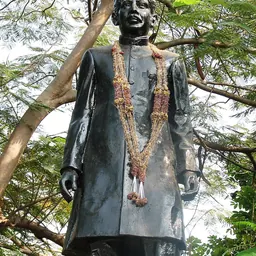
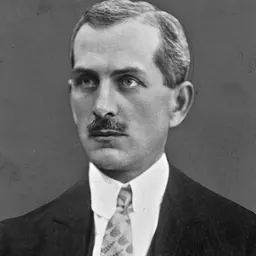

Contemporaries
People whose lives overlapped Alfred North Whitehead's
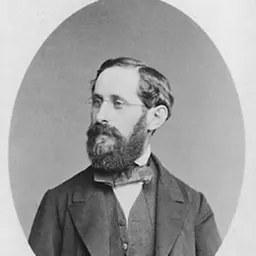

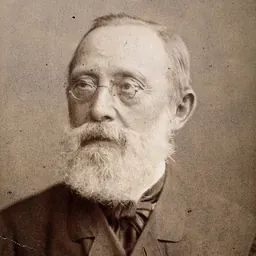

Frequently asked questions
Who was Alfred North Whitehead?
English mathematician and philosopher (1861–1947)
When was Alfred North Whitehead born?
Alfred North Whitehead was born on 15 February 1861 in Ramsgate.
When did Alfred North Whitehead die?
Alfred North Whitehead died on 30 December 1947 in Cambridge.
What was Alfred North Whitehead's occupation?
Alfred North Whitehead was a philosopher, mathematician, physicist, theologian, writer and logician.
What nationality was Alfred North Whitehead?
Alfred North Whitehead was British.
Sources & further reading
· Wikipedia: Alfred North Whitehead
· DBpedia: Alfred North Whitehead
Cite this page
APA: Biography.guide. (2026). Alfred North Whitehead. https://biography.guide/alfred-north-whitehead/
MLA: "Alfred North Whitehead." Biography.guide, https://biography.guide/alfred-north-whitehead/.
Chicago: "Alfred North Whitehead." Biography.guide. https://biography.guide/alfred-north-whitehead/.
Data last updated: 2026-09-25 · Spot an error? Report a correction.
Page generated 2026-09-27 05:12 UTC