
About Charles Birch
Lived 1918 – 2009 (aged 91). Charles Birch was an Australian biologist, university teacher, theologian, zoologist, entomologist and ecologist.
Louis Charles Birch (1918–2009) was a distinguished Australian biologist and theologian. His pioneering work had a profound influence on both scientific and philosophical thought.
Birch served as Challis Professor of Biology at the University of Sydney for 25 years, and had visiting professorships at the University of California, Berkeley; and University of Sao Paulo, Brazil.
As a geneticist, he specialised in population ecology. His book The Distribution and Abundance of Animals (co-authored with Herbert G. (Andy) Andrewartha), became foundational in ecology. It influenced generations of ecologists by shifting focus toward external environmental factors in population dynamics.
Birch was also well known as a theologian, writing widely on the topic of science and religion, becoming the first Australian to be awarded the Templeton Prize in 1990 for progress in religion. The prize recognised his work ascribing intrinsic value to all life.
He held fellowship of the American Association for the Advancement of Science, Australian Academy of Science, the Ecological Society of America, the British Ecological Society (the oldest Learned Society for ecologists in the world); and membership of the Club of Rome and the World Council of Churches.
Birch was educated at University of Melbourne, receiving a Bachelor of Agricultural Science in 1939. His first job was in the entomology department at the Waite Agricultural Research Institute at the University of Adelaide, where he earned a Doctorate of Science in 1941.
During his early time at university Birch became involved with the Student Christian Movement, and later often commented about its significant influence on his life.
During the Vietnam War, Birch was a prominent conscientious objector, so much so that Australia's spy agency ASIO held a file on him.
Birch held close contacts with some of the leading thinkers of the 20th century such as Reinhold Niebuhr, Paul Tillich and Carl von Weizsächer.
He also interacted with many of the world's leading thinkers in population and genetics, including Paul Ehrlich, and was prominent in the Zero Population Growth movement.
Templeton Prize Birch had a deep interest in the confluence of science and religion and the philosophy of science. He wrote widely on the relationship between the objective world of science and the subjective world of personal experience: Confronting the Future (1975), The Liberation of Life (1981) and Science and Soul (2007). Birch discussed his deep interest in the confluence of science and religion in his 1989 interview by Caroline Jones on her Radio National program, The Search for Meaning; and in his 1997 presentation on the Radio National program, Ockham's Razor.
His 1990 book On Purpose linked cosmic evolution to biological and social evolution: "Finding purpose pervasive throughout the individual entities of the universe".
Following On Purpose, Birch was awarded the prestigious Templeton prize for progress in religion. He was the first Australian, and fourth scientist (the first three being Alister Hardy, Stanley Jaki and von Weizsächer) to receive the $793,000 prize. It was presented by the Duke of Edinburgh at Buckingham Palace.
He said in his acceptance speech, "I find the honour of these proceedings quite overwhelming, not the least because I would never have regarded myself as worthy to be amongst the chosen few who receive such an honour...it is with deep gratitude, sober humility, and a renewed hope in the future that I accept this distinguished award."
Views, holism and "purpose"
As a boy, Birch had an early fascination with the diversity and beauty of insects. He developed his interest in biology in particular because of his mother's encouragement. She gave him J. B. S. Haldane's Possible Worlds. Other influences, including an evangelical religion, underpinned his life goal of wanting to help people. Birch said:"I'm always on the boundary because I think the sub divisions we make between physics, chemistry, biology, economics these are man-made boundaries just for convenience. But in terms of trying to look at the thing as a whole, they're not always helpful, so we have to have a vision that bridges the whole of understanding of knowledge." Paul Ehrlich wrote that Birch "sought to find meaning and purpose in life in general and human life in particular". Birch was involved for many years with the Wayside Chapel in Sydney, where people were encouraged to walk in off the street to participate in discussions about life and religion.
John B. Cobb Jr.: Birch co-authored The Liberation of Life with Cobb, a prominent American theologian and philosopher. Their collaboration bridged science and theology, advocating for the intrinsic value of all life and influencing the field of process theology. Birch said "I owe to Professor John Cobb of the Centre for Process Studies in the School of Theology at Claremont in California much of my understanding of theology in the context of a postmodern ecological worldview…I began a friendship that became a source of deep understanding across the years. I see him, like Paul Abrecht, on the frontiers of thinking and action for a new ecological global society." Birch wrote "In his book Beyond The Human Condition Jeremy Griffith makes the right emphasis when he identifies the order of the universe and its cosmic and biological evolution as the issue that brings science and religion together…[Griffith] gives us a genuinely original and inspiring way of understanding ourselves and our place in the universe." He also wrote the foreword to Griffith's 2003 book A Species in Denial.
Lord Robert May: Early in his career he was encouraged by Birch to move from physics to ecology, and take advantage of a sabbatical to visit Imperial College at the invitation of Professor Richard Southwood, which began a series of collaborations with ecologists at Imperial, the University of York and Oxford University. Birch said to May "Well, you know I think mathematics doesn't have much to say about ecology, but who knows who's right. My friend Ken Watt, whose book you've just read, would really love that. Write it up, send it to him, come and give a seminar in biology." May described Birch as "…a wonderful man. He was one of the founders of Social Responsibility in Science in Australia, and involved in all these "1998 things". Also, in the Vietnam War, he was a willing source of counselling for people who wanted to not be caught up in it – in a very un-ego-gratifying way."
Graham H. Pyke: Birch played a major role in Pyke's life, steering him into wanting to be a scientist rather than an engineer.
Holmes Rolston III: A Templeton Prize recipient, often called the "father of environmental ethics," Rolston's philosophical work paralleled Birch's emphasis on the intrinsic value of all life. While not a direct student, Rolston's ideas resonated strongly with Birch's ecological and theological synthesis. Rolston said of Birch, "He's a friend of mine, we are acquainted, he's a previous Templeton Prize winner. Birch, with John Cobb, has a book on the celebration of life on respect for life, and in that sense his thinking and my thinking are parallel. Birch is an ecologist so one of the things he knows is that organisms don't simply exist on their own and by themselves in isolation, but they exist as adapted fits in the ecosystems, and I like to replace the language of survival of the fittest, which Richard Dawkins has his selfish genes and survival of the fittest, I'd like to say it's more a question of organisms having a good adapted fit, and I think Charles Birch would think along those lines equally."
Richard Shine: In 1978 Shine was appointed a postdoctoral position at the University of Sydney under Birch. Shine interviewed Birch in 2008 on behalf of the Australian Academy of Science.
Honors and awards
1945 – 1946 Research in the growth of insect populations and other aspects of insect ecology at University of Chicago, Illinois, U.S.A., Science and Industry Endowment Fund 1954 Fulbright Fellow, Columbia University, New York, U.S.A. 1955 David Syme Research Prize (shared with H. G. Andrewartha), University of Melbourne 1961 Fellow, Australian Academy of Science (FAA) 1970-83 vice-chairman of the World Council of Churches, Church and Society Committee 1974 elected to the Club of Rome 1980 Fellow, American Association for the Advancement of Science Fellow, Academy of Environmental Biology of India 1988 Eminent Ecologist Award (with Herbert Andrewartha), Ecological Society of America 1988 Gold Medal, Ecological Society of Australia 1990 Templeton Prize, John Templeton Foundation, U.S.A. 2003 DSc honoris causa, University of Sydney 2003 DSc honoris causa, University of Sydney 2008 Member of the Order of Australia (AM) for service to science, particularly in the field of biology as an academic and researcher, and through contributions to the understanding of the relationship of science to religion
Death Birch died on 19 December 2009. He never married. He was survived by his twin, Sidney, and sister-in-law, Jenny.
Publications The Distribution and Abundance of Animals, with H. G. Andrewartha. University of Chicago Press, 1954 Nature and God, SCM Press, 1965 Confronting the Future: Australia and the world: the next hundred years, Penguin Books, 1975 (2nd edition 1993) Genetics and the Quality of Life, with Paul Abrecht. Pergamon Press, 1975. Another Australia in a Just and Sustainable Global Society: An Address University of Newcastle, 1976. The Liberation of Life: From the Cell to the Community, with John B. Cobb Jr., Cambridge University Press, 1981. The Ecological Web: more on the distribution and abundance of animals, with H. G. Andrewartha. University of Chicago Press, 1984. Liberating Life: Contemporary Approaches to Ecological Theory, Orbis, 1990 On Purpose, UNSW Press, 1990. (published in the US as A Purpose for Everything: Religion in a Postmodern World View, Twentythird Publications, 1990. ) Regaining Compassion for Humanity and Nature, UNSW Press, 1993. Feelings, UNSW Press, 1995. Living With the Animals: The Community of God's Creatures, with Lukas Vischer. Risk Book Series, World Council of Churches, 1996. Biology and the Riddle of Life, co-published by UNSW Press (Australia), 1999. Life and Work: Challenging Economic Man, with David Paul. UNSW Press, 2003. Science and Soul, co-published by UNSW Press (Australia), 2007 and Templeton Foundation Press (USA), 2008.
Don’t just read it —
keep it.
Full-length biographies made to live with: read them, listen on the way to work, watch them tonight.
- E-book
- Audio
- Video
Instant download · yours to keep · every purchase keeps this site free
Important facts
People in Charles Birch's life
Named in this biography and alive at the same time






Related people
Same field, nearest in time

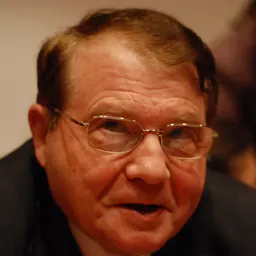
Contemporaries
People whose lives overlapped Charles Birch's


Frequently asked questions
Who was Charles Birch?
Australian biologist (1918-2009)
When was Charles Birch born?
Charles Birch was born on 8 February 1918 in Melbourne.
When did Charles Birch die?
Charles Birch died on 19 December 2009 in Sydney.
What was Charles Birch's occupation?
Charles Birch was a biologist, university teacher, theologian, zoologist, entomologist and ecologist.
What nationality was Charles Birch?
Charles Birch was Australian.
Sources & further reading
Cite this page
APA: Biography.guide. (2026). Charles Birch. https://biography.guide/charles-birch/
MLA: "Charles Birch." Biography.guide, https://biography.guide/charles-birch/.
Chicago: "Charles Birch." Biography.guide. https://biography.guide/charles-birch/.
Data last updated: 2026-09-20 · Spot an error? Report a correction.
Page generated 2026-09-27 05:30 UTC