
About Ziauddin Ahmad
Lived 1878 – 1947 (aged 69). Ziauddin Ahmad was an Indian mathematician, philosopher, politician and pedagogue, known for Algebraic geometry and analytic geometry, Aligarh Movement and Differential geometry.
Sir Ziauddin Ahmad (born Ziauddin Ahmed Zuberi; 13 February 1873 – 23 December 1947) was an Indian mathematician, parliamentarian, logician, natural philosopher, politician, political theorist, educationist and a scholar. He was a member of the Aligarh Movement and was a professor, principal of MAO College, first pro vice-chancellor, vice chancellor
He served as vice chancellor of Aligarh Muslim University for three terms. Born to Hafiz Muinuddin, a junior employee in the district of collectorate, Ziauddin was related to the influential Muslim political figure Waqar-ul-Mulk.
Education His primary education was at a madrasa and later joined Muhammadan Anglo-Oriental College, Aligarh.
Ahmad's association with Aligarh began in 1889, when at the age of 16 years, he joined the 'first year' at the M.A.O. College School. He passed high school in first division and was awarded the Lang Medal and a government scholarship.
He had to join the Government College, Allahabad, as science courses were not available at Muhammadan Anglo-Oriental College. He returned to Aligarh and passed his B.A in 1895 in first division, standing first among science students, and was awarded Starchy Gold Medal. Soon after passing B.A., he was appointed assistant lecturer in mathematics at Muhammadan Anglo-Oriental College.
On the basis of merit, he was nominated for the post of deputy collector, but Ahmad declined the offer and elected to continue in the service of the college. Sir Syed offered him a permanent appointment in the grade of Rs , provided he signed a bond to serve for a period of five years. He responded by undertaking to serve for his entire life. A highly impressed Sir Syed tore up the bond.
Ahmad completed his BA in mathematics (with distinction) from Muhammadan Anglo-Oriental College in 1895. He was the first Muslim to obtain a D.Sc. (Mathematics), from Allahabad University. His field was complex logarithms applications. He published in differential geometry and algebraic geometry. While teaching, he continued his education and earned M.A. degrees from Calcutta and Allahabad Universities and also a D.Sc. degree from the University of Allahabad in 1901.
In 1901, Ahmad left for England on a government scholarship and obtained his honours degree in mathematics from Cambridge University. He was awarded the Isaac Newton Scholarship in 1904, the first Indian awardee becoming the first Indian to secure this coveted honour. He became a Wrangler He was elected a Fellow of the Royal Astronomical Society and London Mathematical Society. He visited University of Paris and University of Bologna, Italy for advanced studies in modern geometry. He did research in astronomy in Bologna, Italy. He visited Al Azhar University, Cairo to understand their academic methodologies.
Professor On his return to India in 1907, Ahmad joined his alma mater. In 1911, he was appointed secretary of the AMU Foundation and Constitution Committees. He became a professor of history at Muhammadan Anglo-Oriental College and in 1918 was selected principal.
He was appointed assistant master in MAO College
In 1890, MAO College Mathematics Society was formed with him as president and A.M. Kureishy as secretary. The society continues as Aligarh Mathematical Society. The Department of Mathematics was founded when MAO College was given the status of a residential University in 1920, becoming one of its oldest departments. Ahmad was the first professor and head of the department. The members of the commission were Sir Ziauddin, He started imparting post-graduate education in the university in 1916 as recommended by the University Education Commission of 1902. This has attracted the attention of the Government. By this time the London University was reorganised and reformed as per recommendations of the Royal Commission under the chairmanship of Lord Halden. Therefore, it became a necessity to reform the Indian Universities also. All these circumstances led to the formation of the second university commission. i.e., Calcutta University Commission, 1917.
The commission reviewed the entire field from school education to university education. The Sadler Commission held the view that improved secondary education was a necessary condition for the improvement of university education. This committee was consisted of Lt.General Sir Andrew Skeen who was the then Chief of General Staff of India as chairman, and 12 Indian of Military and civil stature as its member. Sir Ziauddin along with Motilal Nehru, M.A.Jinnah, Sardar Jogendra Singh, Sir Phiroze Sethna, Ramachandra Rao, Sahibzada Abdul Qaiyum, Capt. Hira Singh, Capt. J.N. Banerjee, Major Thaku Zorawar Singh were its members. This committee met for the first time in Shimla and quickly decided upon its working. It studied French, American, Canadian, British military system and submitted its report within 6 months. The committee recommended the opening of a Military college in India at Dehradoon which later become Indian Military Academy.
Aligarh Muslim University In 1911, a Central Committee was set up to transform MAO College into a university, with Raja Sahib Mahmudabad, India as president, Syed Ali Bilgrami as secretary and Ahmad as joint secretary. The college had to raise Rs. 30 lakh (3 million) for elevation to university status, which was achieved in 1915. The student body at that time was less than 1500. Ahmad traveled across India to raise funds. At Aligarh the brothers stayed in 'English House', a hostel established to house the sons of nawabs and rajas. In 1946 Ahmad arranged for their education in England.
Ahmad had opposed a popular movement and risked alienating the Muslim masses. He had to choose between supporting a popular movement and losing government support (financial and otherwise) or establishing a Muslim University with government assistance.
When classes resumed, a sizeable number of students stayed home. It appeared that the sharp decline in enrollment the college would cost the college its elevation. Dr. Sahib visited several towns and convince most of the students to return, while new students enrolled. However, Ahmad earned the wrath of people who continued to oppose him thereafter. At the same time, he found a solid base that supported him. These policies made him popular among students and parents. He introduced a system of private examinations, because the government did not permit the affiliation of colleges and schools to the university. It was not clear whether students could appear in exams as private candidates, but he continued this practice while pro-vice-chancellor.
In 1925, the university administration celebrated the Golden Jubilee of the foundation of Aligarh College. At this time differences between the VC and the PVC surfaced. Dr. Sahib decided to take a leave and asked the VC to appoint a replacement. Sahibzada refused his request and prevailed upon him to continue as PVC.
The Jubilee was celebrated on a grand scale, and raised Rs 176,000/-. Dr. Sahib reserved these funds for the establishment of an Engineering College and Departments of Applied Physics and Applied Chemistry. However, by law the university was required to obtain permission from the government and the effort was unsuccessful.
Resignation In February 1926, Dr. Sahib's term as PVC ended and with Sahibzada Sahib recommendation began another term. However, when Sahibzada's own term as VC ended in December 1926, the trustees appointed Nawab Sir Muzzamil Ullah Khan in his place. Before leaving Sahibzada wrote a pamphlet pointing out irregularities for which he held Dr. Sahib responsible. He sent a copy to the Viceroy, to Begum Bhopal (Chancellor) and to the trustees. Moin-ul-Haque, who was on the History Department faculty, claimed that Dr. Sahib was willing to break rules to aid students in graduating and finding work.
The pamphlet resulted in the formation of an inquiry committee. The committee expressed appreciation of Dr. Sahib services, but recommended that he take a six-month paid leave with pay and then retire. Before the University Court could meet to discuss the issue, Dr. Sahib submitted his resignation, to take effect from 27 April 1928, declining the offer of leave with pay. Farewell parties produced poems in his honor. One staff member, Qazi Jalal Uddin, wrote a two-page poem.
The vice-president of the Student Union, in his farewell address, stated: "If Khan was the founder of this institution, you are beyond a question its savior." After 33 years, Ahmad left Aligarh on 27 April 1928. According to Zia-i-Hayat, almost the entire student body came to bid him farewell at the railway station.
In 1937, Ahmad proposed a College of Technology to prepare students for work in electrical, mechanical, sanitary and civil engineering and agriculture. Other related subjects included applied chemistry, electro-chemistry, and textile chemistry. In the same year, the Technology workshop opened. Its foundation stone was laid by Nawab Sahib of Rampur.
In 1937, Girls Intermediate College became a Degree College and affiliated with the university. At the same time, upon Ahmad's recommendation, for the first time, girls were admitted to their Teachers Training College.
Dr. Sahib also proposed a military college.
His first term ended on 30 April 1938. He was succeeded by Sir Shah Suleiman, a judge of the Federal Court, who then died on 13 March 1941. Ahmad was appointed vice-chancellor for the second time on 24 April 1941.
Tibbiya College became his administration's top priority. Work on the college building was completed 1943 due to scarcity of resources. His second priority was the establishment of a full-fledged Engineering College. This goal was achieved by 1945. He made an effort to establish an airport near the university in 1942. Nawab Sahib Bhopal contributed Rs 50,000/- to build an aeronautics workshop. The university acquired a plane as well, enabling students to take flying lessons. Ahmad proposed to establish a department of applied physics and to attach it to the College of Engineering.
Ahmad's second term as VC came to an end in 1943 and he was reappointed. In 1944, he proposed to establish a medical College at Aligarh, for which he collected a sum of Rs. 50 lakh (5 million) by the end of 1946. In 1945, Commerce College opened. He then began to shift his focus from career training to scholarship and the quality of education.
Resignation and appointment as Rector In December 1946 some students spread a rumor, encouraged by his enemies, that Dr. Sahib had confiscated all copies of a magazine that reported riots in Bihar and that he was going to have its student author arrested. Between 250 and 300 students marched to the vice-chancellor's office shouting slogans, "Ahmad Must Go." Dr. Sahib remained in his office and asked student representatives what they wanted. They asked for his resignation, which he immediately resigned.
In the evening, around 500–600 students went to his house shouting, "Ahmad come back." He did not withdraw his resignation, despite the entreaties of the executive council and the court. The court unanimously passed a resolution expressing their confidence in his leadership, and recommended his appointment as rector of the university—to which he acceded.
Political career By 1915, he was taking interest in public affairs and in technical and vocational education.
He sponsored the Indian Foreign Relations Act in Parliament. Ahmad worked on the budget for the Indian Railways and with the Reserve Bank of India (RBI). When RBI was founded he was involved in moving legislation for its more efficient functioning.
Anwer Noor In 1931 Anwer Noor, in the Frontier Province, was so offended by an assistant commissioner that he attacked him. The officer was not injured, but Noor was nevertheless executed, creating a political issue. A committee was appointed to submit a report. However, the government seized the report before it was published. Ahmad stated that no harm had come to the assistant commissioner, that Noor had had no chance to appeal and that the government should say what greater punishment should follow a more serious attack. The colonial government thereafter withdrew the laws in question.
Aligarh Muslim University Centres After the demise of Sir Syed Ahmad Khan in 1898, Sir Syed Memorial Fund was created in different parts of country and the effort for the establishment of a Muslim University was sped up. All the persons associated with this movement wanted all Muslim institutions of India to be affiliated to the Muslim University.
Dr. Sir Ziauddin, while presenting the idea of the Muslim University at Lahore session of All India Muslim Educational Conference in 1898, discussed at length the concept of a university and emphasized the importance of the right of affiliating colleges.
Ahmad moved a billentral Legislative Assembly to amend the University Act 1920 to empower AMU to recognize and affiliate Schools and Colleges outside Aligarh. However, due to empathy of British ruler towards education of Indians the bill failed.
Death He was also a member of the East India Railway Company's board of directors, and the viceroy appointed him as a member of his defense council. Ahmad was knighted by the Crown. During World War II he served as a lieutenant colonel.
Books
Systems of Education: England, Germany, France and India. Calcutta, India: Longmans, Green & Co., 1929. Pp. xvi+302.
Recognitions and awards Stratchey Gold Medal Member of Sadler Commission on Higher Education also known as Calcutta University Commission. Member of Skeen also known as Indian Sandhurst Committee and Shea Commission for the Indianisation of British Indian Army. Moved Indian Foreign Relations Act in the legislative assembly in British India Worked proactively to establish Reserve Bank of India and helped pass RBI Act of 1935. Ziauddin University and Dr. Ziauddin Hospitals in Karachi, Pakistan were established by Asim Hussain in his honour. Sir Ziauddin Public School at Aligarh, Uttar Pradesh, bears his name.
Don’t just read it —
keep it.
Full-length biographies made to live with: read them, listen on the way to work, watch them tonight.
- E-book
- Audio
- Video
Instant download · yours to keep · every purchase keeps this site free
Important facts
more
Projective geometry, Sadler CommissionPeople in Ziauddin Ahmad's life
Named in this biography and alive at the same time
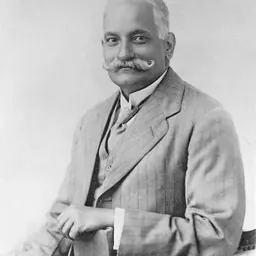



Related people
Same field, nearest in time


Contemporaries
People whose lives overlapped Ziauddin Ahmad's




Frequently asked questions
Who was Ziauddin Ahmad?
Indian mathematician and philosopher (1873-1947)
When was Ziauddin Ahmad born?
Ziauddin Ahmad was born on 13 February 1878 in Meerut.
When did Ziauddin Ahmad die?
Ziauddin Ahmad died on 23 December 1947 in London.
What was Ziauddin Ahmad's occupation?
Ziauddin Ahmad was a mathematician, philosopher, politician and pedagogue.
What was Ziauddin Ahmad known for?
Ziauddin Ahmad was known for Algebraic geometry and analytic geometry, Aligarh Movement, Differential geometry, Indian Parliament, Logarithm and Pakistan Movement.
What nationality was Ziauddin Ahmad?
Ziauddin Ahmad was Indian.
Sources & further reading
Cite this page
APA: Biography.guide. (2026). Ziauddin Ahmad. https://biography.guide/ziauddin-ahmad/
MLA: "Ziauddin Ahmad." Biography.guide, https://biography.guide/ziauddin-ahmad/.
Chicago: "Ziauddin Ahmad." Biography.guide. https://biography.guide/ziauddin-ahmad/.
Data last updated: 2026-09-20 · Spot an error? Report a correction.
Page generated 2026-09-27 05:25 UTC