
About Antonio Caso
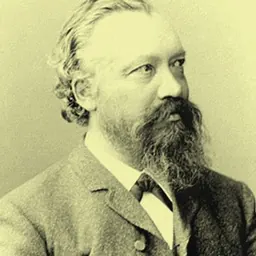
Lived 1883 – 1946 (aged 62). Antonio Caso was a Mexican philosopher, university teacher, writer, sociologist, lawyer and intellectual, known for National Autonomous University of Mexico.
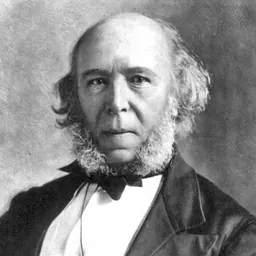
Antonio Caso Andrade (December 19, 1883 – March 6, 1946) was a Mexican philosopher and rector of the former Universidad Nacional de México, nowadays known as the National Autonomous University of Mexico from December 1921 to August 1923. Along with José Vasconcelos, he founded the Ateneo de la Juventud, a humanist group against philosophical positivism. The Athenian generation opposed Auguste Comte and Herbert Spencer's philosophical views, giving credence to and expanding on the ideas of Henri Bergson, Schopenhauer, Nietzsche, and José Enrique Rodó. Caso opposed rationalism. His group the ateneistas believed in a moral, willing, and spiritual individual being. He was the older brother of archaeologist Alfonso Caso.
Philosophical Work In the summer of 1909, Caso presented his critiques of positivism in a series of conferences later expanded in the third edition by the Athenians of Youth. He was inspired by the Christian philosophical tradition, in particular by Blaise Pascal and Tolstoy. Caso distinguishes three aspects of human existence: economic, aesthetic, and moral. Caso refuted Gabino Barreda's and Justo Sierra's thesis that the future of Mexico was built primarily on basis of a scientific doctrine. In the work "Catholicism, Jacobinism and Positivism", included in the book Discursos a la nacion mexicana (Discourses to the Mexican nation), Caso deepens his criticism of two of the hegemonic ideologies in the late nineteenth century: Jacobinism (or extreme liberalism) and positivism. The supporters of the first accuse them of ignoring reality, while those in the second get the blame for the alleged inevitability of reality. Antonio Caso is a pioneer in the Mexican philosophy that was developed later by Samuel Ramos, Leopoldo Zea Aguilar and Octavio Paz, among others. In his book El problema de México y la ideología nacional (The problem of Mexico and the nation ideology) published in 1924, Caso argues Mexico's biggest problem is the lack of unity (racial, cultural and social). Towards the end of his life, Caso was influenced by the philosophies of Scheler, Heidegger and, especially, Husserl, whose ideas were reflected in the book La filosofía de Husserl, El acto ideatorio, La persona humana y el estado totalitario, y El peligro del hombre (The Philosophy of Husserl, The Ideational Act, The Individual and the Totalitarian State, and The Danger of Man).
Works La filosofía de la intuición, 1914 The philosophy of intuition, 1914 El concepto de la historia universal, 1918 The concept of universal history, 1918 Sociología genética y sistemática, 1927 Genetic and Systematic Sociology, 1927 Principios de estética, 1925 Principles of aesthetics, 1925 El acto ideatorio, 1934 The ideational act, 1934 El peligro del hombre, 1942 The danger of man, 1942
Don’t just read it —
keep it.
Full-length biographies made to live with: read them, listen on the way to work, watch them tonight.
- E-book
- Audio
- Video
Instant download · yours to keep · every purchase keeps this site free
Important facts
People in Antonio Caso's life
Named in this biography and alive at the same time

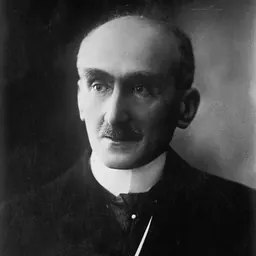


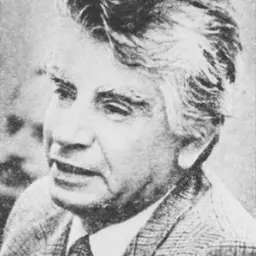
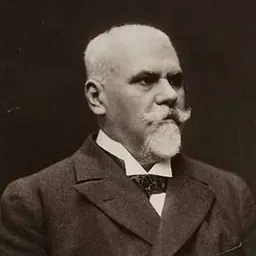
Related people
Same field, nearest in time



Contemporaries
People whose lives overlapped Antonio Caso's



Frequently asked questions
Who was Antonio Caso?
Mexican philosopher (1883–1946)
When was Antonio Caso born?
Antonio Caso was born on 19 December 1883 in Mexico City.
When did Antonio Caso die?
Antonio Caso died on 6 March 1946 in Mexico City.
What was Antonio Caso's occupation?
Antonio Caso was a philosopher, university teacher, writer, sociologist, lawyer and intellectual.
What was Antonio Caso known for?
Antonio Caso was known for National Autonomous University of Mexico.
What nationality was Antonio Caso?
Antonio Caso was Mexican.
Sources & further reading
· DBpedia: Antonio Caso Andrade
Cite this page
APA: Biography.guide. (2026). Antonio Caso. https://biography.guide/antonio-caso-philosopher/
MLA: "Antonio Caso." Biography.guide, https://biography.guide/antonio-caso-philosopher/.
Chicago: "Antonio Caso." Biography.guide. https://biography.guide/antonio-caso-philosopher/.
Data last updated: 2026-09-20 · Spot an error? Report a correction.
Page generated 2026-09-27 05:28 UTC