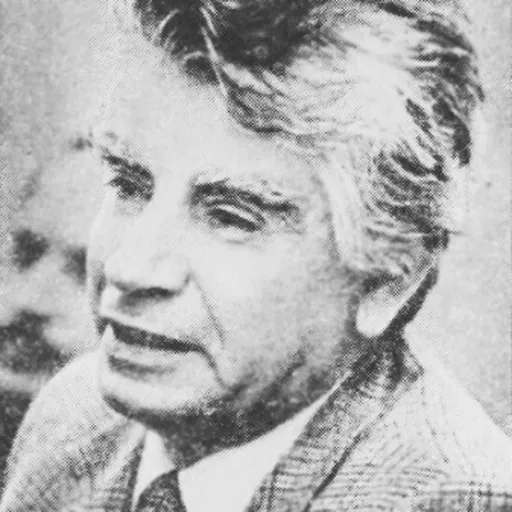
About Leopoldo Zea
Lived 1912 – 2004 (aged 91). Leopoldo Zea was a Mexican philosopher and university teacher.
Leopoldo Zea Aguilar (June 30, 1912 – June 8, 2004) was a Mexican philosopher.
Biography Zea was born in Mexico City.
One of the integral Latin Americanism thinkers in history, Zea became famous thanks to his master's thesis, El Positivismo en México (Positivism in Mexico, 1943), in which he applied and studied positivism in the context of his country and the world during the transition between the 19th and 20th centuries. With it he began the defense of American Integration, first suggested by the Liberator and Statesman Simón Bolívar, giving it his own interpretation based in the context of neocolonialism during the separation of the American Empire and Mexico.
In his works, Zea demonstrates that historical facts aren't independent from ideas, and that they do not arise from what is considered unusual, but from simple reactions to certain situations of human life.
In his vision of a united Latin America, he defended his beliefs concerning the place of mankind in the region. Zea explained that the discovery of 1492 was nothing more than a concealment in cultural and known terms, a product of the ideological cross-breeding of the configuration of the Latin American identity, a matter which he revealed on the 5th centenary in 1992. Later, he studied the ontological analysis of Latin America in the cultural and geo-historical planes.
Being of poor origin, Zea worked in 1933 in the office of Telégrafos Nacionales to help afford the costs of his secondary and university education.
Zea was associated with the National Autonomous University of Mexico (UNAM) beginning with his training as a professor and philosopher in 1943. In 1947, he founded the Faculty of Philosophy and gave lectures on History of Ideas in America. In 1954, he was appointed to a full-time position as a researcher at the Philosophical Studies Center of the university. In 1966, he became director of the college, holding this position until 1970. During his time as Director he founded the Latin American Studies College (in 1966) and later founded the Coordination and Propagation Center of the UNAM Latin American Studies (1978). He received multiple awards including the Premio Nacional de Ciencias y Artes in 1980, the Premio Interamericano de Cultura "Gabriela Mistral" (of the OAS) and the Medalla Belisario Domínguez (of the Senate of Mexico) in 2000. Three years later he was cataloged and honored by the UNAM as the oldest professor to work continually without interruptions until his death.
Zea was compared to many diverse political, revolutionary, and intellectual personalities, such as Germán Arciniegas (who was his friend), Che Guevara, José Gaos (his mentor), Víctor Raúl Haya de la Torre, Andrés Bello, Simón Bolívar, Domingo Faustino Sarmiento and others.
His philosophy embodied his concept of a united Latin America, not in the terms of a utopia, but based in reality, and the renewal of the fight for a people in demand for said change. As a result, he opened up the discourse to other scholars of the subject in the future.
Publications Superbus Philosophus El positivismo en México. Nacimiento, apogeo y decadencia Apogeo y decadencia del positivismo en México En torno a una filosofía americana Esquema para una historia del pensamiento en México Ensayos sobre filosofía de la historia Dos etapas del pensamiento en Hispanoamérica Conciencia y posibilidad del mexicano La filosofía como compromiso y otros ensayos América como conciencia La conciencia del hombre en la filosofía. Introducción à la filosofía El Occidente y la conciencia de México América en la conciencia de Europa La filosofía en México Del liberalismo à la revolución en la educación mexicana Esquema para una historia de las ideas en Iberoamérica América en la historia Las ideas en Iberoamérica en el siglo XIX La cultura y el hombre de nuestros días Democracia y dictaduras en Latinoamérica Dos ensayos Latinoamérica y el mundo Europa al margen de Occidente Antología del pensamiento social y político en América Latina Latinoamérica en la formación de nuestro tiempo El pensamiento latinoamericano Antología de la filosofía americana contemporánea La filosofía americana como filosofía sin más Colonización y descolonización de la cultura latinoamericana La esencia de lo americano Latinoamérica. Emancipación y neocolonialismo Los precursores del pensamiento latinoamericano contemporáneo Dependencia y liberación en la cultura latinoamericana Dialéctica de la conciencia americana La filosofía actual en América Latina (Coauthor) Filosofía latinoamericana Filosofía y cultura latinoamericanas Latinoamérica, Tercer Mundo Filosofía de la historia americana Pensamiento positivista latinoamericano (Selection and prologue) Simón Bolívar, integración en libertad Desarrollo de la creación cultural latinoamericana Latinoamérica en la encrucijada de la historia Sentido de la difusión cultural de América Latina Latinoamérica, un nuevo humanismo La transformación de la filosofía latinoamericana Filosofía de lo americano América como autodescubrimiento El problema cultural de América Discurso desde la marginación y la barbarie
References and further reading Mario Saenz: The Identity of Liberation in Latin American Thought: Latin American Historicism and the Phenomenology of Leopoldo Zea, Lanham, Md.; Oxford : Lexington Books, 1999 José Luis Gómez Martínez. Leopoldo Zea. El hombre y su obra. Madrid: Ediciones del Orto, 1997. José Luis Gómez Martínez. "Leopoldo Zea: reflexiones para asumir críticamente su obra".Cuadernos Americanos 107 (2004): 31–44. Alejandro Sánchez El Estallido de la Verdad en América Latina - Revista Nómadas- Critical review on Latin American philosophy and Zea's ´modernity´ Roberto Colonna, Filosofía sin más. Leopoldo Zea e i "Cuadernos Americanos", Firenze: Le Cáriti, 2008. Roberto Colonna, Hable con Él Leopoldo Zea’s Last Interview , Journal of Philosophical Research 39, 2014, 253–263, https://doi.org/10.5840/jpr20148415
Specific
Don’t just read it —
keep it.
Full-length biographies made to live with: read them, listen on the way to work, watch them tonight.
- E-book
- Audio
- Video
Instant download · yours to keep · every purchase keeps this site free
Important facts
People in Leopoldo Zea's life
Named in this biography and alive at the same time






Related people
Same field, nearest in time



Contemporaries
People whose lives overlapped Leopoldo Zea's






Frequently asked questions
Who was Leopoldo Zea?
Mexican philosopher (1912–2004)
When was Leopoldo Zea born?
Leopoldo Zea was born on 30 June 1912 in Mexico City.
When did Leopoldo Zea die?
Leopoldo Zea died on 8 June 2004 in Mexico City.
What was Leopoldo Zea's occupation?
Leopoldo Zea was a philosopher and university teacher.
What nationality was Leopoldo Zea?
Leopoldo Zea was Mexican.
Sources & further reading
· DBpedia: Leopoldo Zea Aguilar
Cite this page
APA: Biography.guide. (2026). Leopoldo Zea. https://biography.guide/leopoldo-zea/
MLA: "Leopoldo Zea." Biography.guide, https://biography.guide/leopoldo-zea/.
Chicago: "Leopoldo Zea." Biography.guide. https://biography.guide/leopoldo-zea/.
Data last updated: 2026-09-21 · Spot an error? Report a correction.
Portrait: Wikimedia Commons · author & licence
Page generated 2026-09-27 05:00 UTC