
About Che Guevara
Lived 1928 – 1967 (aged 39). Che Guevara was a Cuban and Argentine politician, physician, poet, diplomat, essayist and revolutionary.
Ernesto "Che" Guevara de la Serna (14 May 1928 – 9 October 1967) was an Argentine Marxist revolutionary, author, guerrilla leader, diplomat, politician, and military theorist. A major figure of the Cuban Revolution, his stylized visage has become a countercultural symbol of rebellion and global insignia in popular culture.
As a medical student, Guevara travelled throughout South America and was appalled by the poverty, hunger, and disease he witnessed. His burgeoning desire to help overturn what he saw as the capitalist exploitation of Latin America by the US prompted his involvement in Guatemala's social reforms under President Jacobo Árbenz, whose CIA-assisted overthrow at the behest of the United Fruit Company solidified Guevara's political ideology. Guevara left Cuba in 1965 to foment continental revolutions across Africa and South America, first unsuccessfully in Congo-Kinshasa and later in Bolivia, where he was captured by CIA-assisted Bolivian forces and summarily executed.
Guevara remains a revered and reviled figure, polarized in the collective imagination in biographies, memoirs, essays, documentaries, songs, and films. As a result of his perceived martyrdom, poetic invocations for class struggle, and desire to create the consciousness of a "new man" driven by moral rather than material incentives, Guevara has evolved into a quintessential icon of many leftist movements. His critics accuse him of promoting authoritarianism and endorsing violence against his opponents. Despite disagreement on his legacy, Time named him one of the 100 most influential people of the 20th century, while an Alberto Korda photograph of him, titled , was cited by the Maryland Institute College of Art as "the most famous photograph in the world".
Early life
Ernesto Guevara was born to Ernesto Guevara Lynch and Celia de la Serna y Llosa, on 14 May 1928, in Rosario, Argentina. Although the legal name on his birth certificate was "Ernesto Guevara", his name sometimes appears with "de la Serna" or "Lynch" accompanying it. He was the eldest of five in an upper-class Argentine family of pre-independence immigrants that have Spanish, Basque, and Irish ancestry. Two of Guevara's 18th-century ancestors included Luis María Peralta, a Californio landowner in colonial California, and Patrick Lynch, who emigrated from Ireland to the Río de la Plata Governorate. Referring to Che's "restless" nature, his father declared "the first thing to note is that in my son's veins flowed the blood of the Irish rebels". Che Guevara was fond of Ireland, and according to Irish actress Maureen O'Hara, "Che would talk about Ireland and all the guerilla warfare that had taken place there. He knew every battle in Ireland and all of its history" and told her that everything he knew about Ireland he learned on his grandmother's knee.
Early in life, Ernestito (as he was then called) developed an "affinity for the poor". Growing up in a family with leftist leanings, Guevara was introduced to a spectrum of political perspectives. His father, a staunch supporter of Republicans from the Spanish Civil War, would host veterans in the home. As a young man, he contemplated a career selling insecticides, and set up a laboratory in his family's garage to experiment with effective mixtures of talc and gammaxene under the brand name Vendaval, but was forced to abandon his efforts after suffering a severe asthmatic reaction.
Despite bouts of acute asthma that affected him throughout his life, he excelled as an athlete, enjoying swimming, football, golf, and shooting, while becoming an "untiring" cyclist. He was an avid rugby union player. Sources say he first played for Estudiantes of Córdoba, then San Isidro Club (1947), Yporá Rugby Club (1948), and Atalaya Polo Club (1949), although other sources claim he played for Club Universitario de Buenos Aires (CUBA), at fly-half. His rugby playing earned him the nickname "Fuser"—a contraction of (furious) and his mother's surname, de la Serna—for his aggressive play.
Intellectual and literary interests Teenage Ernesto (left) with his parents and siblings. Left to right: Celia (mother), Celia (sister), Roberto, Juan Martín, Ernesto (father) and Ana María
Guevara learned chess from his father and began participating in tournaments by the age of 12. During adolescence and throughout his life, he was passionate about poetry, especially that of Pablo Neruda, John Keats, Antonio Machado, Federico García Lorca, Gabriela Mistral, César Vallejo, and Walt Whitman. He could recite Rudyard Kipling's If— and José Hernández's Martín Fierro by heart. The Guevara home contained 3,000 books, which allowed Guevara to be an enthusiastic and eclectic reader, with interests including Karl Marx, William Faulkner, André Gide, Emilio Salgari, and Jules Verne. He enjoyed the works of Jawaharlal Nehru, Franz Kafka, Albert Camus, Vladimir Lenin, and Jean-Paul Sartre, as well as Anatole France, Friedrich Engels, H. G. Wells, and Robert Frost.
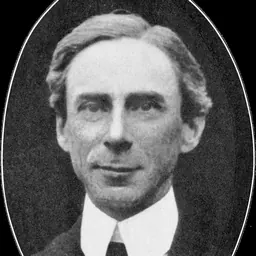
He developed an interest in the Latin American writers Horacio Quiroga, Ciro Alegría, Jorge Icaza, Rubén Darío, and Miguel Asturias. Many of these authors' ideas he cataloged in his notebooks of concepts, definitions, and philosophies of influential intellectuals. These included composing analytical sketches of Buddha and Aristotle, along with examining Bertrand Russell on love and patriotism, Jack London on society, and Nietzsche on death. Sigmund Freud's ideas fascinated him, and he quoted him on topics from dreams and libido to narcissism and the Oedipus complex. His favorite subjects included philosophy, mathematics, engineering, political science, sociology, history, and archaeology. A 1958 CIA personality report made note of Guevara's range of interests and intellect – describing him as "quite well read", while adding that "Che is fairly intellectual for a Latino".
Motorcycle journey
A map of Guevara's 1952 trip with Alberto Granado. Red arrows correspond to air travel. alt=black and white photograph of two men on a raft, fitted with a large hut. The far bank of the river is visible in the far distance
In 1948, Guevara entered the University of Buenos Aires to study medicine. His "hunger to explore the world" led him to intersperse his collegiate pursuits with two long introspective journeys that changed the way he viewed himself and economic conditions in Latin America. The first expedition, in 1950, was a 4,500-kilometer (2,800 mi) solo trip through the rural provinces of northern Argentina on a bicycle on which he had installed a small engine. Guevara then spent six months working as a nurse on Argentina's merchant marine freighters and oil tankers. His second expedition, in 1952, was a nine-month, 8,000-kilometer (5,000 mi) continental motorcycle trek through South America. He took a year off his studies to embark with his friend, Alberto Granado, with the final goal of spending a few weeks volunteering at the San Pablo leper colony in Peru, on the banks of the Amazon River. Guevara claimed to have first been introduced to the work of Karl Marx by Dr. Hugo Pesce, a leprosy specialist and former protégé of José Carlos Mariátegui.
In Chile, Guevara was angered by the working conditions of the miners at Anaconda's Chuquicamata copper mine, moved by his overnight encounter in the Atacama Desert with a persecuted communist couple who did not even own a blanket, describing them as "the shivering flesh-and-blood victims of capitalist exploitation". On the way to Machu Picchu he was stunned by the poverty of rural areas, where peasant farmers worked small plots owned by wealthy landlords. Guevara was impressed by the camaraderie among the people living in a leper colony, stating, "The highest forms of human solidarity and loyalty arise among such lonely and desperate people." Guevara used notes taken during this trip to write an account (not published until 1995), titled The Motorcycle Diaries, which became a New York Times best seller, and a 2004 film.
The journey took Guevara through Argentina, Chile, Peru, Ecuador, Colombia, Venezuela, Panama, and Miami, before returning home to Buenos Aires. By the end, he came to view Latin America not as a collection of nations, but a single entity requiring a continent-wide liberation strategy. His conception of a borderless, united Hispanic America sharing a Latino heritage was a theme that recurred during his revolutionary activities. Upon returning to Argentina, he received his medical degree in June 1953.
Guevara later remarked that, through his travels in Latin America, he came in "close contact with poverty, hunger and disease" along with the "inability to treat a child because of lack of money" and "stupefaction provoked by the continual hunger and punishment" that leads a father to "accept the loss of a son as an unimportant accident". Guevara cited these experiences as convincing him that to "help these people", he needed to leave medicine and consider the political arena of armed struggle. discussed her travels to study Marxism in Russia and China, and to whom Guevara dedicated a poem, "Invitación al camino".
In May 1954, a ship carrying infantry and light artillery weapons was dispatched by communist Czechoslovakia for the Árbenz government and arrived in Puerto Barrios. As a result, the US government—which since 1953 had been tasked by President Eisenhower to remove Árbenz from power in the CIA operation code-named PBSuccess—responded by saturating Guatemala with anti-Árbenz propaganda through radio and air-dropped leaflets, and began bombing using unmarked airplanes. The US sponsored an armed force of several hundred anti-Árbenz Guatemalan refugees and mercenaries headed by Carlos Castillo Armas to help remove the Árbenz government. On 27 June, Árbenz was pressured to resign. This allowed Armas and his CIA-assisted forces to march into Guatemala City and establish a military junta, which elected Armas president on 7 July. The Armas regime consolidated power by rounding up and executing suspected communists, while crushing labor unions and reversing the agrarian reforms.
Guevara was eager to fight for Árbenz, and joined an armed militia organized by communist youth. Once the bombing began, he tried to organize units to guard the capital, and move arms to create stronger resistance. However, frustrated with that group's inaction, Guevara returned to medical duties. Following the coup, he again volunteered to fight, but Árbenz took refuge in the Mexican embassy and told foreign supporters to leave. Guevara's calls to resist were noted by supporters of the coup, and he was marked for murder. After Gadea was arrested, Guevara sought protection in the Argentine consulate, where he remained until he received a safe-conduct pass weeks later, and made his way to Mexico. While in Mexico, he met Castro and joined him in what became the Cuban Revolution.
The overthrow of the Árbenz government and establishment of the right-wing Armas dictatorship cemented Guevara's view of the US as an imperialist power that attempted to destroy any government that sought to redress the socioeconomic inequality endemic to Latin America and other developing countries. Guevara stated:
Guevara's conviction strengthened that Marxism, achieved through armed struggle and defended by an armed populace, was the only way to rectify conditions. Gadea wrote later, "It was Guatemala which finally convinced him of the necessity for armed struggle and for taking the initiative against imperialism. By the time he left, he was sure of this."
Exile in Mexico
Guevara arrived in Mexico City in September 1954, and worked in the allergy section of the General Hospital and at the Hospital Infantil de Mexico. He gave lectures on medicine at the Faculty of Medicine in the National Autonomous University of Mexico and worked as a news photographer for Latina News Agency. His first wife Hilda notes in her memoir My Life with Che, that Guevara considered working as a doctor in Africa and continued to be troubled by the poverty around him. In one instance, Hilda describes Guevara's obsession with an elderly washerwoman whom he was treating, remarking that he saw her as "representative of the most forgotten and exploited class". Hilda later found a poem that Che had dedicated to the old woman, containing "a promise to fight for a better world, for a better life for all the poor and exploited".
By this point in Guevara's life, he deemed that US-controlled conglomerates had installed and supported repressive regimes around the world. In this vein, he considered Batista a "U.S. puppet whose strings needed cutting". Although he planned to be the group's combat medic, Guevara participated in the military training. The key portion of training involved learning hit and run tactics of guerrilla warfare. Guevara and the others underwent arduous 15-hour marches over mountains, across rivers, and through the undergrowth, learning the procedures of ambush and quick retreat. Guevara was instructor Alberto Bayo's "prize student", scoring highest on the tests. He was named "the best guerrilla of them all" by General Bayo.
Guevara married Hilda in Mexico in September 1955, before embarking on his plan to assist in the liberation of Cuba.
Cuban Revolution
Granma invasion
Granma survivors in the Sierra Maestra. Fidel Castro stands at center. Che Guevara stands second from left. The first step in Castro's revolutionary plan was an assault on Cuba from Mexico via the Granma, an old, leaky cabin cruiser. They set out for Cuba on 25 November 1956. Attacked by Batista's military soon after landing, many of the 82 men were killed in the attack or executed upon capture; only 22 found each other afterwards. During this initial confrontation, Guevara laid down his medical supplies and picked up a box of ammunition dropped by a fleeing comrade, proving to be a symbolic moment in Che's life.
Only a small band of revolutionaries survived to re-group as a bedraggled fighting force deep in the Sierra Maestra mountains, where they received support from the urban guerrilla network of Frank País, the 26 July Movement, and campesinos. With the group withdrawn to the Sierra, people wondered whether Castro was alive until early 1957, when an interview by Herbert Matthews appeared in The New York Times. The article presented a lasting, almost mythical image of Castro and the guerrillas. Guevara was not present for the interview, but began to realize the importance of the media. As supplies and morale diminished, and with an allergy to mosquito bites which resulted in agonizing walnut-sized cysts on his body, Guevara considered these "the most painful days of the war".
During Guevara's time living among the poor subsistence farmers of the Sierra Maestra mountains, he discovered there were no schools, no electricity, minimal access to healthcare, and 40 percent of adults were illiterate. During the guerrilla campaign, Guevara was responsible for summary executions of men accused of being informers, deserters, or spies. In his diaries, Guevara described the first such execution, of Eutimio Guerra, a peasant who had acted as a guide for the guerrillas, but admitted treason when it was discovered he accepted the promise of ten thousand pesos for repeatedly giving away the rebels' position for attack by the air force. Such information also allowed Batista's army to burn the homes of peasants sympathetic to the revolution. His scientific notations and matter-of-fact description suggested a "remarkable detachment to violence" by that point in the war.
Castro described Guevara as intelligent, daring, and an exemplary leader who "had great moral authority over his troops". Castro remarked that Guevara took too many risks, even having a "tendency toward foolhardiness". Guevara's teenage lieutenant, Joel Iglesias, recounted such actions, noting that Guevara's behavior in combat even brought admiration from the enemy. On one occasion Iglesias recounts the time he had been wounded in battle, stating "Che ran out to me, defying the bullets, threw me over his shoulder, and got me out of there. The guards didn't dare fire at him ... later they told me he made a great impression on them when they saw him run out with his pistol stuck in his belt, ignoring the danger, they didn't dare shoot."
Guevara was instrumental in creating the clandestine radio station Radio Rebelde (Rebel Radio) in February 1958, which broadcast statements by the 26 July movement, and provided radiotelephone communication between the growing number of rebel columns. Guevara had apparently been inspired to create the station by observing the effectiveness of CIA supplied radio in Guatemala in ousting the government of Jacobo Árbenz Guzmán.
To quell the rebellion, Cuban government troops began executing rebel prisoners on the spot, and regularly rounded up, tortured, and shot civilians as a tactic of intimidation. By March 1958, the continued atrocities carried out by Batista's forces led the US to stop selling arms to Cuba. Then, in July 1958, Guevara played a critical role in the Battle of Las Mercedes by using his column to halt a force of 1,500 men called up by Batista's General Cantillo in a plan to encircle and destroy Castro's forces. Years later, Major Larry Bockman of the United States Marine Corps analyzed and described Che's tactical appreciation of this battle as "brilliant". During this time Guevara became an "expert" at leading hit-and-run tactics against Batista's army, and then fading back into the countryside before the army could counterattack.
Final offensive
As the war extended, Guevara led a new column of fighters dispatched westward for the final push towards Havana. Travelling by foot, Guevara embarked on a difficult 7-week march, only travelling at night to avoid an ambush and often not eating for several days. In the closing days of December 1958, Guevara's task was to cut the island in half by taking the Las Villas province. He executed a series of "brilliant tactical victories" that gave him control of all but the province's capital Santa Clara. Guevara then directed his "suicide squad" in the attack on Santa Clara, which became the decisive military victory of the revolution. In the six weeks leading up to the battle, there were times when his men were completely surrounded, outgunned, and overrun. Che's eventual victory despite being outnumbered 10:1 remains in the view of some observers a "remarkable tour de force in modern warfare".
Radio Rebelde broadcast the first reports that Guevara's column had taken Santa Clara on New Year's Eve 1958. This contradicted reports by the heavily controlled national news media, which had at one stage reported Guevara's death during the fighting. At 3am on 1 January 1959, upon learning that his generals were negotiating a separate peace with Guevara, Fulgencio Batista boarded a plane in Havana and fled for the Dominican Republic, along with a "fortune of more than $300,000,000 through graft and payoffs". On 2 January, Guevara entered Havana to take control of the capital. Castro took six days to arrive, as he stopped to rally support in large cities on his way to rolling victoriously into Havana on 8 January 1959. The death toll from the two years of revolutionary fighting was 2,000 people.
Political career in Cuba
Revolutionary tribunals
The first political crisis arose over what to do with the captured Batista officials who had perpetrated the worst of the repression. During the rebellion against Batista, the general command of the rebel army, led by Castro, introduced into the territories under its control the 19th-century penal law known as the Ley de la Sierra (Law of the Sierra). This law included the death penalty for serious crimes, whether perpetrated by the Batista regime or supporters of the revolution. In 1959, the revolutionary government extended its application to the whole of the republic and those it considered war criminals, captured and tried after the revolution. According to the Cuban Ministry of Justice, this latter extension was supported by most of the population, and followed the same procedure as those in the Nuremberg trials after World War II.
To implement a portion of this plan, Castro named Guevara commander of the La Cabaña Fortress prison for a five-month tenure (2 January-12 June 1959). Guevara was charged with purging the Batista army and consolidating victory by exacting "revolutionary justice" against those regarded as traitors, (informants) or war criminals. As commander of La Cabaña, Guevara reviewed the appeals of those convicted. The tribunals were conducted by 2–3 army officers, an assessor, and a respected local citizen. On some occasions, the penalty delivered was death by firing-squad. Raúl Gómez Treto, legal advisor to the Cuban Ministry of Justice, has argued the death penalty was justified to prevent citizens from taking justice into their own hands, as had happened 20 years earlier in the anti-Machado rebellion. Biographers note that in January 1959 the Cuban public was in a "lynching mood", with 93% public approval for the tribunal process. Televised execution of Colonel Rojas, ordered by Che Guevara. (7 January 1959). One of the first public executions ordered by Guevara was of Colonel Rojas, which was broadcast on television. Rojas was the chief of police in Santa Clara, whose officers had held out against the rebels until the last moment of the Battle of Santa Clara. After his capture, Rojas' family received a letter of safe departure, implying he'd be kept alive and released. Soon afterwards, Guevara ordered Rojas to be executed on 7 January 1959. When the footage was aired, Rojas' family was relieved to see him alive, but after realizing he was being placed in front of a firing squad, began to scream as he was then shot. The footage was later broadcast around the world, becoming one of the first killings ever aired on television.
On 22 January 1959, a Universal Newsreel broadcast in the US featured Castro asking an estimated one million Cubans whether they approved of the executions, and being met with a roaring "¡Sí!" (yes). With between 1,000 and 20,000 Cubans estimated to have been killed at the hands of Batista's collaborators, and many of the accused war criminals sentenced to death accused of torture and physical atrocities, the new government carried out executions, punctuated by cries from the crowds of "¡al paredón!" ([to the] wall!),
Several hundred people were executed, with Guevara's jurisdictional death total at La Cabaña ranging from 55 to 105. Conflicting views exist of Guevara's attitude towards the executions at La Cabaña. Some exiled opposition biographers report that he relished the rituals of the firing squad, and organized them with gusto, while others relate that Guevara pardoned as many prisoners as he could. All sides acknowledge that Guevara had become a hardened man who had no qualms about the death penalty, or summary and collective trials. If the only way to "defend the revolution was to execute its enemies, he would not be swayed by humanitarian or political arguments". He started the Tarará Group that formed plans for Cuba's social, political, and economic development. Che began to write Guerrilla Warfare. A civil ceremony was held at La Cabaña military fortress. Guevara would have five children from his two marriages. Che Guevara meeting Josip Broz Tito, during Guevara's 1959 diplomatic travels. Che Guevara visiting Gaza during his diplomatic tour. (1959)
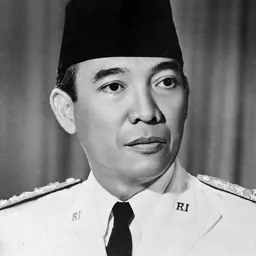
Castro sent Guevara out on a three-month tour of mostly Bandung Pact countries (Morocco, Sudan, Egypt, Syria, Pakistan, India, Sri Lanka, Burma, Thailand, Indonesia, Japan, Yugoslavia, and Greece), Singapore and Hong Kong. Sending Guevara away allowed Castro to distance himself from Guevara and his Marxist sympathies, which troubled the US and some members of Castro's 26 July Movement. While in Jakarta, Guevara visited Indonesian president Sukarno to discuss the revolution of 1945–1949 in Indonesia and establish trade relations. The two bonded, as Sukarno was attracted to Guevara's energy and relaxed approach; moreover they shared revolutionary leftist aspirations against Western imperialism. Guevara spent 15–27 July in Japan, participating in negotiations aimed at expanding Cuba's trade relations. He refused to visit and lay a wreath at Japan's Tomb of the Unknown Soldier commemorating soldiers lost during World War II, remarking that Japanese "imperialists" had "killed millions of Asians". Instead, Guevara visited Hiroshima, where the Americans had detonated an atomic bomb. Despite his denunciation of Imperial Japan, Guevara considered President Truman a "macabre clown" for the bombings, and after visiting the Hiroshima Peace Memorial Museum he sent a postcard to Cuba stating, "In order to fight better for peace, one must look at Hiroshima."
Upon Guevara's return to Cuba in September, it became evident Castro had more power. The government had seized land in accordance with the agrarian law, but was hedging on compensation offers to landowners, instead offering low-interest "bonds", a step which put the US on alert. The affected wealthy cattlemen of Camagüey mounted a campaign against land redistribution and enlisted disaffected rebel leader Huber Matos, who along with the anti-communist wing of the 26 July Movement, joined them in denouncing "communist encroachment". Dominican dictator Rafael Trujillo offered assistance to the "Anti-Communist Legion of the Caribbean" which was training in the Dominican Republic. This multi-national force, composed mostly of Spaniards and Cubans, and right-wing mercenaries, was plotting to topple Castro's regime.
Guevara acquired the additional position of Finance Minister, as well as President of the National Bank. These appointments, combined with his existing position as Minister of Industries, placed Guevara at the zenith of his power, as "virtual czar" of the economy. As a consequence of heading the central bank, it became Guevara's duty to sign the currency. He signed the bills "Che". It was through this symbolic act, which horrified many in finance, that Guevara signaled his distaste for money and the class distinctions it brought about.
Guevara stressed the need for improvement in literacy. Before 1959 the literacy rate was 60-76%, with limited rural educational access and lack of instructors determining factors. The government at Guevara's behest dubbed 1961 the "year of education" and mobilized 100,000 volunteers into "literacy brigades", sent into the countryside to construct schools, train new educators, and teach the predominantly illiterate guajiros (peasants). Unlike many of Guevara's economic initiatives, this was "a remarkable success". By the completion of the Cuban literacy campaign, 707,212 adults had been taught to read and write, raising the literacy rate to 96%.
Guevara was concerned with establishing universal access to higher education. To accomplish this the new regime introduced affirmative action to the universities. While announcing this commitment, Guevara told the gathered faculty and students at the University of Las Villas that the days when education was "a privilege of the white middle class" had ended. "The University" he said, "must paint itself black, mulatto, worker, and peasant." If it did not, he warned, the people were going to break down its doors "and paint the University the colors they like."
Economic reforms and the "New Man"
In September 1960, when Guevara was asked about Cuba's ideology at the First Latin American Congress, he replied, "If I were asked whether our revolution is Communist, I would define it as Marxist. Our revolution has discovered by its methods the paths that Marx pointed out." When enacting and advocating policy, Guevara cited Karl Marx as his ideological inspiration. In defending his stance, Guevara confidently remarked, "There are truths so evident, so much a part of people's knowledge, that it is now useless to discuss them. One ought to be Marxist with the same naturalness with which one is 'Newtonian' in physics, or 'Pasteurian' in biology."
Guevara meeting with French existentialist philosophers Jean-Paul Sartre and Simone de Beauvoir at his office in Havana, March 1960. Sartre later wrote that Che was "the most complete human being of our time". In addition to Spanish, Guevara was fluent in French.
In an effort to eliminate social inequality, Guevara and Cuba's leadership had moved to transform the political and economic base of the country through nationalizing factories, banks, and businesses, while attempting to ensure affordable housing, healthcare, and full employment. In order for a genuine transformation of consciousness to take root, it was believed such structural changes had to be accompanied by a conversion in people's social relations and values. Believing that the attitudes in Cuba towards race, women, individualism, and manual labor were the product of the island's past, individuals were urged to view each other as equals and take on the values of what Guevara termed "el Hombre Nuevo", the New Man. He was known for working 36 hours at a stretch, calling meetings after midnight, and eating on the run. Such behavior was emblematic of Guevara's program of moral incentives, where each worker was required to meet a quota and produce a certain quantity of goods. As a replacement for the pay increases abolished by Guevara, workers who exceeded their quota now only received a certificate of commendation, while workers who failed to meet their quotas were given a pay cut. Guevara unapologetically defended his philosophy towards motivation and work, stating:
Guevara fishing off the coast of Havana, on 15 May 1960. Along with Castro, Guevara competed with expatriate author Ernest Hemingway at what was known as the "Hemingway Fishing Contest".
In 1960, Guevara ordered the construction of the Guanahacabibes camp: a labor camp to "rehabilitate" his employees who had committed infractions at work. Historians have had difficulty characterizing the camp, because it was extra-legal and thus poorly documented. There is a consensus that employees worked to regain their employment after a negative incident, and were under no legal pressure to work at the camp. However, historian Rachel Hynson has theorized that other poorly documented "Guanahacabibes" camps also existed, that were more brutal and legally binding.
With the loss of commercial connections with Western states, Guevara tried to replace them with commercial relationships with Eastern Bloc states, visiting Marxist states and signing trade agreements. At the end of 1960 he visited Czechoslovakia, the Soviet Union, North Korea, Hungary, and East Germany and signed a trade agreement in East Berlin. Such agreements helped Cuba's economy but had the disadvantage of a growing economic dependency on the Eastern Bloc. It was in East Germany where Guevara met Tamara Bunke, who was assigned as his interpreter, and who joined him years later, and was killed with him in Bolivia.
His programs were unsuccessful, and accompanied a drop in productivity and rise in absenteeism. In a meeting with economist René Dumont, Guevara blamed the inadequacy of agrarian reform, which turned plantations into farm cooperatives or split up land amongst peasants. In Guevara's opinion, this situation continued to promote a "heightened sense of individual ownership" in which workers could not see the positive social benefits of their labor, leading them to seek individual material gain as before. Che's former deputy Ernesto Betancourt, subsequently the director of the US government-funded Radio Martí and an ally turned Castro-critic, accused Guevara of being "ignorant of the most elementary economic principles."
Bay of Pigs and Four Year Plan
In 1960, Guevara began promoting the idea of industrializing Cuba, and diversifying Cuba's agriculture. In 1961, Guevara proposed a four-year plan for rapid industrialization that would create a 15% annual growth rate, and tenfold increase in fruit production. As head of the Ministry of Industries, Guevara announced on March 3 that "accelerated industrialization" would require the centralization of all economic decision making.
On 17 April 1961, 1,400 US-trained Cuban exiles invaded Cuba during the Bay of Pigs Invasion. Guevara did not play a key role, as the day before the invasion a warship carrying Marines faked an invasion off the West Coast of Pinar del Río and drew forces commanded by Guevara. However, historians give him a share of credit for the victory as he was director of instruction for Cuba's armed forces. Author Tad Szulc in his explanation of the Cuban victory, assigns Guevara partial credit, stating: "The revolutionaries won because Che Guevara, as the head of the Instruction Department of the Revolutionary Armed Forces in charge of the militia training program, had done so well in preparing 200,000 men and women for war." It was during this deployment he suffered a bullet grazing to the cheek when his pistol fell out of its holster and accidentally discharged.
In August 1961, during an economic conference of the Organization of American States in Punta del Este, Uruguay, Guevara sent a note of "gratitude" to US President John F. Kennedy through Richard N. Goodwin, Deputy Assistant Secretary of State for Inter-American Affairs. It read "Thanks for Playa Girón (Bay of Pigs). Before the invasion, the revolution was shaky. Now it's stronger than ever." In response to US Treasury Secretary Douglas Dillon presenting the Alliance for Progress for ratification by the meeting, Guevara antagonistically attacked the United States' claim of being a "democracy", stating that such a system was not compatible with "financial oligarchy, discrimination against blacks, and outrages by the Ku Klux Klan". Guevara continued, speaking out against the "persecution" that in his view "drove scientists like Oppenheimer from their posts, deprived the world for years of the marvelous voice of Paul Robeson, and sent the Rosenbergs to their deaths against the protests of a shocked world."
Guevara was a member of JUCEPLAN, the central planning board of Cuba, while head of the Ministry of Industries. The head of JUCEPLAN, Regino Boti, announced in August 1961 that the country would soon have 10% growth, and throughout 1961, Marxist economists from throughout the world were invited to Cuba to assist in economic planning. The four-year plan drafted by JUCEPLAN in 1961 stressed industrialization and agricultural diversification, minimizing sugar production. This plan was devised to be implemented in 1962 through 1965.
Great Debate and Missile Crisis
In March 1962, Guevara admitted in a speech that the economic plan was a failure, stating it was "an absurd plan, disconnected from reality, with absurd goals and imaginary resources."
Fidel Castro invited Marxist economists to debate two propositions. One proposed by Guevara was that Cuba could bypass capitalist, then "socialist" transition period, and immediately become an industrialized "communist" society if "subjective conditions" like public consciousness and vanguard action are perfected. The other proposition held by the Popular Socialist Party was that Cuba required a transitionary period as a mixed economy in which Cuba's sugar economy was maximized for profit before a "communist" society could be established.
Guevara elaborated that moral incentives should exist as the main motivator to increase workers' production. All profits were to be given to the state budget, and the state would cover losses. Institutions that developed socialist consciousness were regarded as the most important element in maintaining a path to socialism, rather than materially incentivized increases in production. Implementation of the profit-motive was regarded as a path towards capitalism and one of the flaws of the Eastern bloc economies. The economy would rely on mass mobilizations and centralized planning as a method for development. The main ideal that compromised the consciousness that would develop socialism was the praise of the "new man", a citizen that was only motivated by solidarity and self-sacrifice.
Guevara served as the main architect of the Cuban–Soviet relationship, and played a key role in bringing to Cuba the Soviet nuclear-armed ballistic missiles that precipitated the Cuban Missile Crisis in October 1962 and brought the world to the brink of nuclear war. After the Soviets proposed basing nuclear missiles in Cuba it was Guevara who traveled to the Soviet Union in August 1962, to sign off on the agreement. Guevara argued with Khruschev that the missile deal should be made public but Khruschev insisted on secrecy, and swore the Soviet Union's support if the Americans discovered the missiles. By the time Guevara arrived in Cuba the US had discovered Soviet troops in Cuba via U-2 spy planes.
A few weeks after the crisis, during an interview with the British communist newspaper the Daily Worker, Guevara was still fuming over the perceived Soviet betrayal and said that, if the missiles had been under Cuban control, they would have fired them off. While expounding on the incident later, Guevara reiterated that the cause of socialist liberation against "imperialist aggression" would have been worth the possibility of "millions of atomic war victims". The missile crisis further convinced Guevara that the world's two superpowers (the US and Soviet Union) used Cuba as a pawn in their global strategies. Afterward, he denounced the Soviets almost as frequently as the Americans. Che Guevara in his office as Minister of Industry (in the Hotel Riviera), while being interviewed by Laura Berquist for Look magazine. (1963) Economic decline in Cuba continued past 1962, in the next year, sugar production was down by over a third from its 1961 level. The sugar harvest of 1963 only brought in 3.8 million tons, the lowest harvest in Cuba in over twenty years. Food production was down per capita by 40% for the next three years. Castro began to emphasize sugar production in economic planning.
In February 1963, Guevara published the essay Against bureaucratism, in which he describes the "guerrillaism" of the Cuban leadership, the necessity of bureaucratization to prevent rash decision-making amongst ex-guerrillas, and the need to de-bureaucratize to end idleness in production. Since his essay, the word "Guerrillerismo" from his essay, has been used by historians to refer to a style of rhetoric that developed in Cuba, that constantly linked government decisions to the guerrilla struggle of the Cuban Revolution, implying they are all part of the same struggle.
In 1964, Guevara published an article, The Cuban Economy: Its Past, and Its Present Importance, which analyzed the failure of Guevara's economic plans. Guevara stated that he committed "two principle errors": the diversification of agriculture, and dispersing resources evenly for various agricultural sectors. Guevara states:
International diplomacy
United Nations delegation By December 1964, Guevara had emerged as a "revolutionary statesman of world stature" and traveled to New York as head of the Cuban delegation to speak at the UN. On 11 December, during Guevara's hour-long, impassioned address at the UN, he criticized the United Nations' inability to confront the "brutal policy of apartheid" in South Africa, asking "Can the United Nations do nothing to stop this?". Guevara then denounced the United States policy towards their black population, stating:
Those who kill their own children and discriminate daily against them because of the color of their skin; those who let the murderers of blacks remain free, protecting them, and furthermore punishing the black population because they demand their legitimate rights as free men—how can those who do this consider themselves guardians of freedom? The first from Molly Gonzales, who tried to break through barricades with a seven-inch hunting knife, and the second by Guillermo Novo, who fired a timer-initiated bazooka from a boat in the East River at the UN Headquarters during his address, but was off target. Afterwards Guevara commented that "it is better to be killed by a woman with a knife than by a man with a gun", while adding with a languid wave of his cigar that the explosion had "given the whole thing more flavor". and met with a range of people, from US Senator Eugene McCarthy to associates of Malcolm X. The latter expressed his admiration, declaring Guevara "one of the most revolutionary men in this country right now" while reading a statement from him to a crowd at the Audubon Ballroom.
World travel On 17 December, Guevara left New York for Paris, and embarked on a three-month world tour that included visits to China, North Korea, the United Arab Republic, Algeria, Ghana, Guinea, Mali, Dahomey, Congo-Brazzaville, and Tanzania, with stops in Ireland and Prague. While in Ireland, Guevara embraced his Irish heritage, celebrating Saint Patrick's Day in Limerick. He wrote to his father, humorously stating "I am in this green Ireland of your ancestors. When they found out, the television [station] came to ask me about the Lynch genealogy, but in case they were horse thieves or something like that, I didn't say much."
During Guevara's time in Algeria, he was interviewed by poet Juan Goytisolo inside the Cuban embassy. During the interview, Guevara noticed a book by openly gay Cuban writer Virgilio Piñera sitting on the table next to him. He threw the book against the wall and yelled "how dare you have in our embassy a book by this foul faggot?" This moment was a turn in Goytisolo's identity as it influenced him to slowly come out of the closet as gay and begin to sympathize with the LGBT citizens of Cuba.
During this voyage, he wrote a letter to Carlos Quijano, editor of a Uruguayan weekly, which was later retitled Socialism and Man in Cuba. Outlined in the treatise was Guevara's summons for the creation of a new consciousness, a new status of work, and a new role of the individual. He laid out the reasoning behind his anti-capitalist sentiments, stating: The laws of capitalism, blind and invisible to the majority, act upon the individual without his thinking about it. He sees only the vastness of a seemingly infinite horizon before him. That is how it is painted by capitalist propagandists, who purport to draw a lesson from the example of Rockefeller—whether or not it is true—about the possibilities of success. The amount of poverty and suffering required for the emergence of a Rockefeller, and the amount of depravity that the accumulation of a fortune of such magnitude entails, are left out of the picture, and it is not always possible to make the people in general see this. He specified the moral duty of the socialist countries, accusing them of tacit complicity with the exploiting Western countries. He proceeded to outline measures which he said communist bloc countries must implement to accomplish the defeat of imperialism. Having criticized the Soviet Union (the primary financial backer of Cuba) in such a public manner, he returned to Cuba on 14 March to a solemn reception by Fidel and Raúl Castro, Osvaldo Dorticós, and Carlos Rafael Rodríguez at Havana airport.
As revealed in his speech, Guevara had come to view the Northern Hemisphere, led by the US in the West and Soviet Union in the East, as the exploiter of the Southern Hemisphere. He strongly supported communist North Vietnam in the Vietnam War, and urged the peoples of other developing countries to take up arms and create "many Vietnams". Che's denunciations of the Soviets made him popular among intellectuals and artists of the Western European left who had lost faith in the Soviet Union, while his condemnation of imperialism and call to revolution inspired radical students in the US, who were impatient for change.
Che Guevara has continued to have a lasting impact on the Argentine left. When President Cristina Fernández de Kirchner made 24 March a holiday to remember the fall of the Argentine military dictatorship, the holiday was first celebrated by a mass parade of communist groups and trade unions, many waving banners displaying the face of Guevara.
Retrieval of remains and possessions
In late 1995, the retired Bolivian General Mario Vargas revealed to Jon Lee Anderson, author of Che Guevara: A Revolutionary Life, that Guevara's corpse lay near a Vallegrande airstrip. The result was a multi-national search for the remains, which lasted more than a year. In July 1997, a team of Cuban geologists and Argentine forensic anthropologists discovered the remnants of seven bodies in two mass graves, including one man without hands (as Guevara would have been). Bolivian government officials with the Ministry of Interior later identified the body as Guevara when the excavated teeth "perfectly matched" a plaster mold of Che's teeth made in Cuba prior to his Congolese expedition. The "clincher" then arrived when Argentine forensic anthropologist Alejandro Inchaurregui inspected the inside hidden pocket of a blue jacket dug up next to the handless cadaver and found a small bag of pipe tobacco. Niño de Guzmán, the Bolivian helicopter pilot who had given Che a small bag of tobacco, later remarked that he "had serious doubts" at first and "thought the Cubans would just find any old bones and call it Che"; but "after hearing about the tobacco pouch, I have no doubts."
In July 2008, the Bolivian government of Evo Morales unveiled Guevara's sealed diaries composed of two frayed notebooks, along with a logbook and several black-and-white photographs. At this event, Bolivia's vice-minister of culture, Pablo Groux, expressed that there were plans to publish photographs of every handwritten page later in the year. Meanwhile, in August 2009, anthropologists working for Bolivia's Justice Ministry discovered and unearthed the bodies of five of Guevara's fellow guerrillas near the Bolivian town of Teoponte.
Biographical debate Guevara's life and legacy remain contentious. The perceived contradictions of his ethos at points in his life present a complex character, who was "able to wield the pen and submachine gun with equal skill", while prophesying that "the most important revolutionary ambition was to see man liberated from his alienation". Guevara's paradoxical standing is complicated by his array of seemingly diametrically opposed qualities. He was a secular humanist and sympathetic practitioner of medicine who did not hesitate to shoot enemies, a celebrated internationalist leader who advocated violence to enforce a utopian philosophy of the collective good, an idealistic intellectual who loved literature but refused to allow dissent, an anti-imperialist Marxist insurgent who was willing to forge a poverty-less new world on the apocalyptic ashes of the old one, and an outspoken anti-capitalist whose image has been commoditized. Che's history continues to be rewritten. Sociologist Michael Löwy contends that facets of Guevara's life illuminated the rise of the "Che myth", allowing him to be invariably crystallized in his many metanarrative roles as a "Red Robin Hood, Don Quixote of communism, new Garibaldi, Marxist Saint Just, Cid Campeador of the Wretched of the Earth, Sir Galahad of the beggars ... and Bolshevik devil who haunts the dreams of the rich, kindling braziers of subversion all over the world".
Notable individuals have lauded Guevara; for example, Nelson Mandela referred to him as "an inspiration for every human being who loves freedom", while Jean-Paul Sartre described him as "not only an intellectual but also the most complete human being of our age". Others who have expressed their admiration include authors Graham Greene, who remarked that Guevara "represented the idea of gallantry, chivalry, and adventure", and Susan Sontag, who supposed that "[Che's] goal was nothing less than the cause of humanity itself." Frantz Fanon professed Guevara to be "the world symbol of the possibilities of one man", while Black Power leader Stokely Carmichael eulogized that "Che Guevara is not dead, his ideas are with us." Praise has been reflected throughout the political spectrum, with libertarian theorist Murray Rothbard extolling Guevara as a "heroic figure" who "more than any man of our epoch or even of our century, was the living embodiment of the principle of revolution", while journalist Christopher Hitchens reminisced that "[Che's] death meant a lot to me and countless like me at the time, he was a role model, albeit an impossible one for us bourgeois romantics insofar as he went and did what revolutionaries were meant to do—fought and died for his beliefs." Exiled former Cuban prisoners have expressed similar opinions, among them Armando Valladares, who declared Guevara "a man full of hatred" who executed dozens without trial, and Carlos Alberto Montaner, who asserted that Guevara possessed "a Robespierre mentality", wherein cruelty against the revolution's enemies was a virtue. Álvaro Vargas Llosa of the Independent Institute has hypothesized that Guevara's contemporary followers "delude themselves by clinging to a myth", describing Guevara as a "Marxist Puritan" who employed his rigid power to suppress dissent, while operating as a "cold-blooded killing machine". Ratliff speculates that economic conditions suited Guevara's commitment to "bring justice to the downtrodden by crushing centuries-old tyrannies"; describing Latin America as being plagued by what Moisés Naím referred to as the "legendary malignancies" of inequality, poverty, dysfunctional politics and malfunctioning institutions. Guevara remains a Cuban hero, where his image adorns the 3 peso coin and schoolchildren begin each morning pledging "We will be like Che." In his homeland of Argentina, where high schools bear his name, Che museums dot the country, and in 2008, a bronze statue of him was unveiled in the city of his birth, Rosario. Guevara has been sanctified by Bolivian campesinos as "Saint Ernesto", who pray to him for assistance. Guevara remains a hated figure amongst many in the Cuban exile and Cuban American community of the US, who view him as "the butcher of La Cabaña". Despite this polarized status, a high-contrast monochrome graphic of Che's face, created in 1968 by artist Jim Fitzpatrick, became a universally merchandized and objectified image, found on an endless array of items, including T-shirts, hats, posters, tattoos, and bikinis, contributing to the consumer culture Guevara despised. Yet, he still remains a transcendent figure in political contexts and as a popular icon of youthful rebellion.
Addressing the flexibility of his legacy, Trisha Ziff, director of the documentary Chevolution, remarked that "Che Guevara's significance in modern times is less about the man and his specific history, and more about the ideals of creating a better society." Writer Ariel Dorfman has suggested Guevara's enduring appeal might be because "to those who will never follow in his footsteps, submerged as they are in a world of cynicism, self-interest and frantic consumption, nothing could be more vicariously gratifying than Che's disdain for material comfort and everyday desires."
International honors Guevara received several honors of state during his life.
Archival media
Video footage Guevara addressing the United Nations General Assembly on 11 December 1964, (6:21), public domain footage uploaded by the UN, video clip Guevara interviewed by Face the Nation on 13 December 1964, (29:11), from CBS, video clip Guevara interviewed in 1964 on a visit to Dublin, Ireland, (2:53), English translation, from RTÉ Libraries and Archives, video clip Guevara interviewed in Paris and speaking French in 1964, (4:47), English subtitles, interviewed by Jean Dumur, video clip Guevara reciting a poem, (0:58), English subtitles, from El Che: Investigating a Legend – Kultur Video 2001, video clip Guevara showing support for Fidel Castro, (0:22), English subtitles, from El Che: Investigating a Legend – Kultur Video 2001, video clip Guevara speaking about labor, (0:28), English subtitles, from El Che: Investigating a Legend – Kultur Video 2001, video clip Guevara speaking about the Bay of Pigs, (0:17), English subtitles, from El Che: Investigating a Legend – Kultur Video 2001, video clip Guevara speaking against imperialism, (1:20), English subtitles, from El Che: Investigating a Legend – Kultur Video 2001, video clip Guevara visiting Algeria in 1963 and giving a speech in French, from the Algerian Cinema Archive, video clip
Audio recording Guevara interviewed on ABC's Issues and Answers, (22:27), English translation, narrated by Lisa Howard, 24 March 1964, audio clip
List of English-language works
A New Society: Reflections for Today's World, Ocean Press, 1996, Back on the Road: A Journey Through Latin America, Grove Press, 2002, Che Guevara, Cuba, and the Road to Socialism, Pathfinder Press, 1991, Che Guevara on Global Justice, Ocean Press (AU), 2002, Che Guevara: Radical Writings on Guerrilla Warfare, Politics and Revolution, Filiquarian Publishing, 2006, Che Guevara Reader: Writings on Politics & Revolution, Ocean Press, 2003, Che Guevara Speaks: Selected Speeches and Writings, Pathfinder Press (NY), 1980, Che Guevara Talks to Young People, Pathfinder, 2000, Che: The Diaries of Ernesto Che Guevara, Ocean Press (AU), 2008, Colonialism is Doomed, Ministry of External Relations: Republic of Cuba, 1964, Congo Diary: The Story of Che Guevara's "Lost" Year in Africa Ocean Press, 2011, Critical Notes on Political Economy: A Revolutionary Humanist Approach to Marxist Economics, Ocean Press, 2008, Diary of a Combatant: The Diary of the Revolution that Made Che Guevara a Legend, Ocean Press, 2013, Episodes of the Cuban Revolutionary War, 1956–58, Pathfinder Press (NY), 1996, Global Justice: Three Essays on Liberation and Socialism, Seven Stories Press, 2022, Guerrilla Warfare: Authorized Edition, Ocean Press, 2006, I Embrace You with All My Revolutionary Fervor: Letters 1947-1967, Seven Stories Press, 2021, Latin America: Awakening of a Continent, Ocean Press, 2005, Latin America Diaries: The Sequel to The Motorcycle Diaries, Ocean Press, 2011, Marx & Engels: An Introduction, Ocean Press, 2007, Our America And Theirs: Kennedy And The Alliance For Progress, Ocean Press, 2006, Reminiscences of the Cuban Revolutionary War: Authorized Edition, Ocean Press, 2005, Self Portrait Che Guevara, Ocean Press (AU), 2004, Socialism and Man in Cuba, Pathfinder Press (NY), 1989, The African Dream: The Diaries of the Revolutionary War in the Congo, Grove Press, 2001, The Argentine, Ocean Press (AU), 2008, The Awakening of Latin America: Writings, Letters and Speeches on Latin America, 1950–67, Ocean Press, 2012, The Bolivian Diary of Ernesto Che Guevara, Pathfinder Press, 1994, The Great Debate on Political Economy, Ocean Press, 2006, The Motorcycle Diaries: A Journey Around South America, London: Verso, 1996, The Secret Papers of a Revolutionary: The Diary of Che Guevara, American Reprint Co, 1975, To Speak the Truth: Why Washington's "Cold War" Against Cuba Doesn't End, Pathfinder, 1993,
Don’t just read it —
keep it.
Full-length biographies made to live with: read them, listen on the way to work, watch them tonight.
- E-book
- Audio
- Video
Instant download · yours to keep · every purchase keeps this site free
Important facts
Family & relationships
People in Che Guevara's life
Named in this biography and alive at the same time





Related people
Same field, nearest in time



Contemporaries
People whose lives overlapped Che Guevara's


Frequently asked questions
Who was Che Guevara?
Argentine Marxist revolutionary (1928–1967)
When was Che Guevara born?
Che Guevara was born on 14 June 1928 in Rosario.
When did Che Guevara die?
Che Guevara died on 9 October 1967 in La Higuera.
What was Che Guevara's occupation?
Che Guevara was a politician, physician, poet, diplomat, essayist and revolutionary.
What nationality was Che Guevara?
Che Guevara was Cuban and Argentine.
Sources & further reading
Cite this page
APA: Biography.guide. (2026). Che Guevara. https://biography.guide/che-guevara/
MLA: "Che Guevara." Biography.guide, https://biography.guide/che-guevara/.
Chicago: "Che Guevara." Biography.guide. https://biography.guide/che-guevara/.
Data last updated: 2026-09-20 · Spot an error? Report a correction.
Page generated 2026-09-27 05:20 UTC