
About Kurt Hager
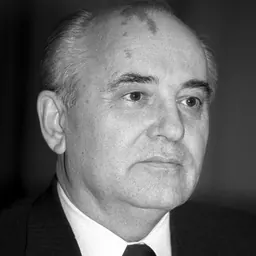
Lived 1912 – 1998 (aged 86). Kurt Hager was a German politician, journalist, university teacher and education policymaker, known for Socialist Unity Party of Germany.
Leonard Kurt Hager (24 July 1912 – 18 September 1998) was a German communist politician who served a member of the Central Committee of the Socialist Unity Party from 1949 to 1989 and as a member of the Politburo from 1963 to 1989. He was the party's chief ideologist, deciding many cultural and educational policies in East Germany.
Life Hager was born in Bietigheim, Württemberg, on 24 July 1912, the son of a labourer and a cleaner.
East Germany
In 1945 Hager returned to Berlin. Until 1946 he first worked as forestry worker and welder, and later as a journalist for the magazine .
Upon his return, he was deputy chief editor of "Vorwärts", the Monday edition of Neues Deutschland. In 1948, Hager graduated the Parteihochschule Karl Marx, qualifying him to be a lecturer. In 1949 he became a full professor for philosophy at the Humboldt University in Berlin.
In 1946 he joined the SED, and became head of the party Training Division, then in 1949 the Head of the Propaganda Department. From 1952 he became the Head of the Science Department of SED, and from 1954 a member of the Central Committee of the SED. In 1955 he became the secretary, and was responsible for science, popular education and culture. A candidate in 1959, from 1963 he was a Member of the Politburo of the CC of SED and the Ideology committee of the Politburo. In 1958 he became a member of the Volkskammer and 1967 was made chairman of the Public Education Committee. He was also between 1976 and 1989 a Member of the Council of State and between 1979 and 1989 a member of the National Defense Council. In the SED-Politbüro Hager was "Chefideologe" and ultimately responsible for culture.
In speeches and writings Hager denied the existence of a single German cultural nation and a common German history. In 1987, in an interview with the German magazine Stern about the reforms of Mikhail Gorbachev in the Soviet Union, Hager gave the answer: "Would you, if your neighbor repapers his apartment, feel like you should also repaper your apartment?". This rejection of the policy of glasnost and perestroika of the Soviet military power met an angry reception both in the party base, as well as in the population of the GDR. Wolf Biermann titled Hager — probably due to this occasion, in his song "The Ballad of the corrupt old men" scornfully as "Professor Tapeten-Kutte". In an encounter with East German journalists spontaneously visiting his residence at "Wachobjekt Wandlitz", Hager claimed he was placed there against his will at the climax of the Cold War. He had "submitted to the decisions of the party," said Hager in the presence of his wife. He described Wandlitz, which after 1989 became a symbol of the duplicity of East German leaders, as the seventh internment camp in his life.
In November 1989 Hager was removed from his functions, and in 1990 expelled from the SED-PDS.
Hager won numerous awards. He received 1956 Hans-Beimler-Medaille, 1962 Banner of Labor, 1964 Vaterländischer Verdienstorden, 1969 entitled Hero of Labour, as well as 1972, 1977 and 1982 Order of Karl Marx.
His daughter Nina Hager, joined somewhat in the footsteps of her father. She is vice chairman of the German Communist Party (DKP), a member of the National Executive and there are other positions.
Hager died in Berlin in 1998. His grave is located on the Zentralfriedhof Friedrichsfelde.
Don’t just read it —
keep it.
Full-length biographies made to live with: read them, listen on the way to work, watch them tonight.
- E-book
- Audio
- Video
Instant download · yours to keep · every purchase keeps this site free
Important facts
People in Kurt Hager's life
Named in this biography and alive at the same time


Related people
Same field, nearest in time






Contemporaries
People whose lives overlapped Kurt Hager's





Frequently asked questions
Who was Kurt Hager?
East German politician (1912–1998)
When was Kurt Hager born?
Kurt Hager was born on 24 July 1912 in Bietigheim-Bissingen.
When did Kurt Hager die?
Kurt Hager died on 18 September 1998 in Berlin.
What was Kurt Hager's occupation?
Kurt Hager was a politician, journalist, university teacher and education policymaker.
What was Kurt Hager known for?
Kurt Hager was known for Socialist Unity Party of Germany.
What nationality was Kurt Hager?
Kurt Hager was German.
Sources & further reading
Cite this page
APA: Biography.guide. (2026). Kurt Hager. https://biography.guide/kurt-hager/
MLA: "Kurt Hager." Biography.guide, https://biography.guide/kurt-hager/.
Chicago: "Kurt Hager." Biography.guide. https://biography.guide/kurt-hager/.
Data last updated: 2026-09-22 · Spot an error? Report a correction.
Page generated 2026-09-27 05:23 UTC