
About Germán Arciniegas
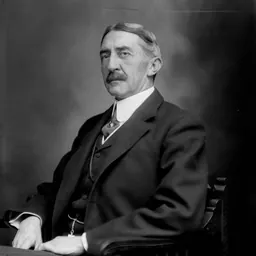
Lived 1900 – 1999 (aged 98). Germán Arciniegas was a Colombian journalist, politician, diplomat, historian, poet lawyer and writer.
Germán Arciniegas Angueyra (December 6, 1900 - November 29, 1999) was a Colombian historian, writer and journalist who was known for his advocacy of educational and cultural issues, as well as his outspoken opposition to dictatorship. He also served as a college professor and held positions in the government, including Minister of Education and several ambassadorships.
Family Arciniegas was the son of Rafael Arciniegas Tavera, a farmer, and his wife Aurora Angueyra Figueredo. He had three brothers and four sisters. His father died young, leaving his mother struggling to support the family, his sister Maria Mercedes and his younger brother Joaquín Arciniegas Tavera migrated to El Salvador. His maternal great-grandfather was Perucho Figueredo, an early Cuban freedom fighter who wrote La Bayamesa, Cuba's national anthem. Both of Perucho's daughters fled the country when he was executed. Luz, the younger daughter, was married to a Cuban engineer who went to Colombia to help build a railroad line. It was there, amid the dangers of the jungle, that Germán's mother was born.
Early years At the age of eighteen, he began studying law at the National University of Colombia. At that time he had already created two journals: Año Quinto (1916) and Voz de la Juventud (1917). While a student he founded and managed the magazine Universidad (1921). He collaborated with many well-known figures at all three periodicals, including Luis López de Mesa, José Vasconcelos, León de Greiff and José Juan Tablada, who introduced the haiku into Spanish literature via Universidad. His love of journalism led him to establish and manage numerous cultural magazines throughout his life. In 1928, he joined El Tiempo, a daily newspaper in Bogotá, where he managed the editorial section, put together the Sunday Literary Supplement and wrote a weekly column, becoming the general manager in 1937. He would continue to contribute articles and opinion pieces to El Tiempo for the rest of his life, For him, students were the axis around which all political and intellectual movements had turned throughout history. This gave rise to his first book El Estudiante de la Mesa Redonda (The Student of the Round Table, 1932), in which he speaks of history as a "tavern" with the students sitting at a single table, drinking, recounting their deeds and laughing at everybody else.
Later career He continued his fight for students' rights during his brief tenures as Minister of Education in 1942 and 1945-46. During this time, he founded the Caro and Cuervo Institute and moved the Colombian National Museum to its current home in a former prison building. At this time, he wrote his most important and most often banned book, Entre la Libertad y el Miedo (Between Freedom and Fear, 1952). The work analyzes a critical period in Latin-America, when seven dictators were in power at the same time. He also criticized the U.S. State Department for its conciliatory behavior towards these regimes and, as a result, was detained for questioning several times after returning from trips abroad. The publication and translation of the book was prohibited in at least ten countries. General Gustavo Rojas Pinilla, the President of Colombia, accused Arciniegas of being a Communist and ordered all of his books to be burnt. Rafael Trujillo, the dictator of the Dominican Republic, put Arciniegas on his hit list.
In 1992, he was appointed President of the National Commission for the Celebration of the Five-Hundredth Anniversary of the Discovery of America. He was summarily dismissed by then First-Lady Ana Milena Muñoz de Gaviria, who took over the commission herself; an action that generated much controversy.
Honors and awards Order of Civil Merit Grand Cross of Spain (1982) Order of Merit of the Italian Republic (1962) Maria Moors Cabot Prize (1963) Alfonso Reyes International Prize (1994) Honorary member of the Academia Mexicana de la Lengua (1949). Doctor Honoris Causa at the Faculty of Humanities and Education of the Universidad Nacional Pedro Henríquez Ureña (UNPHU, 1984).
Selected works English The Knight of El Dorado: The Tale of Don Gonzalo Jiménez de Quesada and His Conquest of New Granada, translated by Mildred Adams, Viking Press (1942) Germans in the Conquest of America: A Sixteenth-Century Venture, translated by Ángel Flores, Macmillan (1943) The State of Latin-America: Twenty Nations Between Freedom and Fear, translated by Harriet de Onís, Knopf (1952) Latin-America: A Cultural History, translated by Joan MacLean, Knopf (1967) Amerigo and the New World : The Life & Times of Amerigo Vespucci, translated by Harriet de Onís, Octagon (1978) America in Europe: A History of the New World in Reverse, translated by Gabriela Arciniegas and Victoria Arana, Harcourt (1986) Caribbean: Sea of the New World, translated by Harriet de Onís, Markus Wiener (2003)
Spanish El Estudiante de la Mesa Redonda, Ercilla (1937) Los Comuneros, Editorial ABC (1938) Este Pueblo de América, Fondo de Cultura Economica (1945) América Mágica. Los Hombres y los Meses, Sudamericana (1961) América Mágica. Las Mujeres y las Horas, Sudamericana (1961)
Don’t just read it —
keep it.
Full-length biographies made to live with: read them, listen on the way to work, watch them tonight.
- E-book
- Audio
- Video
Instant download · yours to keep · every purchase keeps this site free
Important facts
People in Germán Arciniegas's life
Named in this biography and alive at the same time



Related people
Same field, nearest in time



Contemporaries
People whose lives overlapped Germán Arciniegas's



Frequently asked questions
Who was Germán Arciniegas?
Colombian essayist and historian (1900-1999)
When was Germán Arciniegas born?
Germán Arciniegas was born on 6 December 1900 in Bogotá.
When did Germán Arciniegas die?
Germán Arciniegas died on 29 November 1999 in Bogotá.
What was Germán Arciniegas's occupation?
Germán Arciniegas was a journalist, politician, diplomat, historian, poet lawyer and writer.
What nationality was Germán Arciniegas?
Germán Arciniegas was Colombian.
Sources & further reading
· Wikipedia: Germán Arciniegas
Cite this page
APA: Biography.guide. (2026). Germán Arciniegas. https://biography.guide/german-arciniegas/
MLA: "Germán Arciniegas." Biography.guide, https://biography.guide/german-arciniegas/.
Chicago: "Germán Arciniegas." Biography.guide. https://biography.guide/german-arciniegas/.
Data last updated: 2026-09-20 · Spot an error? Report a correction.
Page generated 2026-09-27 05:26 UTC