
About Gustavo Rojas Pinilla
Lived 1900 – 1975 (aged 74). Gustavo Rojas Pinilla was a Colombian civil engineer, politician and engineer.
Gustavo Rojas Pinilla (12 March 1900 – 17 January 1975) was a Colombian army general, civil engineer and politician who ruled as President of Colombia in a military dictatorship from June 1953 to May 1957.
Rojas Pinilla gained prominence as a colonel during La Violencia, the period of civil strife in Colombia during the late 1940s and early 1950s that saw infighting between the ruling Conservatives and Liberal guerillas, and was named to the cabinet of Conservative President Mariano Ospina Pérez. In 1953, he mounted a successful coup d'état against Ospina's successor as president, the extreme right-wing Laureano Gómez Castro, imposing martial law. Seeking to reduce political violence, he ruled the country as a military dictatorship, allying himself with trade unionists, implementing infrastructure programs, and extending female suffrage. He was forced to step down due to public pressure in 1957.
Rojas Pinilla founded the National Popular Alliance (ANAPO) in 1961 in opposition to the National Front, the power-sharing agreement which the Conservatives and Liberals had brokered after he had been deposed. He contested the 1970 presidential election but was defeated by the National Front candidate, Conservative lawyer Misael Pastrana Borrero. However, Rojas Pinilla and his supporters alleged that the election had been fraudulent and illegitimate; the results caused ANAPO supporters to form M-19 guerilla movement, which would contribute to the country's insurgency unrest in the second half of the 20th century.
Early life and education Rojas was born in the city of Tunja, Boyacá, on March 12, 1900, to Julio Rojas Jiménez and his wife, Hermencia Pinilla Suárez. Spending his youth in Tunja, Villa de Leyva, and Arcabuco, he studied at the Tunja School of Presentation and earned a secondary degree at the Normal School of Tunjasu Leiva.
After graduating with a bachelor's degree in 1917, he entered the José María Córdova Military School in Bogotá as a cadet in 1917, graduating as a second lieutenant in 1920. In 1923 while serving in Manizales, Caldas, he was promoted to lieutenant in the army. He became dissatisfied with the army and in 1924 he requested permission to retire from active service. He continued his education at Tri-State College in the United States, where he obtained a degree in civil engineering in 1927 while working the assembly line at a Ford factory.
Returning to Colombia, he started taking part in the construction of highways and other works of engineering, managing the construction of the highway from Belén to Socha. On December 3, 1949, Rojas was appointed as Minister of Posts and Telegraphs. in the government of President Mariano Ospina Pérez.
In 1951, he was nominated as a delegate for Colombia to the United Nations in Washington, and as such he inspected the Colombia Battalion, then attached to the American 21st Infantry Regiment fighting in the Korean War. Rojas took offense at the overseas posting, which he interpreted as an intentional slight on Gómez's part, and returned to Colombia in September 1952. When Gómez returned to office, he ordered the immediate removal of Rojas; the Minister of War Lucio Pabón Núñez, an ally of Rojas, resigned rather than comply with the order.
Shortly after the bloodless coup was consolidated, it emerged that Gómez had fled with his family to New York City, solidifying Rojas' assumption of power.
Presidency
Rojas was the first president of Colombia to assume power through a coup d'état since José Manuel Marroquín in 1900, during the Thousand Days War, and the first to hold power with an active military commission since Santos Acosta overthrew Tomás Cipriano de Mosquera in 1867. He was military dictator of Colombia from 1953 to 1954, when he was officially designated President of Colombia. The National Constituent Assembly, by its Legislative Act Number 1 of 1953, appointed him as President of Colombia without a popular election.
Initially, the Rojas government hewed a moderately conservative line, and he appointed many Ospinists to his cabinet. Nevertheless, he earned the confidence of many Liberals when he announced amnesty for political prisoners and guerillas, and promised to lift censorship restrictions that had been imposed on the press. Almost immediately, Liberal guerillas began to surrender en masse. He also allied himself with organized labor, forming the Confederación Nacional del Trabajo, or CNT, as an independent alternative to the two Liberal and Conservative-dominated unions.
The government's development programs alienated certain members of the industrial and mercantile sectors, who were especially displeased with the higher taxes that were imposed to fund the president's projects. Rojas' detractors compared his "demagogic" economic programme to the rule of Juan Perón in Argentina.
The Liberals, on the other hand, viewed Rojas' rule as increasingly authoritarian. His promises of freedom of the press were not kept, and Liberal newspapers critical of the government were again shuttered. Rojas also established a national gun permit system, making it more difficult for Colombians to obtain a gun.
From 1955, the Colombian economy began to struggle, as the price of coffee fell on the international market and the country entered a balance of payments crisis, forcing a loan from the IMF.
Post-presidency After resigning the presidency, Rojas went into exile in the Dominican Republic, under the protection of dictator Rafael Trujillo. Loyalists to Rojas opposed the military junta's plan to turn over control to a civilian government, and attempted to prevent the 1958 elections from going forward with an attempted coup d'état. The coup ultimately failed, and Lleras assumed power as the first president of the National Front.
Elections of 1962 In the election of 1962 Rojas ran for the first time as the presidential candidate of his newly created ANAPO opposition party. He came in fourth, but his result was nonetheless declared invalid due to him being a former coup leader.
Elections of 1970
In the election of 1970 he ran again for the presidency, with a populist platform. He was defeated by a narrow margin by Misael Pastrana, but alleged that this was the result of fraud.
The presidential election of April 19, 1970, was difficult and controversial. Rojas and Misael Pastrana Borrero were both running for office. Rojas seemed to be winning the elections until a nationwide malfunction of communication systems happened. After these were restored, the votes had already been counted. The results were very close, giving a slight margin in favor of Pastrana Borrero. The supporters of Rojas challenged the results and accused the government of President Carlos Lleras Restrepo of fraud. The case was brought before the Electoral Court, which ruled in favor of Pastrana Borrero on July 15, 1970, certifying him as President of Colombia. This alleged electoral fraud led to the formation of the 19th of April Movement.
Death and legacy
Rojas Pinilla died in Melgar, Tolima, on January 17, 1975. Rojas' daughter, María Eugenia Rojas, contested the 1974 Colombian general election as the leader of ANAPO, on an explicitly socialist platform. His grandson through María Eugenia, Samuel Moreno Rojas, would go on to serve as Mayor of Bogotá as part of the left-wing Alternative Democratic Pole, a successor party to ANAPO and M-19. Samuel Moreno, along with his brother Iván, would be arrested and charged with corruption in 2011.
Ideology Though Rojas was himself a Conservative, his rule drew support from both sides of the Colombian political spectrum. His regime was characterized by populism, influenced by the policies and rhetoric of Juan Perón in Argentina. Rojas invoked the notion of a "Third Force" in society that could stand up to the "odious politicians" and "oligarchs" of the historic Liberal and Conservative Parties, by uniting the armed forces and organized labor. His efforts to formalize this "Third Force" into a political party were not successful.
Historian Daniel García-Peña summed up Rojas' shifting ideological position and support bases:
Don’t just read it —
keep it.
Full-length biographies made to live with: read them, listen on the way to work, watch them tonight.
- E-book
- Audio
- Video
Instant download · yours to keep · every purchase keeps this site free
Important facts
Family & relationships
People in Gustavo Rojas Pinilla's life
Named in this biography and alive at the same time



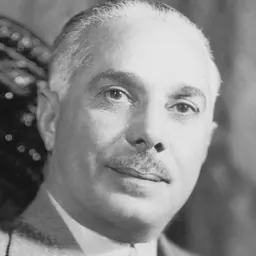
Related people
Same field, nearest in time


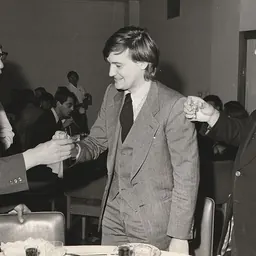
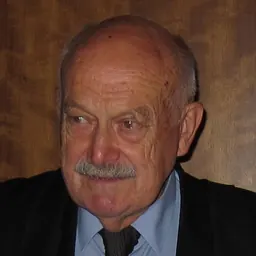

Contemporaries
People whose lives overlapped Gustavo Rojas Pinilla's



Frequently asked questions
Who was Gustavo Rojas Pinilla?
26th President of Colombia (1900-1975)
When was Gustavo Rojas Pinilla born?
Gustavo Rojas Pinilla was born on 12 March 1900 in Tunja.
When did Gustavo Rojas Pinilla die?
Gustavo Rojas Pinilla died on 17 January 1975 in Melgar.
What was Gustavo Rojas Pinilla's occupation?
Gustavo Rojas Pinilla was a civil engineer, politician and engineer.
What nationality was Gustavo Rojas Pinilla?
Gustavo Rojas Pinilla was Colombian.
Sources & further reading
· Wikipedia: Gustavo Rojas Pinilla
· DBpedia: Gustavo Rojas Pinilla
Cite this page
APA: Biography.guide. (2026). Gustavo Rojas Pinilla. https://biography.guide/gustavo-rojas-pinilla/
MLA: "Gustavo Rojas Pinilla." Biography.guide, https://biography.guide/gustavo-rojas-pinilla/.
Chicago: "Gustavo Rojas Pinilla." Biography.guide. https://biography.guide/gustavo-rojas-pinilla/.
Data last updated: 2026-09-25 · Spot an error? Report a correction.
Page generated 2026-09-27 05:10 UTC