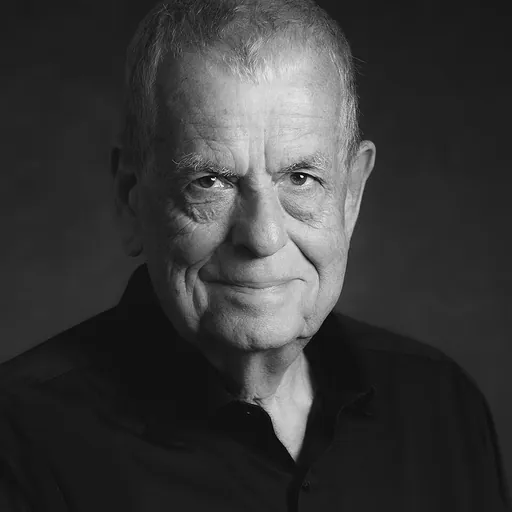
Aaron Ciechanover
Israeli physician and biochemist, Nobel Laureate
About Aaron Ciechanover
Born 1947. Aaron Ciechanover is an Israeli biochemist, chemist, physician, pedagogue and university teacher, known for Ubiquitin.
Aaron Ciechanover ( ; ; born October 1, 1947) is an Israeli biologist who won the Nobel Prize in Chemistry for characterizing the method that cells use to degrade and recycle proteins using ubiquitin.
Biography
Early life Ciechanover was born in Haifa, Israel on 1 October 1947 into a Jewish family. He is the son of Bluma (Lubashevsky), a teacher of English, and Yitzhak Ciechanover, an office worker in a law firm. His parents immigrated to Israel from Poland in the 1920s.
Education Upon graduating from high school, Ciechanover joined the Academic Reserve (Atuda) and studied medicine at the Hebrew University of Jerusalem.
He earned a master's degree in science in 1971 and graduated from Hebrew University of Jerusalem in 1974. He received his doctorate in biochemistry in 1981 from the Technion – Israel Institute of Technology in Haifa before conducting postdoctoral research in the laboratory of Harvey Lodish at the Whitehead Institute at MIT from 1981 to 1984.
Nobel Prize Ciechanover is one of Israel's first Nobel Laureates in science, earning his Nobel Prize in 2004 for his work in ubiquitination. He is honored for playing a central role in the history of Israel and in the history of the Technion – Israel Institute of Technology.
Publications and lectures
Ciehanover, A., Hod, Y. and Hershko, A. (1978). A Heat-stable Polypeptide Component of an ATP-dependent Proteolytic System from Reticulocytes. Biochem. Biophys. Res. Commun. 81, 1100–1105. (His name was wrongly transliterated from Hebrew in this publication.) Ciechanover, A., Heller, H., Elias, S., Haas, A.L. and Hershko, A. (1980). ATP-dependent Conjugation of Reticulocyte Proteins with the Polypeptide Required for Protein Degradation. Proc. Natl. Acad. Sci. USA 77, 1365–1368. Hershko, A. and Ciechanover, A. (1982). Mechanisms of intracellular protein breakdown. Annu. Rev. Biochem. 51, 335–364. Hershko, A. and Ciechanover, A. (1998). THE UBIQUITIN SYSTEM. Biochem. 1998 67:1, 425–479 Ciechanover was an invited guest lecturer at the Yerevan State Medical University in Armenia in 2010. He lectured at the Pyongyang University of Science and Technology in North Korea in May 2016.
Industry involvement Ciechanover has served on the scientific advisory boards of the following companies: Rosetta Genomics (Chairman), BioLineRx, Ltd, StemRad, Ltd, Allosterix Ltd, Proteologics, Inc, MultiGene Vascular Systems, Ltd, Protalix BioTherapeutics, BioTheryX, Inc., and Haplogen, GmbH.
Ciechanover is a member of the advisory board of Patient Innovation, a nonprofit, international, multilingual, free venue for patients and caregivers of any disease to share their innovations.
Awards In 2000, Ciechanover received the Albert Lasker Award for Basic Medical Research. In 2003, he was awarded the Israel Prize, for biology. In 2004, he was awarded the Nobel Prize in Chemistry for his discovery with Avram Hershko and Irwin Rose, of ubiquitin-mediated protein degradation. The ubiquitin-proteasome pathway has a critical role in maintaining the homeostasis of cells and is believed to be involved in the development and progression of cancer, muscular and neurological diseases, and immune and inflammatory responses. In 2005, he received the Golden Plate Award of the American Academy of Achievement. In 2006, he was awarded the Sir Hans Krebs Medal. In 2008, he was conferred Hon. DSc by NCKU Taiwan In 2009, he was conferred an Honorary Doctorate in Science by the University of Cambodia. In 2011, he was awarded the Humboldt Prize of the Alexander von Humboldt Foundation. In 2016, he became a member of the German Academy of Sciences Leopoldina.
Don’t just read it —
keep it.
Full-length biographies made to live with: read them, listen on the way to work, watch them tonight.
- E-book
- Audio
- Video
Instant download · yours to keep · every purchase keeps this site free
Important facts
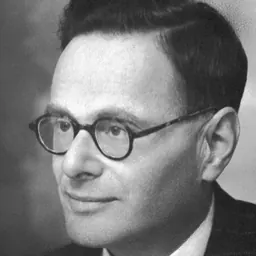
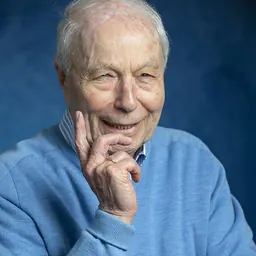
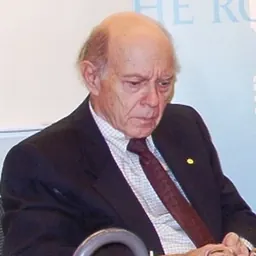
People in Aaron Ciechanover's life
Named in this biography and alive at the same time


Related people
Same field, nearest in time


Contemporaries
People whose lives overlapped Aaron Ciechanover's



Frequently asked questions
Who is Aaron Ciechanover?
Israeli physician and biochemist, Nobel Laureate
When was Aaron Ciechanover born?
Aaron Ciechanover was born on 1 October 1947 in Haifa.
What is Aaron Ciechanover's occupation?
Aaron Ciechanover is a biochemist, chemist, physician, pedagogue and university teacher.
What is Aaron Ciechanover known for?
Aaron Ciechanover is known for Ubiquitin.
What nationality is Aaron Ciechanover?
Aaron Ciechanover is Israeli.
Sources & further reading
· Wikipedia: Aaron Ciechanover
Cite this page
APA: Biography.guide. (2026). Aaron Ciechanover. https://biography.guide/aaron-ciechanover/
MLA: "Aaron Ciechanover." Biography.guide, https://biography.guide/aaron-ciechanover/.
Chicago: "Aaron Ciechanover." Biography.guide. https://biography.guide/aaron-ciechanover/.
Data last updated: 2026-09-22 · Spot an error? Report a correction.
Portrait: Wikimedia Commons · author & licence
Page generated 2026-09-27 05:02 UTC