
About Wolfram Saenger
Lived 1939 – 2026 (aged 86). Wolfram Saenger was a German biochemist and university teacher.
Wolfram Saenger (23 April 1939 – 16 February 2026) was a German biochemist and protein biochemist known for his pioneering contributions to nucleic acid crystallography and structural biology. Over a scientific career spanning more than four decades, he worked at Harvard University (Harvard Medical School, Max Planck Institute for Experimental Medicine, and the Free University of Berlin, where he led the Institute for Crystallography until his retirement in 2011.
Life and career Saenger played a major role in establishing structural biology and nucleic acid crystallography in Germany and Europe. His research focused on the structural chemistry of nucleic acids, protein–nucleic acid complexes, hydration patterns in DNA, and molecular recognition at atomic resolution. His work contributed significantly to understanding base pairing, stacking interactions, and structural principles governing biological macromolecules.
At the Free University of Berlin, he built one of the leading crystallography groups in Germany and trained numerous doctoral students and postdoctoral researchers who later became academic leaders in structural biology, chemistry, and biophysics.
He received the Gottfried Wilhelm Leibniz Prize (1987) of the Deutsche Forschungsgemeinschaft which is the highest honor awarded for achievements in research in Germany, and the Humboldt Prize (1988) and was awarded the Carl Hermann Medal in 2004 for his contributions to crystallography.
Saenger authored ten books, including the widely used reference work Principles of Nucleic Acid Structure published by Springer, and published more than 500 scientific articles. His publications span fundamental studies of DNA structure, hydrogen bonding networks, nucleic acid hydration, protein–nucleic acid recognition, and early structural analyses of large biological complexes.
He was a member of the National Academy of Sciences and was internationally recognized for shaping modern structural biology through both his research and mentorship.
Saenger died on 16 February 2026, at the age of 86.
Partial list of major scientific contributions Circular hydrogen bonds, Nature, 1979 Specific protein-nucleic acid recognition in ribonuclease T1−2'-guanylic acid complex: an X-ray study, Nature 1982 DNA conformation is determined by economics in the hydration of phosphate groups, Nature 1986 Long-range structural changes in proteinase K triggered by calcium ion removal, Nature 1989 Three-dimensional structure of the E. coli DMA-binding protein FIS, Nature 1991 Three-dimensional structure of system I of photosynthesis at 6 Å resolution, Nature 1993 Crystal structure of beta-D-cellotetraose hemihydrate with implications for the structure of cellulose II, Science 1994 Structure of the Tet repressor-tetracycline complex and regulation of antibiotic resistance, Science 1994 Characterization of non-inducible Tet repressor mutants suggests conformational changes necessary for induction, Nature Structural Biology 1995 Photosystem I at 4 Å resolution represents the first structural model of a joint photosynthetic reaction centre and core antenna system, Nature Structural Biology 1996 Structural basis of gene regulation by the tetracycline inducible Tet repressor− operator system, Nature Structural Biology 2000 Crystal structure of photosystem II from Synechococcus elongatus at 3.8 Å resolution, Nature 2001 Three-dimensional structure of cyanobacterial Photosystem I at 2.5 Å resolution, Nature 2001 Towards complete cofactor arrangement in the 3.0 Å resolution structure of photosystem II, Nature 2005 Where water is oxidized to dioxygen: structure of the photosynthetic Mn4Ca cluster, Science 2006 Cyanobacterial photosystem II at 2.9 Å resolution and the role of quinones, lipids, channels and chloride, Nature Structural & Molecular Biology 2009
Don’t just read it —
keep it.
Full-length biographies made to live with: read them, listen on the way to work, watch them tonight.
- E-book
- Audio
- Video
Instant download · yours to keep · every purchase keeps this site free
Important facts
People in Wolfram Saenger's life
Named in this biography and alive at the same time
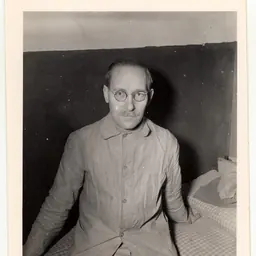

Related people
Same field, nearest in time
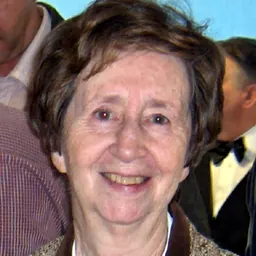
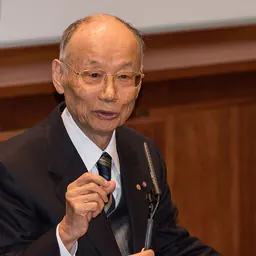




Contemporaries
People whose lives overlapped Wolfram Saenger's


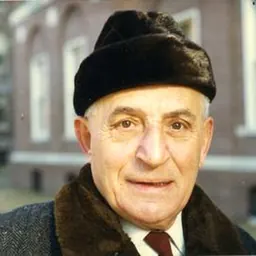


Frequently asked questions
Who was Wolfram Saenger?
German biochemist
When was Wolfram Saenger born?
Wolfram Saenger was born on 23 April 1939 in Frankfurt.
When did Wolfram Saenger die?
Wolfram Saenger died on 16 February 2026.
What was Wolfram Saenger's occupation?
Wolfram Saenger was a biochemist and university teacher.
What nationality was Wolfram Saenger?
Wolfram Saenger was German.
Sources & further reading
Cite this page
APA: Biography.guide. (2026). Wolfram Saenger. https://biography.guide/wolfram-saenger/
MLA: "Wolfram Saenger." Biography.guide, https://biography.guide/wolfram-saenger/.
Chicago: "Wolfram Saenger." Biography.guide. https://biography.guide/wolfram-saenger/.
Data last updated: 2026-09-20 · Spot an error? Report a correction.
Page generated 2026-09-27 05:06 UTC