
About Vaclovas Sidzikauskas
Lived 1893 – 1973 (aged 80). Vaclovas Sidzikauskas was a Lithuanian jurist and diplomat.
Early life and education Sidzikauskas was born in Šiaudinė village in Suwałki Governorate in 1893. His younger brother Vladas became lieutenant colonel in the Lithuanian Army. particularly after January 1923 when Lithuania organized the Klaipėda Revolt and took over the Klaipėda Region (Memel Territory) which was detached from Germany by the Treaty of Versailles. Sidzikauskas became heavily involved with negotiating Klaipėda's status and maintaining good relations with Germany which was the largest trading partner of Lithuania and its key supporter against Poland.
In early 1931, Minister of Foreign Affairs Dovas Zaunius devised a plan to replace some of the long-term Lithuanian representatives. Petras Klimas was to be transferred from Paris to Berlin, Sidzikauskas from Berlin to London, Kazys Bizauskas from London to Moscow, and Jurgis Baltrušaitis from Moscow to Paris. However, only Sidzikauskas was moved, on 1 October 1931, as Bizauskas was recalled to Kaunas. At the same time, he represented Lithuania in The Hague, Netherlands. Sidzikauskas defended Lithuania in two cases brought before the Permanent Court of International Justice. He also helped the Lithuanian government to open economic negotiations with the United Kingdom, when, as a result of the Great Depression, United Kingdom established import quotas for bacon, one of the key exports of Lithuania, in November 1932. The negotiation was mediated by Paul Hymans whose plan was to transfer Vilnius to Lithuania if it agreed to join a federation with Poland. Lithuanian public vehemently opposed such plans and Galvanauskas even survived an assassination attempt.
In March 1926, several members of the Parliament of the Klaipėda Region appealed to the League Nations complaining about the shares of taxes the region had to pay the central government. The Lithuanian delegation, led by Sidzikauskas, argued that, according to the Klaipėda Convention, the parliament had no rights to submit the complain (it could be done only by a member of the Council of the League of Nations). In September, the issue was referred to the Commission of Jurists which agreed with the Lithuanian position, but also ruled that any member of the Council of the League of Nations could accept local complaints and then forward them to the League. While Sidzikauskas thought it was a diplomatic victory, diplomats in Kaunas viewed it as a long-term problem as Germany, now the fifth permanent member of the council, could – and indeed was going to – use this ruling to accept various local complains and thus exert pressure on Lithuania. Sidzikauskas reserved the right of the Lithuanian government to decide the rights of Lithuanian citizens to petition foreign governments or international organizations, but did not protest the ruling. He could have argued that the right to petition the League of Nations was given to local inhabitants only in Article 11 of the Convention dealing with the protection of ethnic minorities.
On 15 September 1930, only a day after the Reichstag elections, members of the Parliament of the Klaipėda Region submitted another complaint against Lithuania. This time they complained about Lithuania's interference in the local elections, such as press censorship, restrictions on freedom of assembly, promoting pro-Lithuanian bias within the electoral commission. Sidzikauskas worked intensely negotiating directly with Germany in hopes that the complaint would be withdrawn. Lithuanians relented to many German demands, including appointment of all-German Directorate of the Klaipėda Region and less interference in the October 1930 local elections. German Minister of Foreign affairs Julius Curtius kept pressuring Lithuanians to recall Klaipėda governor Antanas Merkys. Sidzikauskas failed to resolve the conflict via direct negotiations and the complaint was discussed in the January 1931 session of the League of Nations. The session was inconclusive and the issue was postponed.
The Klaipėda Convention guaranteed freedom of transit in the port of Klaipėda, which a concern for Poland due to the profitable timber export via the Neman River. Sidzikauskas was the lead negotiators with the Polish delegation led by Leon Wasilewski on the issue in Copenhagen in September 1925. Prime Minister Vytautas Petrulis was in favor of using the opportunity to normalize the relations with Poland, but intense internal opposition led to the collapse of the negotiations and resignation of Petrulis. When further negotiations between Poland and Lithuania collapsed, the League of Nations referred the case to the Permanent Court of International Justice in January 1931.
Another case was submitted to the Permanent Court of International Justice in April 1932. It concerned the dismissal of Otto Böttcher, President of the Directorate of the Klaipėda Region, and dissolution of the Parliament of the Klaipėda Region by Governor Antanas Merkys in February–March 1932. The case was driven by Jurgis Šaulys, who had replaced Sidzikauskas as the Lithuanian envoy in Berlin. In October 1934, Kaunas district court found Sidzikauskas guilty and sentenced him to six months in prison that was replaced by a three-year parole. He appealed the decision and was found not guilty in May 1935. In March 1945, VLIK evacuated to Würzburg and later to Reutlingen and attempted to assert its authority over the Lithuanian Diplomatic Service, i.e. Lithuanian diplomats who continued to represent the pre-war Republic of Lithuania in those countries that did not recognize the Soviet occupation. VLIK asserted that the Diplomatic Service was its subordinate in its April 1945 memorandum to American General Dwight D. Eisenhower that was co-authored by Sidzikauskas. Such unilateral declaration set off a decade-long conflict between VLIK and the Diplomatic Service.
The parties met in July 1946 in Bern and agreed to form an Executive Council under VLIK, an embryo which they hoped could develop into a recognized government-in-exile. Its intended chairman Ernestas Galvanauskas departed to Madagascar and was replaced by Sidzikauskas, but he was unpopular with the diplomats. In March 1947, Sidzikauskas sent a letter to Adam Tarnowski, Minister of Foreign Affairs in the Polish government-in-exile, and signed it as acting Minister of Foreign Affairs. The diplomats protested as the letter was sent without their knowledge or approval. Sidzikauskas believed that a new war between the Western powers and Soviet Union was inevitable and that a Lithuanian government-in-exile was necessary to represent the Lithuanian interests. Stasys Lozoraitis, chief of the diplomats, did not believe the war was inevitable and was cautious not to jeopardize the fragile recognition of the diplomats by subordinating them to VLIK which had no official recognition abroad. Despite further attempts at negotiations, the relationship between VLIK and the Diplomatic Service remained strained. At the same time, parties inside VLIK were growing dissatisfied with the dominating position of the Lithuanian Christian Democratic Party. It forced internal reforms in August 1949 and Sidzikauskas temporarily resigned from the Executive Council. He chaired the council until early 1951.
VLIK and Sidzikauskas continued to represent Lithuanian. In August 1948, Sidzikauskas met with Mikola Abramchyk, chairman of the Rada of the Belarusian Democratic Republic. In December 1948, he also met with Isaak Mazepa and Stepan Vytvytskyi, representatives of the Ukrainian People's Republic. In August 1949, Sidzikauskas became chairman of the Lithuanian National Council (Lietuvos tautinė taryba) which joined the European Movement International in January 1950. In February 1950, Sidzikauskas and Juozas Ambrazevičius visited the Budestag of West Germany. In June 1950, Sidzikauskas, Krupavičius, and Ambrazevičius gained an audience with Pope Pius XII.
Committee for a Free Lithuania
Sidzikauskas moved to United States in July 1950 and settled in New York. The National Committee for a Free Europe, which had ties with the Central Intelligence Agency, approached Povilas Žadeikis, Lithuanian envoy in Washington D.C., about creating a Lithuanian committee. In February 1951, Žadeikis proposed seven men for the Lithuanian Consultative Panel (renamed to the Committee for a Free Lithuania in October 1952). The membership was approved in May 1951 and Sidzikauskas was its chairman until his death. The committee joined the Assembly of Captive European Nations (ACEN) when it was established in 1954. Sidzikauskas became involved with ACEN becoming its chairman in 1960–1961 and 1965–1966 and was elected as VLIK chairman in November 1964 – December 1966.
The Committee for a Free Lithuania supplied data, documents, and witnesses to the Kersten Committee, advocated for Lithuanian-language broadcasts on Radio Free Europe, and joined Latvian and Estonian committees to establish the Baltic Freedom House and publish Baltic Review in English, French, and Spanish. ACEN and the Committee for a Free Lithuania wrote numerous memorandums and protest notes to world leaders reminding of the Soviet occupation. For example, in May 1955, on the 37th anniversary of the Constituent Assembly of Lithuania, 21 former members of the assembly issued a memorandum to parliament members of United States, Canada, and Great Britain; representatives of the Baltic states issued a manifesto on the 20th anniversary of the Soviet occupation in June 1960 (in response, the Parliamentary Assembly of the Council of Europe adopted a resolution condemning the occupation in September 1960); ACEN held a meeting with the International League for the Rights of Man which issued a report condemning the Soviet regime as it violated human rights in 1962. They also organized protests on historically important dates or when, for example, Nikita Khrushchev visited United States in 1959. All of these actions kept the issue of Lithuania's independence on the political agenda despite the general fatigue and increasing acceptance of the status quo in Eastern Europe.
Don’t just read it —
keep it.
Full-length biographies made to live with: read them, listen on the way to work, watch them tonight.
- E-book
- Audio
- Video
Instant download · yours to keep · every purchase keeps this site free
Important facts
Family & relationships
People in Vaclovas Sidzikauskas's life
Named in this biography and alive at the same time




Related people
Same field, nearest in time

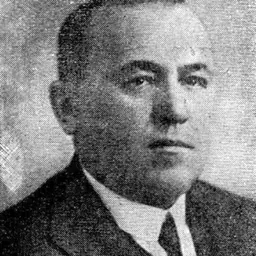
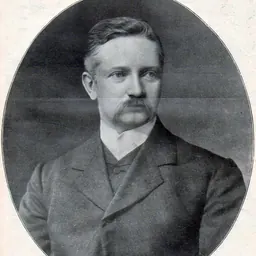
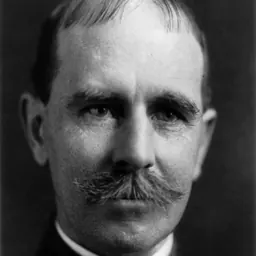
Contemporaries
People whose lives overlapped Vaclovas Sidzikauskas's
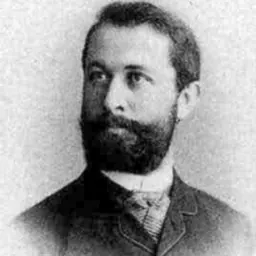


Frequently asked questions
Who was Vaclovas Sidzikauskas?
Lithuanian diplomat
When was Vaclovas Sidzikauskas born?
Vaclovas Sidzikauskas was born on 10 April 1893 in Šiaudinė.
When did Vaclovas Sidzikauskas die?
Vaclovas Sidzikauskas died on 2 December 1973 in NewYork–Presbyterian Hospital.
What was Vaclovas Sidzikauskas's occupation?
Vaclovas Sidzikauskas was a jurist and diplomat.
What nationality was Vaclovas Sidzikauskas?
Vaclovas Sidzikauskas was Lithuanian.
Sources & further reading
· Wikipedia: Vaclovas Sidzikauskas
· DBpedia: Vaclovas Sidzikauskas
Cite this page
APA: Biography.guide. (2026). Vaclovas Sidzikauskas. https://biography.guide/vaclovas-sidzikauskas/
MLA: "Vaclovas Sidzikauskas." Biography.guide, https://biography.guide/vaclovas-sidzikauskas/.
Chicago: "Vaclovas Sidzikauskas." Biography.guide. https://biography.guide/vaclovas-sidzikauskas/.
Data last updated: 2026-09-22 · Spot an error? Report a correction.
Page generated 2026-09-27 05:32 UTC