
About Juozas Ambrazevičius
Lived 1903 – 1974 (aged 70). Juozas Ambrazevičius was a Lithuanian historian, politician, pedagogue, literary scholar and writer.
Ambrazevičius in 1925Juozas Ambrazevičius or Juozas Brazaitis (9 December 1903 – 28 November 1974) was a Lithuanian literary historian and politician who served as the prime minister of the Nazi-collaborationist Lithuanian provisional government in 1941. His own ideology and views are disputed.
Academic career in Lithuania Ambrazevičius studied literature at the University of Lithuania in Kaunas and the University of Bonn. Starting in 1927, he lectured on Lithuanian literature and folklore in Kaunas. By the end of the 1930s, he was involved in numerous organizations for literature and science.
He also worked on the editorial staff of the national daily newspaper Lietuva (Lithuania) and the Catholic daily XX amžius (The 20th Century). He sometimes used the pseudonym "Servus" to write for these newspapers. During World War II, he edited an underground periodical (Towards Freedom), which he later revived in Germany and the United States.
Lithuanian Activist Front As the Soviets occupied Lithuania, Ambrazevičius became a member of the Lithuanian Activist Front (LAF) in Lithuania. The LAF was founded in Berlin by Lithuanian ambassador Kazys Škirpa. Its goal was to rebuild a Lithuania independent of the Soviets under German protection. Their early publications called for the expulsion of Jews from Lithuania and the requisition of their property and blamed them for the country's loss of independence.
On 22 June 1941, Germany invaded the Soviet Union. On 23 June, the June Uprising in Lithuania began, first in Kaunas and then throughout the country. LAF representative Leonas Prapuolenis broadcast an announcement of the newly independent Lithuanian state and its formation of a provisional government. Insurgents and TDA members organized and engaged in pogroms against the Jewish population. One of the bloodiest occurred in the capture of Kaunas, when 3,500 Jews were killed. When Einsatzgruppen A entered Kaunas, they found it already in the hands of Algirdas Klimaitis' 600-man Voldemarininkai militia. Its commander, Franz Walter Stahlecker, explained in an 15 October report that after meeting with little enthusiasm from the Security Police, he had used Klimaitis' men rather than his own for the Kaunas pogrom.
Ambrazevičius became acting Prime Minister of the Provisional Government of Lithuania when Kazys Škirpa, originally envisioned for the role, was under house arrest in Berlin. "The Provisional Government which was politically selected by the LAF and arose out of the June Uprising with acting prime minister professor Juozas Ambrazevičius at its head, did engage in political collaboration with the Third Reich" wrote of the Lithuanian Institute of History in 2017, citing antisemitic legislation passed by the Provisional Government, apparently unprompted, such as the 1 August proposed Regulations on the Status of the Jews for example.
The LAF was in Kaunas when the Germans arrived but were preoccupied with the repair and control of the radio station, which the Soviets had sabotaged.
Ambrazevičius served as prime minister from 23 June 1941 to 5 August 1941 and was also Minister of Education. He issued a decree 29 July 1941 at the request of the German authorities that expelled Jewish lecturers and Polish and Jewish students from the universities. At Vytautas Magnus University, 31 people were dismissed, mostly Jews, but also Tatars, Russians, and Poles, as well as Lithuanians accused of supporting Soviet rule.
The Germans never intended to rebuild an independent Lithuania, however, nor were the Lithuanians the only people the Germans allowed to believe that they were liberators. On 5 August 1941, the provisional government was dissolved by Germans, and on 22 September, the LAF was dissolved. However, the Germans did not abolish the local administration, and transformed the TDA battalions and Lithuanian police into the subordinated Lithuanian Auxiliary Police.
Lithuanian Front After the LAF was liquidated, most of its members moved to the underground organization Lithuanian Front (; LF), headed by Juozas Ambrazevičius and . This organization combined Catholicism Juozas Ambrazevičius became the chairman of the VLIK's political commission.
Works His major works include Theory of Literature (Literatūros teorija in 1930) two-volume A History of World Literature (Visoutinė literatūros istorija in 1931-1932) Vaižgantas (in 1936) three-volume New Readings (Naujieji skaitymai) Lithuanian Writers (Lietuvių rašytojai in 1938)
Remembrance In 2009, Ambrazevičius was posthumously awarded Lithuania's highest honour, the Grand Cross of the Order of Vytautas the Great.
Controversy arose over the ceremonial reburial with state honors of the remains of Juozas Ambrazevičius in May 2012. Ambrazevičius' remains were transported back from the United States to Lithuania, met by an honour guard at Kaunas airport and reburied at Christ's Resurrection Church in Kaunas. At the reburial ceremony in Kaunas, adviser to Lithuanian prime minister Andrius Kubilius said that a 1975 investigation by US Immigration had found no evidence of Brazaitis being involved in anti-Semitic or pro-Nazi activities. However, Ambrazevicius signed an order to set up a concentration camp and establish a ghetto in Kaunas for the city's Jews. The Kaunas mayor said: 'It seems strange to me that while there is no official proof, they are trying to identify the honourable Ambrazevičius-Brazaitis with pro-Nazi activity'.
, leader of Lithuania's Jewish community, protested the glorification of a person he said had persecuted Lithuania's Jews. A subsequent clarification issued in 2019 by the US Senate Foreign Affairs Committee said that the investigation had not been conclusive and did not amount to a "rehabilitation" of Ambrazevičius/Brazaitis. The investigation into his wartime activities ended after he died in 1974.
Don’t just read it —
keep it.
Full-length biographies made to live with: read them, listen on the way to work, watch them tonight.
- E-book
- Audio
- Video
Instant download · yours to keep · every purchase keeps this site free
Important facts
People in Juozas Ambrazevičius's life
Named in this biography and alive at the same time
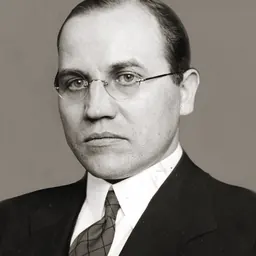
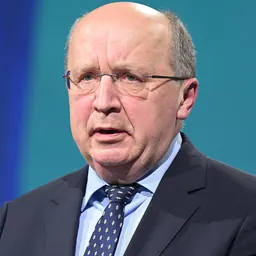



Related people
Same field, nearest in time
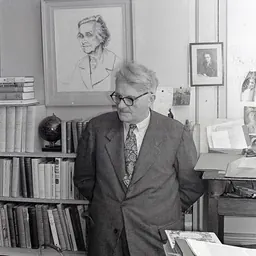
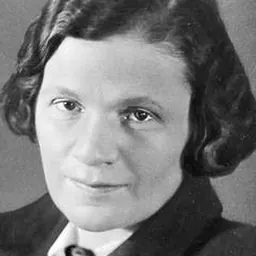
Contemporaries
People whose lives overlapped Juozas Ambrazevičius's
Frequently asked questions
Who was Juozas Ambrazevičius?
Lithuanian historian (1903-1974)
When was Juozas Ambrazevičius born?
Juozas Ambrazevičius was born on 9 December 1903 in Marijampolė.
When did Juozas Ambrazevičius die?
Juozas Ambrazevičius died on 28 October 1974 in South Orange.
What was Juozas Ambrazevičius's occupation?
Juozas Ambrazevičius was a historian, politician, pedagogue, literary scholar and writer.
What nationality was Juozas Ambrazevičius?
Juozas Ambrazevičius was Lithuanian.
Sources & further reading
· Wikipedia: Juozas Ambrazevičius
· DBpedia: Juozas Ambrazevičius
Cite this page
APA: Biography.guide. (2026). Juozas Ambrazevičius. https://biography.guide/juozas-ambrazevicius/
MLA: "Juozas Ambrazevičius." Biography.guide, https://biography.guide/juozas-ambrazevicius/.
Chicago: "Juozas Ambrazevičius." Biography.guide. https://biography.guide/juozas-ambrazevicius/.
Data last updated: 2026-09-20 · Spot an error? Report a correction.
Page generated 2026-09-27 05:20 UTC