
About John Henry Wigmore
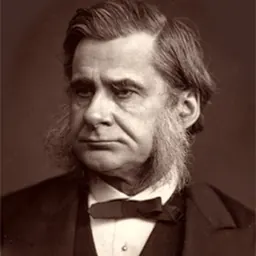
Lived 1863 – 1943 (aged 80). John Henry Wigmore was an American jurist, legal scholar and law professor, known for Northwestern Law School and Wigmore chart.
John Henry Wigmore (1863–1943) was an American lawyer and legal scholar known for his expertise in the law of evidence and for his influential scholarship. Wigmore taught law at Keio University in Tokyo (1889–1892) before becoming the first full-time dean of Northwestern Law School (1901–1929). His scholarship is best remembered for his Treatise on the Anglo-American System of Evidence in Trials at Common Law, often simply called Wigmore on Evidence, and a graphical analysis method known as a Wigmore chart. He served as the second president of the American Association of University Professors.
Personal life and education John Henry Wigmore was born in San Francisco on March 4, 1863. His parents were John and Harriet Joyner Wigmore. He was named after his father, a self-made lumberyard owner. He was the second-oldest child of thirteen.
Wigmore attended Harvard University and earned the degrees A.B. in 1883 and A.M. in 1884. Following his undergraduate work, he returned to San Francisco briefly, but then moved back to Cambridge to attend Harvard Law School where he received his LL.B. in 1887. whom he had met during law school, in September 1889. His parents did not attend the wedding. ), and fair ballot access laws.
Keio University and comparative law In 1889, Wigmore was recruited as a foreign advisor to Meiji period Empire of Japan, and was assigned to teach law at Keio University in Tokyo. Wigmore was the only full-time professor at the university at the time and was "instrumental" in designing the law curriculum. although his interest pre-dated his experiences in Japan. A key legacy of his time in Japan was a detailed study of the laws of the Tokugawa shogunate in Edo period Japan, which he edited and published as a series of papers while at Keio University. The collection of papers grew to 15 volumes under the collected title of Materials for the Study of Private Law in Old Japan before its completion in the mid-1930s.
Wigmore maintained his interest in comparative law for the rest of his life, becoming a prominent writer in the field and has been referred to as the "father of American comparative law", although some critics found his work "imaginary" and "needlessly uncritical". Despite his prominence, he is remembered more for popularizing the field of comparative law than for his scholarly contributions to it.
He was also a manager of the 1907-founded Comparative Law Bureau of the American Bar Association, whose Annual Bulletin was the first comparative law journal in the United States.
American Association of University Professors Wigmore's interests in procedure and due process extended to his life in academia. He was a prominent member and officer of the American Association of University Professors. In addition to serving as the second president from 1916 to 1917, Wigmore wrote publicly on behalf of academic freedom as comparable to "judicial immunity"; appointed standing committees; developed procedures for AAUP investigation of academic dismissal; and initiated the establishment of local AAUP chapters and of regular publication of AAUP proceedings in the Bulletin.
Northwestern University Law School Wigmore accepted a teaching post at Northwestern University and returned to the United States in 1893. He taught torts, comparative law, and evidence. He became the first full-time dean of Northwestern Law School in 1901. In 1906, Wigmore helped establish the Northwestern University Law Review, which was a faculty-run publication in the early days.
During his career at Northwestern, Wigmore "transformed a relatively modest institution into one of the leading law schools in the United States." a song written by Wigmore for the Law School. in a "freakish" taxi accident. and the annual student-run "Law School musical" is called the Wigmore Follies.
Military service In 1915, General Enoch Crowder, the Judge Advocate General of the Army, asked Wigmore to become a reserve officer. Following the United States’ declaration of war on Germany, Wigmore was activated to duty as a major serving with the Judge Advocate General's Office in Washington DC. By 1918 he was promoted colonel. His wartime duties included advising the War Department on labor law, liability for patent infringements on German pharmaceuticals, and the law of war. He also had a significant role in the drafting of the Selective Service Act of 1917 and the Espionage Act. At the conclusion of the war, he sided with Crowder over General Samuel Ansell who insisted that courts-martial were in need of reform.
Wigmore's legacy is made apparent in a 1917 U.S. Army Military Law manual which credits the chapters on 'Evidence' to "the assistance of Prof. Wigmore of Northwestern University, recently commissioned a major and judge advocate in the Officers' Reserve Corps."
Following his military service, Wigmore's preferred mode of address became "Colonel" and remained so for the rest of his life.
Writings and scholarship Wigmore's high productivity as a writer was noted by his contemporaries. or just Wigmore (see § Select works for edition titles), was the product of "10 years of monastic toil." Over the course of the next forty years, the initial four-volume treatise would swell to ten volumes containing over 85,000 judicial citations. Contemporary reviews would declare the "sun of Evidence does pretty much 'rise and set in Wigmore'". Wigmore's peers called the Treatise "one of the greatest intellectual feats in law-writing of any age or any country." U.S. Supreme Court Justice Felix Frankfurter called the Treatise "unrivaled as the greatest treatise on any single subject of the law."
Wigmore on Evidence was probably the most "heavily cited law text of its day" and the dominant source of US evidentiary law up until the codification of the Federal Rules of Evidence in 1975. Today the Federal Rules of Evidence have become the primary modern doctrinal basis for the law of evidence in US federal trials and serve as the basis on which many states have modeled their evidence rules.
Select works 1891 – Notes on Land Tenure and Local Institutions in Old Japan: Posthumous Papers of D. B. Simmons (John Henry Wigmore, editor). Tokyo: Asiatic Society of Japan. [reprinted by University Publications of America, 1979. ; OCLC 5622796 1892 – Materials for the Study of Private Law in Old Japan. Tokyo: Asiatic Society of Japan. OCLC 26107737 1894 – Responsibility for Tortious Acts: Its History. III "Responsibility for Tortious Acts: Its History. III", Harvard Law Review, Vol. 7, No. 8, March 25, 1894, pp. 441–463
1976 – Law & Justice in Tokugawa Japan: Contract, Legal Precedents. New York: Columbia University Press. 1985 – Law and Justice in Tokugawa Japan: Contract, Commercial Customary Law. Tokyo: University of Tokyo Press. 1986 – Law and Justice in Tokugawa Japan: Materials for the History of Japanese Law and Justice Under the Tokugawa Shogunate 1603–1867. Tokyo: University of Tokyo Press.
Treatise
Books
Don’t just read it —
keep it.
Full-length biographies made to live with: read them, listen on the way to work, watch them tonight.
- E-book
- Audio
- Video
Instant download · yours to keep · every purchase keeps this site free
Important facts
People in John Henry Wigmore's life
Named in this biography and alive at the same time



Related people
Same field, nearest in time


Contemporaries
People whose lives overlapped John Henry Wigmore's



Frequently asked questions
Who was John Henry Wigmore?
American legal scholar (1863–1943)
When was John Henry Wigmore born?
John Henry Wigmore was born on 4 March 1863 in San Francisco.
When did John Henry Wigmore die?
John Henry Wigmore died on 20 April 1943 in Chicago.
What was John Henry Wigmore's occupation?
John Henry Wigmore was a jurist, legal scholar and law professor.
What was John Henry Wigmore known for?
John Henry Wigmore was known for Northwestern Law School and Wigmore chart.
What nationality was John Henry Wigmore?
John Henry Wigmore was American.
Sources & further reading
· Wikipedia: John Henry Wigmore
Cite this page
APA: Biography.guide. (2026). John Henry Wigmore. https://biography.guide/john-henry-wigmore/
MLA: "John Henry Wigmore." Biography.guide, https://biography.guide/john-henry-wigmore/.
Chicago: "John Henry Wigmore." Biography.guide. https://biography.guide/john-henry-wigmore/.
Data last updated: 2026-09-27 · Spot an error? Report a correction.
Page generated 2026-09-27 05:17 UTC