
About Shoshichi Kobayashi
Lived 1932 – 2012 (aged 80). Shoshichi Kobayashi was a Japanese mathematician and university teacher, known for Kobayashi metric and Kobayashi–Hitchin correspondence.
was a Japanese mathematician. He was the eldest brother of electrical engineer and computer scientist Hisashi Kobayashi. His research interests were in Riemannian and complex manifolds, transformation groups of geometric structures, and Lie algebras.
Biography Kobayashi graduated from the University of Tokyo in 1953. In 1956, he earned a Ph.D. from the University of Washington under Carl B. Allendoerfer. His dissertation was Theory of Connections. He then spent two years at the Institute for Advanced Study and two years at MIT. He joined the faculty of the University of California, Berkeley in 1962 as an assistant professor, was awarded tenure the following year, and was promoted to full professor in 1966.
Kobayashi served as chairman of the Berkeley Mathematics Department for a three-year term from 1978 to 1981 and for the 1992 Fall semester. He chose early retirement under the VERIP plan in 1994.
The two-volume book Foundations of Differential Geometry, which he coauthored with Katsumi Nomizu, has been known for its wide influence. In 1970 he was an invited speaker for the section on geometry and topology at the International Congress of Mathematicians in Nice.
Technical contributions Kobayashi's earliest work dealt with the geometry of connections on principal bundles. Many of these results, along with others, were later absorbed into Foundations of Differential Geometry.
As a consequence of the Gauss–Codazzi equations and the commutation formulas for covariant derivatives, James Simons discovered a formula for the Laplacian of the second fundamental form of a submanifold of a Riemannian manifold. As a consequence, one can find a formula for the Laplacian of the norm-squared of the second fundamental form. This "Simons formula" simplifies significantly when the mean curvature of the submanifold is zero and when the Riemannian manifold has constant curvature. In this setting, Shiing-Shen Chern, Manfredo do Carmo, and Kobayashi studied the algebraic structure of the zeroth-order terms, showing that they are nonnegative provided that the norm of the second fundamental form is sufficiently small.
As a consequence, the case in which the norm of the second fundamental form is constantly equal to the threshold value can be completely analyzed, the key being that all of the matrix inequalities used in controlling the zeroth-order terms become equalities. As such, in this setting, the second fundamental form is uniquely determined. As submanifolds of space forms are locally characterized by their first and second fundamental forms, this results in a complete characterization of minimal submanifolds of the round sphere whose second fundamental form is constant and equal to the threshold value. Chern, do Carmo, and Kobayashi's result was later improved by An-Min Li and Jimin Li, making use of the same methods.
On a Kähler manifold, it is natural to consider the restriction of the sectional curvature to the two-dimensional planes which are holomorphic, i.e. which are invariant under the almost-complex structure. This is called the holomorphic sectional curvature. Samuel Goldberg and Kobayashi introduced an extension of this quantity, called the holomorphic bisectional curvature; its input is a pair of holomorphic two-dimensional planes. Goldberg and Kobayashi established the differential-geometric foundations of this object, carrying out many analogies with the sectional curvature. In particular they established, by the Bochner technique, that the second Betti number of a connected closed manifold must equal one if there is a Kähler metric whose holomorphic bisectional curvature is positive. Later, Kobayashi and Takushiro Ochiai proved some rigidity theorems for Kähler manifolds. In particular, if is a closed Kähler manifold and there exists in such that
then must be biholomorphic to complex projective space. This, in combination with the Goldberg–Kobayashi result, forms the final part of Yum-Tong Siu and Shing-Tung Yau's proof of the Frankel conjecture. Kobayashi and Ochiai also characterized the situation of as being biholomorphic to a quadratic hypersurface of complex projective space.
Kobayashi is also notable for having proved that a hermitian–Einstein metric on a holomorphic vector bundle over a compact Kähler manifold has deep algebro-geometric implications, as it implies semistability and decomposability as a direct sum of stable bundles. This establishes one direction of the Kobayashi–Hitchin correspondence. Karen Uhlenbeck and Yau proved the converse result, following well-known partial results by Simon Donaldson.
In the 1960s, Kobayashi introduced what is now known as the Kobayashi metric. This associates a pseudo-metric to any complex manifold, in a holomorphically invariant way. This sets up the important notion of Kobayashi hyperbolicity, which is defined by the condition that the Kobayashi metric is a genuine metric (and not only a pseudo-metric). With these notions, Kobayashi was able to establish a higher-dimensional version of the Alhfors–Schwarz lemma from complex analysis.
Major publications Articles
Books
Kobayashi was also the author of several textbooks which (as of 2022) have only been published in Japanese.
Don’t just read it —
keep it.
Full-length biographies made to live with: read them, listen on the way to work, watch them tonight.
- E-book
- Audio
- Video
Instant download · yours to keep · every purchase keeps this site free
Important facts
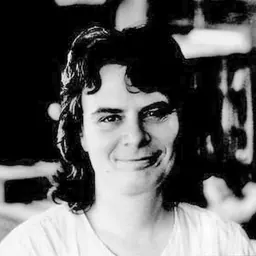
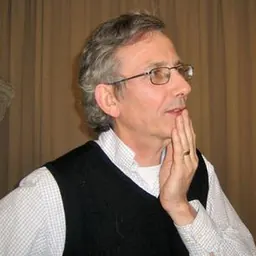
People in Shoshichi Kobayashi's life
Named in this biography and alive at the same time





Related people
Same field, nearest in time


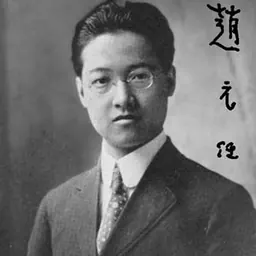
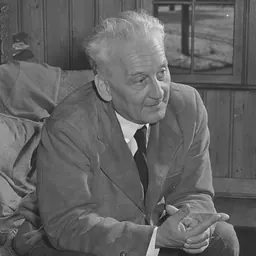
Contemporaries
People whose lives overlapped Shoshichi Kobayashi's


Frequently asked questions
Who was Shoshichi Kobayashi?
Japanese mathematician (1932–2012)
When was Shoshichi Kobayashi born?
Shoshichi Kobayashi was born on 4 January 1932 in Kofu.
When did Shoshichi Kobayashi die?
Shoshichi Kobayashi died on 29 August 2012 in Berkeley.
What was Shoshichi Kobayashi's occupation?
Shoshichi Kobayashi was a mathematician and university teacher.
What was Shoshichi Kobayashi known for?
Shoshichi Kobayashi was known for Kobayashi metric and Kobayashi–Hitchin correspondence.
What nationality was Shoshichi Kobayashi?
Shoshichi Kobayashi was Japanese.
Sources & further reading
· Wikipedia: Shoshichi Kobayashi
· DBpedia: Shoshichi Kobayashi
Cite this page
APA: Biography.guide. (2026). Shoshichi Kobayashi. https://biography.guide/shoshichi-kobayashi/
MLA: "Shoshichi Kobayashi." Biography.guide, https://biography.guide/shoshichi-kobayashi/.
Chicago: "Shoshichi Kobayashi." Biography.guide. https://biography.guide/shoshichi-kobayashi/.
Data last updated: 2026-09-25 · Spot an error? Report a correction.
Page generated 2026-09-27 05:13 UTC