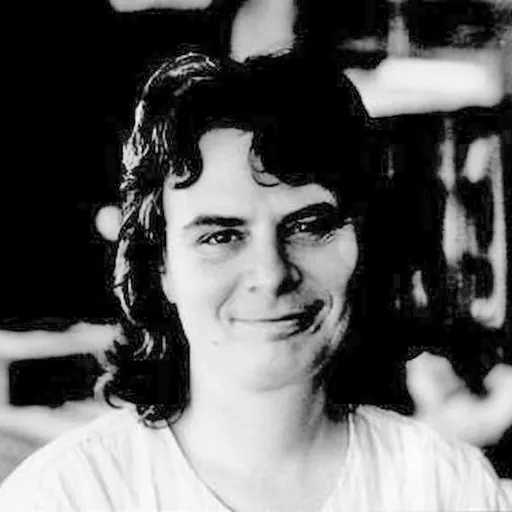
About Karen Uhlenbeck
Born 1942. Karen Uhlenbeck is an American university teacher and mathematician, known for Calculus of variations, Geometric analysis and Minimal surface.
Karen Keskulla Uhlenbeck ForMemRS (born August 24, 1942) is an American mathematician and one of the founders of modern geometric analysis. She is a professor emerita of mathematics at the University of Texas at Austin, where she held the Sid W. Richardson Foundation Regents Chair. Since 2019 she has been a distinguished visiting professor in the School of Mathematics at the Institute for Advanced Study, on an appointment running to 2027, and she is a visiting senior research scholar at Princeton University.
Uhlenbeck was elected to the American Philosophical Society in 2007. In 2023 she was elected a Foreign Member of the Royal Society, listed with her affiliation as distinguished visiting professor at the Institute for Advanced Study. . She won the 2019 Abel Prize for "her pioneering achievements in geometric partial differential equations, gauge theory, and integrable systems, and for the fundamental impact of her work on analysis, geometry and mathematical physics." She is the first, and so far only, woman to win the prize since its inception in 2003. She donated half of the prize money to organizations which promote more engagement of women and other minorities in research mathematics.
Life and career Uhlenbeck was born in Cleveland, Ohio, to engineer Arnold Keskulla and schoolteacher and artist Carolyn Windeler Keskulla. While she was a child, the family moved to New Jersey. Uhlenbeck's maiden name, Keskulla, comes from Keskküla and from her grandfather who was Estonian, while her current surname is Dutch. Uhlenbeck received her B.A. (1964) from the University of Michigan.
After temporary jobs at the Massachusetts Institute of Technology and University of California, Berkeley, and having difficulty finding a permanent position with her husband because of the "anti-nepotism" rules then in place that prevented hiring both a husband and wife even in distinct departments of a university, she took a faculty position at the University of Illinois at Urbana–Champaign in 1971. However, she disliked Urbana and moved to the University of Illinois at Chicago in 1976 as well as separating from her first husband Olke Uhlenbeck in the same year. She moved again to the University of Chicago in 1983. a visiting associate at the Institute for Advanced Study and a visiting senior research scholar at Princeton University.
Research Uhlenbeck is one of the founders of the field of geometric analysis, a discipline that uses differential geometry to study the solutions to differential equations and vice versa. She has also contributed to topological quantum field theory and integrable systems.
Together with Jonathan Sacks in the early 1980s, Uhlenbeck established regularity estimates that have found applications to studies of the singularities of harmonic maps and the existence of smooth local solutions to the Yang–Mills–Higgs equations in gauge theory. In particular, Simon Donaldson describes their joint 1981 paper The existence of minimal immersions of 2-spheres as a "landmark paper... which showed that, with a deeper analysis, variational arguments can still be used to give general existence results" for harmonic map equations.
In particular, her work is described by Simon Donaldson in a survey of Yang–Mills geometry as foundational in the analytic aspects of the calculus of variations associated with the Yang–Mills functional. A wider survey of her contributions to the field of calculus of variations was published by Simon Donaldson in the March 2019 issue of Notices of the American Mathematical Society; Donaldson describes the work of Uhlenbeck, along with Shing-Tung Yau, Richard Schoen and several others, as developing a...
Outreach In 1991, Uhlenbeck co-founded, with Herbert Clemens and Dan Freed, the Park City Mathematics Institute (PCMI) with the mission to "provide an immersive educational and professional development opportunity for several parallel communities from across the larger umbrella of the mathematics profession."
Awards and honors In March 2019, Uhlenbeck became the first woman to receive the Abel Prize, with the award committee citing the decision for "her pioneering achievements in geometric partial differential equations, gauge theory and integrable systems, and for the fundamental impact of her work on analysis, geometry and mathematical physics." She donated half of the cash prize to two organizations, the EDGE Foundation (which subsequently set up the Karen EDGE Fellowship Program), and the Institute for Advanced Study's Women and Mathematics (WAM) Program.
Uhlenbeck also won the National Medal of Science in 2000, and the Leroy P. Steele Prize for Seminal Contribution to Research of the American Mathematical Society in 2007, "for her foundational contributions in analytic aspects of mathematical gauge theory", an honorary member of the London Mathematical Society in 2008, In 2020 the American Mathematical Society awarded her the Leroy P. Steele Prize for Lifetime Achievement, "for her long-lasting influence in geometric topology and analysis and for her mentorship of young people and women in mathematics".
The Association for Women in Mathematics included her in the 2020 class of AWM Fellows for "her groundbreaking and profound contributions to modern geometric analysis; for establishing a career as one of the greatest mathematicians of our time, despite the considerable challenges facing women when she entered the field; for using her experiences navigating these challenges to create and sustain programs to address them for future generations of women. For a lifetime of breaking barriers; and for being the first woman to win the Abel Prize".
She was the Noether Lecturer of the Association for Women in Mathematics in 1988. University of Michigan (2004),
Selected publications Books
Research articles
Don’t just read it —
keep it.
Full-length biographies made to live with: read them, listen on the way to work, watch them tonight.
- E-book
- Audio
- Video
Instant download · yours to keep · every purchase keeps this site free
Important facts
Family & relationships
People in Karen Uhlenbeck's life
Named in this biography and alive at the same time




Related people
Same field, nearest in time



Contemporaries
People whose lives overlapped Karen Uhlenbeck's


Frequently asked questions
Who is Karen Uhlenbeck?
American mathematician (born 1942)
When was Karen Uhlenbeck born?
Karen Uhlenbeck was born on 24 August 1942 in Cleveland.
What is Karen Uhlenbeck's occupation?
Karen Uhlenbeck is a university teacher and mathematician.
What is Karen Uhlenbeck known for?
Karen Uhlenbeck is known for Calculus of variations, Geometric analysis, Minimal surface and Yang–Mills theory.
What nationality is Karen Uhlenbeck?
Karen Uhlenbeck is American.
Sources & further reading
Cite this page
APA: Biography.guide. (2026). Karen Uhlenbeck. https://biography.guide/karen-uhlenbeck/
MLA: "Karen Uhlenbeck." Biography.guide, https://biography.guide/karen-uhlenbeck/.
Chicago: "Karen Uhlenbeck." Biography.guide. https://biography.guide/karen-uhlenbeck/.
Data last updated: 2026-09-21 · Spot an error? Report a correction.
Portrait: Wikimedia Commons · author & licence
Page generated 2026-09-27 04:59 UTC