
Michel Mayor
Swiss astrophysicist & Nobel laureate of Physics
About Michel Mayor
Born 1942. Michel Mayor is a Swiss university teacher, astrophysicist, astronomer, physicist and researcher, known for 51 Pegasi.
Michel Gustave Édouard Mayor (; born 12 January 1942) is a Swiss astrophysicist and professor emeritus at the University of Geneva's Department of Astronomy. and the winner of the 2010 Viktor Ambartsumian International Prize and the 2015 Kyoto Prize.
Together with Didier Queloz in 1995, he discovered , the first extrasolar planet orbiting a sun-like star, 51 Pegasi. For this achievement, they were awarded the 2019 Nobel Prize in Physics "for the discovery of an exoplanet orbiting a solar-type star" resulting in "contributions to our understanding of the evolution of the universe and Earth's place in the cosmos". Related to the discovery, Mayor noted that humans will never migrate to such exoplanets since they are "much, much too far away ... [and would take] hundreds of millions of days using the means we have available today".
From 1971 to 1984, Mayor worked as a research associate at the Observatory of Geneva, which is home to the astronomy department of the University of Geneva. He became an associate professor at the university in 1984.
Research
Mayor's research interests include extrasolar planets (also known as exoplanets), instrumentation, statistical properties of double stars, globular cluster dynamics, galactic structure and kinematics. Mayor's doctoral thesis at the University of Geneva was devoted to the spiral structure of galaxies.
This research led to various fields of interest, including the study of statistical characteristics of solar-type binary stars. With fellow researcher Antoine Duquennoy, they examined the radial velocities of several systems believed to be binary stars in 1991. Their results found that a subset of these may in fact be single star systems with substellar secondary objects. Desiring more accurate radial velocity measurements, Mayor, along with Baranne at Marseille, and with graduate student Didier Queloz, developed ELODIE, a new spectrograph based on the work of CORAVEL, which was estimated to have an accuracy of 15 m/s for bright stars, improving upon the 1 km/s from CORAVEL. ELODIE was developed with the specific intent to determine if the substellar secondary objects were brown dwarf stars or potentially giant planets.
By 1994, ELODIE was operational at Geneva and Mayor and Queloz began their survey of Sun-like systems with suspected substellar secondary objects. In July 1995, the pair's survey of 51 Pegasi affirmed that there was an exoplanet orbiting it, identified as , which was later classified as a hot-Jupiter–type planet. This was the first exoplanet to be found orbiting a main-sequence star, as opposed to planets that orbited the remains of a star. Mayor's and Queloz's discovery of an exoplanet launched great interest is searching for other exoplanets since. On 21 March 2022, the 5000th exoplanet beyond the Solar System was confirmed.
Mayor's work focused more on improving instrumentation for radial velocity measurements to improve detecting exoplanets and measuring their properties. Mayor led a team to further improve ELODIE to increase velocity measurement accuracy to 1 m/s via the High Accuracy Radial Velocity Planet Searcher (HARPS) installed on the ESO 3.6 m Telescope at La Silla Observatory in Chile by 2003. Mayor led the team that used HARPS to seek out other exoplanets. In 2007, Mayor was one of 11 European scientists who discovered Gliese 581c, the first extrasolar planet in a star's habitable zone, from the ESO telescope. In 2009, Mayor and his team discovered the lightest exoplanet ever detected around a main sequence star: Gliese 581e. Nonetheless, Mayor noted that humans will never migrate to such exoplanets since they are "much, much too far away ... [and would take] hundreds of millions of days using the means we have available today". However, due to discoveries by Mayor, searching for extraterrestrial communications from exoplanets may now be a more practical consideration than thought earlier.
Awards and distinctions In 1998, Mayor was awarded the Swiss Marcel Benoist Prize
In 2000, he was awarded the Balzan Prize. Mayor was made a knight of the French Legion d'Honneur in 2004.
Mayor has received honorary doctorate degrees from eight universities: Katholieke Universiteit Leuven (Belgium), 2001; École Polytechnique Fédérale de Lausanne (EPFL) (Lausanne, Switzerland) (2002); Federal University of Rio Grande do Norte (Brazil), 2006; Uppsala University (Sweden), 2007; Paris Observatory (France), 2008; Université Libre de Bruxelles (Belgium), 2009; University of Provence (Marseille, France), 2011, and Université Joseph Fourier (Grenoble, France), 2014. Asteroid 125076 Michelmayor, discovered by Swiss amateur astronomer Michel Ory at the Jura Observatory in 2001, was named in his honor. and the Kyoto Prize in Basic Sciences. In 2017, he received the Wolf Prize in Physics. He and Didier Queloz (also from Switzerland) were awarded one half of the 2019 Nobel Prize in Physics for the discovery of the exoplanet 51 Pegasi b.
Participation in professional associations Publisher and organizer of nine Saas-Fee Advanced Courses of the Swiss Society of Astrophysics and Astronomy
Don’t just read it —
keep it.
Full-length biographies made to live with: read them, listen on the way to work, watch them tonight.
- E-book
- Audio
- Video
Instant download · yours to keep · every purchase keeps this site free
Important facts
People in Michel Mayor's life
Named in this biography and alive at the same time
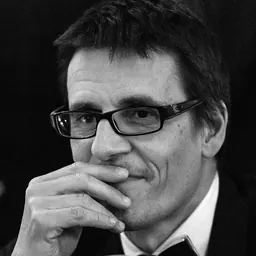
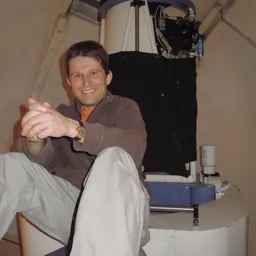
Related people
Same field, nearest in time
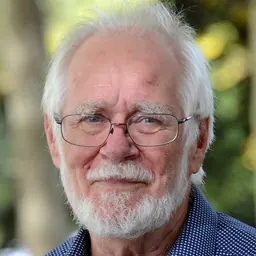
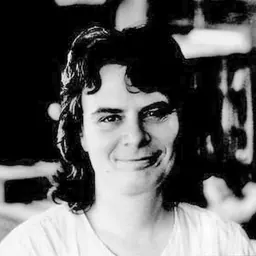



Contemporaries
People whose lives overlapped Michel Mayor's

Frequently asked questions
Who is Michel Mayor?
Swiss astrophysicist & Nobel laureate of Physics
When was Michel Mayor born?
Michel Mayor was born on 12 January 1942 in Lausanne.
What is Michel Mayor's occupation?
Michel Mayor is a university teacher, astrophysicist, astronomer, physicist and researcher.
What is Michel Mayor known for?
Michel Mayor is known for 51 Pegasi.
What nationality is Michel Mayor?
Michel Mayor is Swiss.
Sources & further reading
Cite this page
APA: Biography.guide. (2026). Michel Mayor. https://biography.guide/michel-mayor/
MLA: "Michel Mayor." Biography.guide, https://biography.guide/michel-mayor/.
Chicago: "Michel Mayor." Biography.guide. https://biography.guide/michel-mayor/.
Data last updated: 2026-09-20 · Spot an error? Report a correction.
Page generated 2026-09-27 05:18 UTC