
About Simon Donaldson
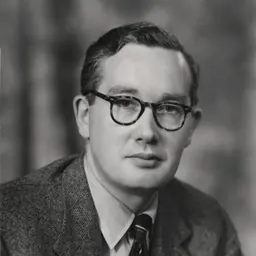
Born 1957. Simon Donaldson is a British mathematician, university teacher and researcher, known for Donaldson theorem, Donaldson theory and Donaldson–Thomas theory.
Sir Simon Kirwan Donaldson (born 20 August 1957) is an English mathematician known for his work on the topology of smooth (differentiable) four-dimensional manifolds, Donaldson–Thomas theory, and his contributions to Kähler geometry. He is currently a Professor in Pure Mathematics at Imperial College London. After being a member of the Simons Center for Geometry and Physics (SCGP) for a decade, he holds Emeritus Professor status at the SCGP and Stony Brook University, in New York state.
Biography Donaldson's father was an electrical engineer in the physiology department at the University of Cambridge, and his mother earned a science degree there. Donaldson gained a BA degree in mathematics from Pembroke College, Cambridge, in 1979, and in 1980 began postgraduate work at Worcester College, Oxford, at first under Nigel Hitchin and later under Michael Atiyah's supervision. Still a postgraduate student, Donaldson proved in 1982 a result that would establish his fame and later become known as Donaldson's theorem. He published the result in a paper "Self-dual connections and the topology of smooth 4-manifolds" which appeared in 1983. In the words of Atiyah, the paper "stunned the mathematical world."
Whereas Michael Freedman classified topological four-manifolds with Freedman's classification, Donaldson's work focused on four-manifolds admitting a differentiable structure, using instantons, a particular solution to the equations of Yang–Mills gauge theory which has its origin in quantum field theory. One of Donaldson's first results gave severe restrictions on the intersection form of a smooth four-manifold. As a consequence, a large class of the topological four-manifolds do not admit any smooth structure at all. Donaldson also derived polynomial invariants from gauge theory, which became known as Donaldson invariants. These were new topological invariants sensitive to the underlying smooth structure of the four-manifold. They made it possible to deduce the existence of "exotic" smooth structures—certain topological four-manifolds could carry an infinite family of different smooth structures.
After gaining his DPhil degree from Oxford University in 1983, Donaldson was appointed a Junior Research Fellow at All Souls College, Oxford. He spent the academic year 1983–84 at the Institute for Advanced Study in Princeton, and returned to Oxford as Wallis Professor of Mathematics in 1985. After spending one year visiting Stanford University, he moved to Imperial College London in 1998 as Professor of Pure Mathematics.
In 2014, he joined the Simons Center for Geometry and Physics at Stony Brook University in New York, United States.
Awards Donaldson was an invited speaker of the International Congress of Mathematicians (ICM) in 1983, and a plenary speaker at the ICM in 1986, 1998, and 2018.
In 1985, Donaldson received the Junior Whitehead Prize from the London Mathematical Society. In 1994, he was awarded the Crafoord Prize in Mathematics. In February 2006, Donaldson was awarded the King Faisal International Prize for science for his work in pure mathematical theories linked to physics, which have helped in forming an understanding of the laws of matter at a subnuclear level. In April 2008, he was awarded the Nemmers Prize in Mathematics, a mathematics prize awarded by Northwestern University.
In 2009, he was awarded the Shaw Prize in Mathematics (jointly with Clifford Taubes) for their contributions to geometry in 3 and 4 dimensions.
In 2014, he was awarded the Breakthrough Prize in Mathematics "for the new revolutionary invariants of 4-dimensional manifolds and for the study of the relation between stability in algebraic geometry and in global differential geometry, both for bundles and for Fano varieties."
In January 2019, he was awarded the Oswald Veblen Prize in Geometry (jointly with Xiuxiong Chen and Song Sun).
In 1986, he was elected a Fellow of the Royal Society (FRS) and received a Fields Medal at the International Congress of Mathematicians (ICM) in Berkeley. He became a Member of the Academia Europaea (MAE) in 1993. In 2010, Donaldson was elected a foreign member of the Royal Swedish Academy of Sciences.
He was knighted in the 2012 New Year Honours for services to mathematics. In 2012, he became a fellow of the American Mathematical Society.
In March 2014, he was awarded the degree "Docteur Honoris Causa" by Université Joseph Fourier, Grenoble. In January 2017, he was awarded the degree "Doctor Honoris Causa" by the Universidad Complutense de Madrid, Spain.
Research
Donaldson's work is on the application of mathematical analysis (especially the analysis of elliptic partial differential equations) to problems in geometry. The problems mainly concern gauge theory, 4-manifolds, complex differential geometry and symplectic geometry. The following theorems have been mentioned:
The diagonalizability theorem : If the intersection form of a smooth, closed, simply connected 4-manifold is positive- or negative-definite then it is diagonalizable over the integers. This result is sometimes called Donaldson's theorem. A smooth h-cobordism between simply connected 4-manifolds need not be trivial . This contrasts with the situation in higher dimensions. A stable holomorphic vector bundle over a non-singular projective algebraic variety admits a Hermitian–Einstein metric , proven using an inductive proof and the theory of determinant bundles and Quillen metrics. A non-singular, projective algebraic surface can be diffeomorphic to the connected sum of two oriented 4-manifolds only if one of them has negative-definite intersection form . This was an early application of the Donaldson invariant (or instanton invariants). Any compact symplectic manifold admits a symplectic Lefschetz pencil .
Donaldson's recent work centers on a problem in complex differential geometry concerning a conjectural relationship between algebro-geometric "stability" conditions for smooth projective varieties and the existence of "extremal" Kähler metrics, typically those with constant scalar curvature (see for example cscK metric). Donaldson obtained results in the toric case of the problem (see for example ). He then solved the Kähler–Einstein case of the problem in 2012, in collaboration with Chen and Sun. This latest spectacular achievement involved a number of difficult and technical papers. The first of these was the paper of on Gromov–Hausdorff limits. The summary of the existence proof for Kähler–Einstein metrics appears in . Full details of the proofs appear in .
Conjecture on Fano manifolds and Veblen Prize
In 2019, Donaldson was awarded the Oswald Veblen Prize in Geometry, together with Xiuxiong Chen and Song Sun, for proving a long-standing conjecture on Fano manifolds, which states "that a Fano manifold admits a Kähler–Einstein metric if and only if it is K-stable". It had been one of the most actively investigated topics in geometry since its proposal in the 1980s by Shing-Tung Yau after he proved the Calabi conjecture. It was later generalized by Gang Tian and Donaldson. The solution by Chen, Donaldson and Sun was published in the Journal of the American Mathematical Society in 2015 as a three-article series, "Kähler–Einstein metrics on Fano manifolds, I, II and III".
Selected publications
Books
Don’t just read it —
keep it.
Full-length biographies made to live with: read them, listen on the way to work, watch them tonight.
- E-book
- Audio
- Video
Instant download · yours to keep · every purchase keeps this site free
Important facts
more
TopologyPeople in Simon Donaldson's life
Named in this biography and alive at the same time

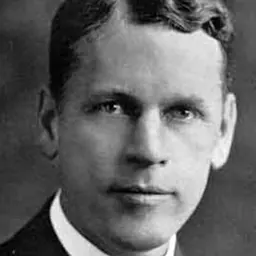




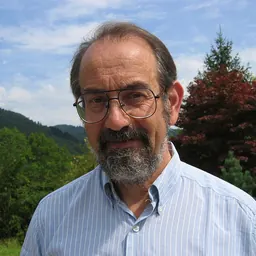
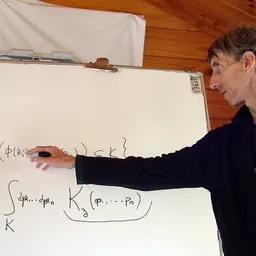
Related people
Same field, nearest in time


Contemporaries
People whose lives overlapped Simon Donaldson's
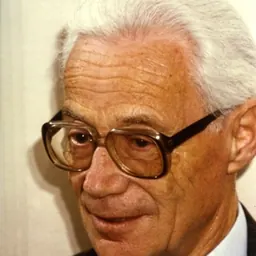



Frequently asked questions
Who is Simon Donaldson?
English mathematician
When was Simon Donaldson born?
Simon Donaldson was born on 20 August 1957 in Cambridge.
What is Simon Donaldson's occupation?
Simon Donaldson is a mathematician, university teacher and researcher.
What is Simon Donaldson known for?
Simon Donaldson is known for Donaldson theorem, Donaldson theory, Donaldson–Thomas theory, K-stability, K-stability of Fano varieties and Kobayashi–Hitchin correspondence.
What nationality is Simon Donaldson?
Simon Donaldson is British.
Sources & further reading
Cite this page
APA: Biography.guide. (2026). Simon Donaldson. https://biography.guide/simon-donaldson/
MLA: "Simon Donaldson." Biography.guide, https://biography.guide/simon-donaldson/.
Chicago: "Simon Donaldson." Biography.guide. https://biography.guide/simon-donaldson/.
Data last updated: 2026-09-26 · Spot an error? Report a correction.
Page generated 2026-09-27 05:14 UTC