
About Ruth Sherman Tolman
Lived 1893 – 1957 (aged 63). Ruth Sherman Tolman was an American psychologist and writer.
Ruth Tolman ( Sherman; October 9, 1893 – September 18, 1957) was an American psychologist and professor. She is known for her work on post-traumatic stress disorder and for her close relationship with J. Robert Oppenheimer, head of the Manhattan Project.
Early life Tolman was born in Washington, Indiana, on October 9, 1893, to Lillie Belle ( Graham) and Warren C. Sherman. She had an older sister named Lillie Margaret. Amongst the family's distant relatives were General William Tecumseh Sherman, Union General during the American Civil War, and Roger Sherman, one of the Founding Fathers of the United States.
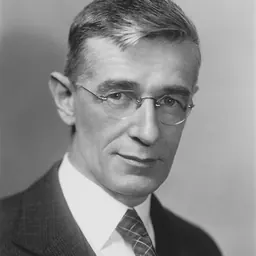
Ruth received her undergraduate degree in psychology from the University of California, Los Angeles, in 1917. During her initial graduate studies at UCLA, she surveyed psychological variations in different groups of criminals. Richard Tolman, who moved to the California Institute of Technology in 1922, is best known for serving as vice chairman of the National Defense Research Committee (under chairman Vannevar Bush) and as a scientific advisor to Major General Leslie Groves of the Manhattan Project during World War II.
Career
During her career, Tolman was a prominent figure in the subfield of clinical psychology. Following her marriage, she stayed on as a research associate and instructor at UCLA (1927–1929) before teaching at Occidental College (instructor of psychology; 1930–1932) and Scripps College (lecturer in psychology; 1934), also receiving her M.A. in psychology from Occidental in 1930. Shortly before completing her Ph.D. in clinical psychology at the University of California, Berkeley in 1937, she became the senior psychological examiner for the Los Angeles County Probation Department (1936–1940). While writing six books and helping to create an early treatment for post-traumatic stress disorder, she was also the first woman ever to be elected to the Society for the Psychological Study of Social Issues (SPSSI).
Tolman was proactive in helping other women achieve the same goals as she had. Throughout World War II, she served on a committee called the Service of Women Psychologists in the Emergency Committee on Psychology (ECP). The organization's purpose was to help prepare women psychologists to fill the role of male psychologists who were away, serving in the military, and to help address the discrimination felt by female psychologists.
As the war commenced, Tolman was recruited by government agencies that were then hiring psychologists. After the Tolmans temporarily relocated to Washington, D.C., she spent a year (1941–1942) as an associate social science analyst with the Program Survey Section of the Department of Agriculture. This led to a two-year stint (1942–1944) as a public opinion analyst with the Office of War Information. Her last assignment (1944–1945) was that of clinical psychologist with the Office of Strategic Services (OSS), which was the forerunner of the Central Intelligence Agency. The role required her to devise tests to assess the psychological stability of field agents.
Around this time, Ruth began an emotional affair with J. Robert Oppenheimer, the wartime head of the Los Alamos Laboratory and main figure credited with being the "father of the atomic bomb" for his role in the Manhattan Project. The two had met in 1928; Tolman was ten years older than Oppenheimer but the two shared a lot in common and became good friends. It was on-and-off after Oppenheimer moved back east to become director of the Institute of Advanced Studies. However, Patricia Klaus and Shirley Streshinsky, authors of An Atomic Love Story, concluded: "it was not believed to have been sexual, only a close emotional bond and connection."
Kai Bird, author of American Prometheus, wrote that Tolman loved her husband and was devastated when he died of a heart attack in 1948. After Richard's death, she found solace with Oppenheimer. The two occasionally met up and would often exchange letters. Many of them were destroyed after Ruth's death but those which survive show a close and affectionate relationship between the two.
Ruth Sherman Tolman died in Pasadena, California, at the age of 64, on September 18, 1957, and was buried in Woods Hole, Massachusetts.
Don’t just read it —
keep it.
Full-length biographies made to live with: read them, listen on the way to work, watch them tonight.
- E-book
- Audio
- Video
Instant download · yours to keep · every purchase keeps this site free
Important facts
People in Ruth Sherman Tolman's life
Named in this biography and alive at the same time



Related people
Same field, nearest in time



Contemporaries
People whose lives overlapped Ruth Sherman Tolman's


Frequently asked questions
Who was Ruth Sherman Tolman?
American psychologist
When was Ruth Sherman Tolman born?
Ruth Sherman Tolman was born on 9 October 1893 in Washington.
When did Ruth Sherman Tolman die?
Ruth Sherman Tolman died on 18 September 1957.
What was Ruth Sherman Tolman's occupation?
Ruth Sherman Tolman was a psychologist and writer.
What nationality was Ruth Sherman Tolman?
Ruth Sherman Tolman was American.
Sources & further reading
· Wikipedia: Ruth Sherman Tolman
· DBpedia: Ruth Sherman Tolman
Cite this page
APA: Biography.guide. (2026). Ruth Sherman Tolman. https://biography.guide/ruth-sherman-tolman/
MLA: "Ruth Sherman Tolman." Biography.guide, https://biography.guide/ruth-sherman-tolman/.
Chicago: "Ruth Sherman Tolman." Biography.guide. https://biography.guide/ruth-sherman-tolman/.
Data last updated: 2026-09-20 · Spot an error? Report a correction.
Page generated 2026-09-27 05:03 UTC