
Raymond Loewy
French-born American industrial designer
About Raymond Loewy
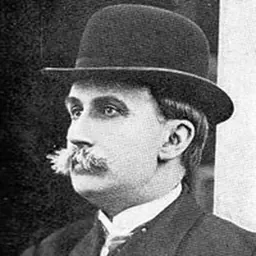
Lived 1893 – 1986 (aged 92). Raymond Loewy was a French and American designer, car designer, postage stamp designer and industrial designer.
Raymond Loewy ( , ; November 5, 1893 – July 14, 1986) was a French-born American industrial designer who achieved fame for the magnitude of his design efforts across a variety of industries. He was recognized for this by Time magazine and featured on its cover on October 31, 1949.
Loewy spent most of his professional career in the United States, becoming a naturalized citizen in 1938. Among his designs were the Shell, Exxon, TWA and the former BP logos, the Greyhound Scenicruiser bus interior, Coca-Cola vending machines and bottle redesign, the Lucky Strike package, Coldspot refrigerators, the Studebaker Avanti and Champion, and the Air Force One livery. He was engaged by equipment manufacturer International Harvester to overhaul its entire product line, and his team also assisted competitor Allis-Chalmers. He undertook numerous railroad designs, including the Pennsylvania Railroad S1 and T1 locomotives, the color scheme and Eagle motif for the first streamliners of the Missouri Pacific Railroad, and a number of lesser known color scheme and car interior designs for other railroads. Loewy worked with designer Donald Dohner to enhance the design of the PRR GG1. Loewy's career spanned seven decades.
The press referred to Loewy as The Man Who Shaped America, The Father of Streamlining and The Father of Industrial Design.
Early life Loewy was born in Paris in 1893, the son of Max (Maximilian) Loewy, a Jewish journalist of Austrian citizenship, naturalized French in 1890, born in Pressburg, and a French mother, Marie Labalme, born in Bessèges. Loewy distinguished himself early with the design of a successful model aircraft, which won the Gordon Bennett Cup for model airplanes in 1908. By the following year, he had commercial sales of the plane, named the Ayrel.
He studied in Lycée Chaptal in Paris and graduated in 1910 from the University of Paris. He continued his studies in advanced engineering at École Duvignau de Lanneau in Paris, but stopped his studies early to serve in World War I, eventually graduating after the war in 1918. for Sears-Roebuck. It was this product that established his reputation as an industrial designer. He opened a London office in the mid-1930s that continues to operate.
Pennsylvania Railroad In the early 1930s, Loewy did comprehensive design work for the Pennsylvania Railroad in providing a deeply modern Art Moderne design for the railroad's flagship electric locomotive, the GG1. The engines would operate into the 1980s under a variety of paint schemes, some of them reflecting ownership changes, and one of them - 4935 - would be restored to its original appearance all the way down to paint colors. He designed other passenger locomotives for the firm, including a streamlined shroud for K4s Pacific #3768 to haul the newly redesigned 1938 Broadway Limited. He followed by styling the experimental S1 locomotive, as well as the T1 class. In 1940, he designed a simplified version of the streamlined shroud for another four K4s. In 1942, he designed the streamlined shroud for the experimental duplex engine Q1 which was his last work of streamlining PRR's steam engine.
In 1946, at the Pennsylvania Railroad's request, he restyled Baldwin's diesels with a distinctive "sharknose" reminiscent of the T1. While he did not design the famous GG1 electric locomotive, he improved its appearance with welded rather than riveted construction, and he added a pinstripe paint scheme to highlight its smooth contours.
In addition to locomotive design, Loewy's studios provided many designs for the Pennsylvania Railroad, including stations, passenger-car interiors, and advertising materials. By 1949, Loewy employed 143 designers, architects, and draftsmen. His business partners were A. Baker Barnhart, William Snaith, and John Breen.
Studebaker
Loewy had a long and fruitful relationship with American car maker Studebaker. Studebaker first retained Loewy and Associates and Helen Dryden as design consultants in 1936 and in 1939 Loewy began work with the principal designer Virgil Exner. Their designs first began appearing with the late-1930s Studebakers. Loewy also designed a new logo to replace the "turning wheel" that had been the Studebaker trademark since 1912. )
The Starlight has consistently ranked as one of the best-designed cars of the 1950s in lists compiled since by Collectible Automobile, Car and Driver, and Motor Trend. The '53 Starliner, recognized today as "one of the most beautiful cars ever made", was radical in appearance, as radical in its way as the 1934 Airflow. However, it was beset by production problems. ) Each team member had a role. Andrews and Kellogg handled sketching, Ebstein oversaw the project, and Loewy was the creative director and offered advice.
NASA
Raymond Loewy worked for NASA from 1967 to 1973 as a Habitability Consultant for design of the Skylab space station, launched in 1973. One of NASA's goals in hiring him was to improve the psychology, safety, and comfort of crewed spacecraft. The table was designed by Loewy in order to avoid creating hierarchical positions for crew members during long missions. Food was eaten using forks, knives and spoons, which were held in place on the table by magnets. Liquids were drunk from squeezable plastic containers.
International Harvester The International Harvester company was a manufacturer of agricultural machinery, light and heavy duty trucks, construction equipment and appliances. In 1935 it engaged Loewy to overhaul the product line, from the company's logo to operator ergonomics. The first new machine to reflect Loewy's design aesthetic, a crawler tractor known as the International TD-18, was launched in 1938.
Cockshutt For the 1958 model year, Loewy was engaged to style the Canadian Cockshutt Plow Company's new line of agricultural tractors in the squared-off style that was becoming popular. The Cockshutt 540, 550, 560 and 570 models were all styled by Loewy.
Allis-Chalmers Raymond Loewy's designers influenced the design of Allis-Chalmers crawler tractors. Jean Thomson remained employed by the Loewy firm after the marriage ended. in Rochefort-en-Yvelines, a village located 40 km south-west of Paris, where he owned a rural home named La Cense.
Foundation In 1992, Viola and Laurence Loewy, with the support of British American Tobacco, established the Raymond Loewy Foundation in Hamburg, Germany. The foundation was established to preserve the memory of Raymond Loewy and promote the discipline of industrial design. An annual award of €50,000 is granted to outstanding designers, in recognition of their lifetime achievements. Notable grantees include Karl Lagerfeld, Philippe Starck and Dieter Rams.
Design philosophy In 1998, Loewy's daughter, Laurence, established Loewy Design in Atlanta, Georgia, to manage her father's continued interests in the United States. In 2006, the Loewy Gallery opened in Roanoke, Virginia, through the supportive efforts of the O. Winston Link Museum, the local business community, and art patrons Laurence Loewy, David Hagerman, and Ross Stansfield. Laurence died of natural causes October 15, 2008. Her husband, David Hagerman, became the representative for the Estate of Raymond Loewy, which remained dedicated to reintroducing Loewy's design philosophy of MAYA, or "most advanced, yet acceptable", to a new generation, through design exhibitions, publications, and documentaries. In October 2017, the documentary "Raymond Loewy: designer of American dreams", originally conceived by Laurence Loewy, premiered to Paris audiences. The film has aired on the French Arte channel.
Google doodle On November 5, 2013, Loewy was honored with a Google Doodle depicting a streamlined locomotive bearing a resemblance to the shroud design of K4s Pacific #3768, using the wheels of the train to form the word Google.
Loewy designs
Work in years or models unknown Frigidaire refrigerators, ranges, and freezers Panama Pacific Line interiors for a trio of American-built cargo liners named the SS Ancon, SS Cristobal and . Wahl-Eversharp Symphony fountain pen. Dorsett "Catalina", a popular early fiberglass pleasure boat.
1900s Ayrel aircraft, 1909
1920s Gestetner mimeograph duplicating machine shell, 1929
1930s Boeing 307 Stratoliner interior of aircraft owned by Howard Hughes International Harvester Farmall tractor letter series, 1939–1954 International Harvester Metro, light & medium duty vans and trucks, 1938 Pennsylvania Railroad, streamlining of: PRR K4s steam locomotive PRR S1 steam locomotive PRR Q1 steam locomotive PRR Q2 steam locomotive PRR T1 steam locomotive PRR GG1 electric locomotive Pennsylvania Railroad, The Broadway Limited (exterior color scheme and interiors) 1938–1947 Pennsylvania Railroad, Fleet of Modernism color scheme for passenger cars 1938–1947 Sears products, including the 1935 Sears Coldspot refrigerator Sunbeam tombstone-shaped electric toaster.
1940s Electrolux L300 refrigerator, 1940 Missouri Pacific Railroad Eagle streamliner colors and car interiors, 1940 Harley-Davidson components of the 1941 74FL Knucklehead Schick electric razor, 1941 Loewy Lincoln Continental, 1946 Filben Maestro jukebox, 1947 1947 Studebaker Champion, 1947 Accommodations and public spaces for the postwar refit of Matson Lines liner , 1948 Baldwin Locomotive Works Model DR-4-4-15 "Sharknose" diesel locomotives, 1949 IBM 026 keypunch, 1949 Norfolk and Western Railway Roanoke, Virginia station renovation (now the O. Winston Link Museum), 1949; the building is included in the Norfolk and Western Railway Company Historic District, listed on the National Register of Historic Places in 1999. Lord & Taylor first branch, Manhasset, New York, 1946 Eversharp Symphony fountain pen 1949
1950s Lionel's #497 Coal Loader, 1950 Greyhound Lines experimental Coach GX-1 (US Patent 2,563,917), precursor to the PD-4501 Scenicruiser, 1951. The International Harvester "IH" "Man on a tractor" logo, 1952. Peace cigarette packaging, 1952 J. W. Robinson's Beverly Hills (department store, interiors), 1952. Studebaker Commander, 1953 Northern Pacific Railway, Vista-Dome North Coast Limited (exterior color scheme and interiors), 1954. Coca-Cola redesign of the original contour bottle, eliminating Coca-Cola embossing and adding vivid white Coke/Coca-Cola lettering, designed and introduced king-size or slenderized bottles (10, 12, 16 and 26 oz.) (1955) Rosenthal Sunburst modern china set 1956. Hillman Minx automobile, Series One onward, 1956–1959. Sunbeam Alpine automobile, series One onward, 1959–1967. Sunbeam Mixmaster Models 10 and 11, 1950–1956. Scott-Atwater Royal Scott outboard motor made by McCulloch, 1957 500-Series of Cockshutt tractors, 1958 Le Creuset Coquelle, 1958 Leisurama homes, 1959 Dorsett recreational boats, 1959 TWA Twin Globes Logo, 1959
1960s Coca-Cola steel can with diamond design, 1960 Air Force One's distinctive blue, white and chrome livery, 1962. Variations on Loewy's original design are today flown by most of the U.S. Air Force's fleet of VIP aircraft, including the military "VC" models of 747s, 757s, 737s, and Gulfstreams. Union News restaurants, coffee shop, at the TWA Flight Center, Idlewild, circa 1962 Studebaker Avanti, 1963 United States Coast Guard "racing stripe" Service Mark, 1964 Five cents John Kennedy postage stamp, 1964 DF-2000 line of modern furniture, 1965 Plastic Omnium logo, 1966 Exxon logo, 1966 (introduced in 1972) New York City Transit Authority R40 car, whose slanted-front end design had to be retrofitted with guide and guard rails, along with pantograph gates due to safety concerns, 1967. Lucky Strike holiday carton, box art, Christmas 1967 Chubb logo, 1968 Nordemende Spectra Futura radio, 1968 Elna's Lotus compact sewing machine; in the Design Collection of New York's Museum of Modern Art (MOMA), 1968. SPAR logo, 1968 Stiffle Lamps Tension Pole Lamps
1970s United States Postal Service eagle logo, 1970 Shell logo, 1971 Air France Concorde interior, 1975 NASA's Skylab space station, first interior design standards for space travel including a porthole to allow a view of Earth from space, interior designs and color schemes, a private area for each crew member to relax and sleep, food table and trays, coveralls, garment storage modules, designs for waste management Norfolk Scope, hallmark and logo
Gallery
Published books The Locomotive: Its Aesthetics (1937) Never Leave Well Enough Alone (1951, autobiography) Industrial Design (1979)
Don’t just read it —
keep it.
Full-length biographies made to live with: read them, listen on the way to work, watch them tonight.
- E-book
- Audio
- Video
Instant download · yours to keep · every purchase keeps this site free
Important facts
People in Raymond Loewy's life
Named in this biography and alive at the same time




Related people
Same field, nearest in time

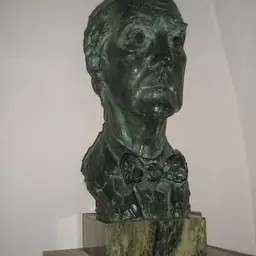
Contemporaries
People whose lives overlapped Raymond Loewy's

Frequently asked questions
Who was Raymond Loewy?
French-born American industrial designer (1893-1986)
When was Raymond Loewy born?
Raymond Loewy was born on 5 November 1893 in 2nd arrondissement of Paris.
When did Raymond Loewy die?
Raymond Loewy died on 14 July 1986 in Monaco.
What was Raymond Loewy's occupation?
Raymond Loewy was a designer, car designer, postage stamp designer and industrial designer.
What nationality was Raymond Loewy?
Raymond Loewy was French and American.
Sources & further reading
Cite this page
APA: Biography.guide. (2026). Raymond Loewy. https://biography.guide/raymond-loewy/
MLA: "Raymond Loewy." Biography.guide, https://biography.guide/raymond-loewy/.
Chicago: "Raymond Loewy." Biography.guide. https://biography.guide/raymond-loewy/.
Data last updated: 2026-09-22 · Spot an error? Report a correction.
Page generated 2026-09-27 05:31 UTC