
Anni Albers
German-American textile artist, weaver and graphic designer, student and teacher at the Bauhaus
About Anni Albers
Lived 1899 – 1994 (aged 94). Anni Albers was a German and American designer, university teacher, textile artist, lithographer, textile designer and jewelry designer.
Anni Albers (born Annelise Elsa Frieda Fleischmann; June 12, 1899 – May 9, 1994) was a German-Jewish visual artist and printmaker. A leading textile artist of the 20th century, she is credited with blurring the lines between traditional craft and art. Born in Berlin in 1899, Fleischmann began her studies under impressionist painter Martin Brandenburg from 1916 to 1919. She briefly attended the Kunstgewerbeschule in Hamburg in 1919. She later enrolled at the Bauhaus, an avant-garde art and architecture school founded by Walter Gropius in Weimar in 1922. At Bauhaus, she began exploring weaving after facing restrictions in other disciplines due to gender biases at the institution.
Under the guidance of Gunta Stölzl and Benita Koch-Otte, Fleischmann developed a passion for the tactile qualities of weaving, shifting her artistic focus from painting to textile art. In 1925, Fleischmann married fellow Bauhaus figure Josef Albers, taking on her husband's last name, and moved with the school to Dessau. The Bauhaus's emphasis on functional design led to innovations in materials that combined aesthetics with practical benefits like sound absorption and light reflection. She eventually headed the weaving workshop after Gunta Stölzl's departure in 1931. The political pressures of Nazi Germany forced the Albers to relocate to the United States in 1933, where Anni Albers took up a teaching position at Black Mountain College in North Carolina.
In 1949, Albers became the first textile designer to have a solo exhibition at the Museum of Modern Art in New York. After leaving Black Mountain College, she continued to create textile designs and ventured into printmaking. She practiced at the Tamarind Lithography Workshop in Los Angeles, and at screen printing studios in New Haven, Connecticut.
Early life and education Anni Albers was a textile artist born Annelise Elsa Frieda Fleischmann on June 12, 1899, in Berlin, Germany. Her father was a general contractor and furniture maker, while her mother was a member of the Ullstein family, who owned a major publishing company. Even in her childhood, she was intrigued by art and the visual world. She painted during her youth and studied under impressionist artist Martin Brandenburg, from 1916 to 1919, but was very discouraged from continuing after a meeting with artist Oskar Kokoschka, who upon seeing a portrait of hers asked her sharply "Why do you paint?" thumb Design for Wall Hanging, 1925 (Harvard Art Museums)Fleischmann eventually decided to attend art school, even though the challenges for art students were often great and the living conditions harsh. Such a lifestyle sharply contrasted with the affluent and comfortable living that she had been used to. She attended the Kunstgewerbeschule in Hamburg for only two months in 1919, decided to apply to the newly opened Bauhaus at Weimar. Her first application was unsuccessful, but she was accepted on her second attempt and began her studies in April 1922.
At the Bauhaus she began her first year under Georg Muche and then Johannes Itten. Fleischmann struggled to find her particular workshop at the Bauhaus. Women were barred from certain disciplines taught at the school and during her second year, unable to gain admission to a glass workshop with future husband Josef Albers, Fleischmann deferred reluctantly to weaving, the only workshop available to women. However, with her instructor Gunta Stölzl, the only woman 'master' at the school, Fleischmann soon learned to appreciate the challenges of tactile construction and began producing geometric designs. In her writing, titled Material as Metaphor, Albers mentions her Bauhaus beginnings: "In my case it was threads that caught me, really against my will. To work with threads seemed sissy to me. I wanted something to be conquered. But circumstances held me to threads and they won me over." Career
Bauhaus In 1925, Fleischmann married Josef Albers, the latter having rapidly become a "Junior Master" at the Bauhaus.
For a time, Albers was a student of Paul Klee, and after Walter Gropius left Dessau in 1928 the Alberses moved into the teaching quarters next to both the Klees and the Kandinskys. During this time, the Alberses began their lifelong habit of traveling extensively: first through Italy, Spain, and the Canary Islands. When Gunta Stölzl left the Bauhaus in 1931, Albers took over her role as head of the weaving workshop, making her one of the few women to hold such a senior role at the school.
The Bauhaus at Dessau was closed in 1932 after refusing to comply with the Nazi party's orders that they cease to promote what the Nazi's classified as "degenerate" art. Albers, who was Jewish, made the move with her husband and the Bauhaus to Berlin, but then fled to North Carolina, where the couple was invited by Philip Johnson to teach at the experimental Black Mountain College, arriving stateside in November 1933. The school was focused on "learning by doing" or "hands-on learning." Albers promoted experimentation with weaving in additional to learning technical skills, such as weave structures, theory, and draft notation. Anni and Josef Albers both taught at Black Mountain College until 1949. While Albers was on sabbatical to prepare for her MoMA exhibition, Trude Guermonprez and Franziska Mayer, taught many of the weaving classes. Guermonprez took on much of the work of the weaving program at Black Mountain College. Albers taught private lessons in the 1950s and 1960s. In the summer of 1950, Albers and several other artists were invited by Jack Lenor Larsen to teach a course with him at the Haystack Mountain School of Crafts in Maine. For the next thirty years she worked on mass-producible fabric patterns, creating the majority of her "pictorial" weavings, some of which are still in production over fifty years later. Some of her early work made using leno weave in the 1920s went on to be mass-produced by Knoll in the 1950s.
In 1963, while at the Tamarind Lithography Workshop in Los Angeles with her husband while he completed a fellowship, Albers was invited to experiment with printmaking. Her design work and writings on design helped establish Design History as a serious area of academic study. When she returned to Connecticut, Albers wanted to continue lithography, but there were no lithographic shops she could work with. Albers instead began silkscreening with a local printer. In 2018, the Tate Modern Gallery in London paired with the Kunstsammlung Nordrhein-Westfalen, in Düsseldorf, Germany, for a retrospective exhibition and book of Albers's work.
One of Albers' best known designs is called éclat, which she initially planned as a woven pattern before it proved too technically difficult. She then began printing it. Later, technological advances enabled students of her work to weave it as she had originally envisioned. The name éclat comes from the French word for sparkle or shard. It features a repeated pattern of parallelograms with sharp corners organized in a way that is not immediately obvious. Albers believed that the order within her patterns should be puzzling so that viewers will “return again and again” to look at it. a not-for-profit organization they hoped would further "the revelation and evocation of vision through art."
Albers was inducted into the Connecticut Women's Hall of Fame in 1994.
Google Doodles honored Albers on November 18, 2024. The date was chosen as it was the date she escaped from Nazi Germany in 1933.
Notable students
Patricia "Patsy" Lynch Wood (1923-2004) Early Music pioneer, educator, music therapist) Lili Blumenau She produced numerous designs in ink washes for her textiles, and occasionally experimented with jewellery design. Her woven works include many wall hangings, curtains and bedspreads, mounted "pictorial" images, and mass-produced yard material. Her weavings are often constructed of both traditional and industrial materials, not hesitating to combine jute, paper, horse hair, and cellophane. Albers's early works, such as Drapery material (1923–26) and Design for Smyrna Rug (1925), display some of the characteristics that lasted throughout her career, notably her experimentation with colour, shape, scale and rhythm with abstract, crisscrossing geometric patterns. Her work in printmaking was also experimental as she would "print lines multiple times, first positive then negative, [and print] off-register ... She would explore the limits and possibilities of her tools."
1940s 1941 Willard Gallery, New York, "Anni Albers and Alex Reed: Exhibition of Necklaces," May 5–25, 1941 1943 North Carolina State Art Gallery, State Library Building, Raleigh, North Carolina, "Painting, Prints, and Textiles by Josef and Anni Albers," October 18–29, 1943 1949 Museum of Modern Art, New York "Anni Albers: Textiles," September 14October 30, 1949 (Exhibition traveled to twenty-six museums in the United States and Canada)
1950s 1953 Wadsworth Atheneum, Hartford, Connecticut "Josef and Anni Albers: Paintings, Tapestries and Woven Textiles," July 8August 2, 1953 1954 Honolulu Academy of Art, Honolulu, Hawaii, "Josef and Anni Albers: Painting and Weaving," July 1August 2, 1954
1960s 1969 Retina Gallery, Cambridge, Massachusetts, "Anni Albers Lithographs and Screenprints 1963–1969," October 24November 15, 1969
1970s 1970 Earl Hall Gallery, Southern Connecticut State College, New Haven, Connecticut, "Anni Albers," November 4–24, 1970 1971 Carlson Library, University of Bridgeport, Bridgeport, Connecticut, "Anni Albers: Lithographs and Screenprints," January 20February 28, 1971 1973 Pollock Gallery, Toronto, Ontario, Canada, "Anni Albers: Drawings, Prints, Pictorial Weavings," September 30October 27, 1973 1977 Lantern Gallery, Ann Arbor, Michigan, "Anni Albers," January 12–30, 1977 1977 Brooklyn Museum, Brooklyn, New York, "Anni Albers: Drawings and Prints," October 1November 11, 1977 1977 Zabriskie Gallery, New York, New York, "Anni Albers: Prints," October 14November 12, 1977 1978 Katonah Gallery, Katonah, New York, "Anni Albers: Graphics," December 10, 1978January 14, 1979 1978 Pollock Gallery, Toronto, Ontario, Canada, "Anni Albers: Recent Work," October 21November 3, 1978 1979 Joseloff Gallery, Hartford Art School, Hartford, Connecticut, "Graphic Work by Anni Albers," October 3–26, 1979 1979 Monmouth Museum, Brookdale Community College, Lincroft, New Jersey, "Anni Albers: Prints," April 1979 1979 Paul Klapper Library, Queens College, New York, "Anni Albers: Graphics," March 5–30, 1979
1980s 1980 Alice Simsar Gallery, Ann Arbor, Michigan, "Anni Albers: Prints," March 29April 23, 1980 1980 Morris Museum of Arts and Science, Morristown, New Jersey, "Anni Albers: Evolving Systems," February 17March 3, 1980 1980 University Art Gallery, University of California Riverside, Riverside, California, "Anni Albers: Prints and Drawings," February 25March 28, 1980 1980 Mattatuck Museum, Waterbury, Connecticut, "Anni Albers: Prints," January 3–13, 1980 1982 Silvermine Gallery, New Canaan, Connecticut, "Anni Albers: Prints," January 9February 7, 1982 1983 Carlson Gallery, University of Bridgeport, Bridgeport, Connecticut, "Anni Albers: Printmaker," November 20December 18, 1983 1984 Artists Signature Gallery, New Haven, Connecticut, "Anni Albers: Silkscreen Prints," September 23November 2, 1984 1985 Arts Club, Chicago, Illinois, " Anni Albers: Prints; Ella Bergmann: Drawings; Ilse Bing: Photographs," September–October 1985 1985 Renwick Gallery, Washington D.C., "The Woven and Graphic Art of Anni Albers," June 12, 1985January 5, 1986
1990s 1990 Museum of Modern Art, New York, "Gunta Stölzl, Anni Albers," February 15July 10, 1990 1998 Kunstmuseum Bern, Bern, Switzerland, "Josef und Anni Albers: Europa und Amerika," November 6, 1998January 31, 1999
2000s 2001 Davidson Art Center, Wesleyan University, Middletown, Connecticut, "Anni Albers: Works on Paper from The Josef and Anni Albers Foundation," September 4November 4, 2001 2002 Gus Fisher Gallery, Auckland, New Zealand, "Anni Albers: Works on Paper," May 18July 6, 2002 2004 Cooper-Hewitt, National Design Museum, New York, "Josef and Anni Albers: Designs for Living," October 1, 2004February 27, 2005 2004 Fuji Xerox Co., Tokyo, "Print work by Anni and Josef Albers and their life at Black Mountain College," 2004
2010s 2010 Alan Cristea Gallery, London, "Anni Albers: Prints and Studies," March 18April 17, 2010 2010 Design Museum, London, "Anni Albers: Truth to Materials," March 22May 10, 2010 2010 Ruthin Craft Centre, Ruthin, Wales, "Anni Albers: Design Pioneer," December 4, 2010February 6, 2011 2015 Mudec, Museo delle Culture, Milan, "A Beautiful Confluence: Anni and Josef Albers and the Latin American World," October 28, 2015February 21, 2016 2016 Davis Museum at Wellesley College, Wellesley, Massachusetts, "Anni Albers: Connections," September 28December 18, 2016 2017 Musée des Beaux-Arts, Le Locle, Le Locle, Switzerland, "Anni Albers: L'Oeuvre Gravé," February 19May 28, 2017 2017 Mercy Gallery, Loomis Chaffee School, Windsor, Connecticut, "Harmony," April 25May 30, 2017 2017 Galleria Carla Sozzani, Milan, "Anni Albers: The Prints," June 16September 10, 2017 2017 Yale University Art Gallery, New Haven, Connecticut, "Small-Great Objects: Anni and Josef Albers in the Americas," February 3June 25, 2017 2017 Guggenheim Museum Bilbao, Bilbao, Spain, "Anni Albers: Touching Vision," October 6, 2017January 14, 2018 2018 Alan Cristea Gallery, London, "Anni Albers Connections: Prints 1963–1984," October 1November 10, 2018 2019 David Zwirner Gallery, New York, "Anni Albers," September 10October 19, 2019
Select publications On Designing. The Pellango Press, New Haven, CT, 1959. Second edition, Wesleyan University Press, Middletown, CT, 1962. First paperback edition, Wesleyan University Press, 1971 . On Weaving. Wesleyan University Press, Middletown, CT, 1965. Albers, Anni, and Gene Baro. Anni Albers. Brooklyn, N.Y. : Brooklyn Museum, Division of Publications and Marketing Services, 1977.
Don’t just read it —
keep it.
Full-length biographies made to live with: read them, listen on the way to work, watch them tonight.
- E-book
- Audio
- Video
Instant download · yours to keep · every purchase keeps this site free
Important facts
Family & relationships
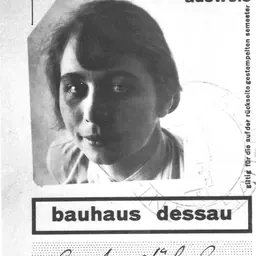
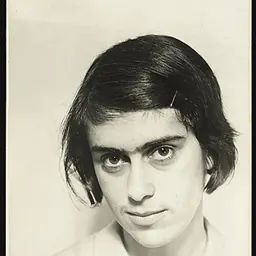
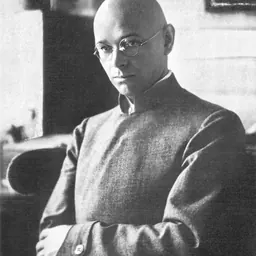
People in Anni Albers's life
Named in this biography and alive at the same time



Related people
Same field, nearest in time
Contemporaries
People whose lives overlapped Anni Albers's



Frequently asked questions
Who was Anni Albers?
German-American textile artist, weaver and graphic designer, student and teacher at the Bauhaus (1899–1994)
When was Anni Albers born?
Anni Albers was born on 12 June 1899 in Berlin.
When did Anni Albers die?
Anni Albers died on 9 May 1994 in Orange.
What was Anni Albers's occupation?
Anni Albers was a designer, university teacher, textile artist, lithographer, textile designer and jewelry designer.
What nationality was Anni Albers?
Anni Albers was German and American.
Sources & further reading
Cite this page
APA: Biography.guide. (2026). Anni Albers. https://biography.guide/anni-albers/
MLA: "Anni Albers." Biography.guide, https://biography.guide/anni-albers/.
Chicago: "Anni Albers." Biography.guide. https://biography.guide/anni-albers/.
Data last updated: 2026-09-20 · Spot an error? Report a correction.
Page generated 2026-09-27 05:22 UTC