
About Prince Georg of Bavaria
Lived 1880 – 1943 (aged 63). Prince Georg of Bavaria was a catholic priest, politician, canon and military officer.
Prince Georg of Bavaria (; 2 April 1880 – 31 May 1943) was a member of the Bavarian Royal House of Wittelsbach and a Catholic priest.
Birth and family Georg was born in Munich, Bavaria, the elder son of Prince Leopold of Bavaria and his wife Archduchess Gisela of Austria. The New York Times described him as the favourite grandson of both the Emperor Franz Joseph I of Austria and the Prince Regent Luitpold of Bavaria.
Military career Georg entered the Bavarian army as a Second Lieutenant (German: Leutnant) a day before his 17th birthday on 1 April 1897; he was assigned to Infanterie-Leib-Regiment. On 8 February 1903, he was promoted to the rank of First Lieutenant (German: Oberleutnant) and then reassigned to the 1st Royal Bavarian Heavy Cavalry “Prince Charles of Bavaria”. Two years later, on 27 October 1905, he was promoted to Rittmeister, and on 26 October 1906 to Major. From 17 August 1908, he was also a Rittmeister and later Major in the 11th "Moravia" Austro-Hungarian Dragoons. While in the army, he became a champion boxer.
Marriage In December 1911, Georg became engaged to Archduchess Isabella of Austria (b. 17 November 1888 in Pressburg), daughter of Archduke Friedrich, Duke of Teschen, and his wife, Princess Isabella of Croy. The wedding took place on 10 February 1912, in the Mariä Vermählung (Marriage of the Virgin Mary) Chapel in the Schönbrunn Palace in Vienna, officiated by Cardinal Franz Nagl.
The couple honeymooned in Wales, Paris, and Algiers, but separated before the end of the honeymoon. There were several unsuccessful attempts at reconciliation. On 17 January 1913, the union was dissolved by the Royal Bavarian Supreme Court; on 5 March 1913, the union was annulled by the Holy See on the grounds of non-consummation.
World War I During World War I, Georg fought both on the Western Front (including the First Battle of Arras and the First Battle of Ypres) and on the Eastern Front. He started the war as commander of the Bavarian mechanized troops and eventually served under General Erich von Falkenhayn in Palestine. He was awarded both the I and II Class of the Iron Cross and on 14 December 1917 reached the rank of Colonel (German: Oberst).
Ecclesiastical career In 1919, Georg resigned his military commission and began studying theology in Innsbruck, Austria. He was ordained a Catholic priest on 19 March 1921, and shortly afterwards received a doctorate in canon law from the Catholic Faculty of Theology at the University of Innsbruck. He continued his religious studies in Rome and in 1925 graduated from the Pontifical Ecclesiastical Academy.
On 18 November 1926, Pope Pius XI named Georg a domestic prelate with the title Monsignor. In the 1930s, Georg was appointed a secular canon at St. Peter's Basilica in Rome. On 12 November 1941, Pope Pius XII named Georg a protonotary apostolic de numero participantium (one of the highest ranks of monsignor).
Throughout his time in Rome, Georg lived at Villa San Francesco with the Franciscan Brothers of Waldbreitbach. He maintained regular contact with his family, including his first cousin Crown Prince Rupprecht of Bavaria who moved to Rome in 1939. He was also in regular contact with other royal and princely houses; in 1930, he attended the Rome wedding of the Prince of Piedmont (later King Umberto II of Italy) to Princess Marie-José of Belgium, and in 1935, he attended the Rome wedding of Infante Jaime of Spain. In 1938, as grand prior of the Sacred Military Constantinian Order of Saint George he arranged the transfer of the remains of King Francis II of the Two Sicilies and of his wife Queen Maria Sophie from Schloss Tegernsee in Bavaria to the Chiesa del Santo Spirito in Rome.
On 31 May 1943, Georg died at Villa San Francesco. One source says that he had been ill for some time. Another source says that he died unexpectedly of tuberculosis contracted while working at a hospital. He is buried in the Campo Santo Teutonico, the German cemetery immediately outside the walls of Vatican City. In his will, he left money to pay for new bronze doors for St. Peter's Basilica; these include the "Door of the Dead" by Giacomo Manzù and the "Door of the Sacraments" by Venanzo Crocetti.
Greek succession
A few writers (e.g. Martha Schad ) maintain that after the death of his father in 1930, Georg became the successor to the Greek rights of his great-uncle King Otto of Greece who was deposed in 1862. Georg's uncle Ludwig and his descendants were more senior, but Ludwig had renounced his Greek rights in 1869. However, the Greek Constitution of 1844 required that the successor of King Otto "shall profess the Greek Orthodox religion."
Honours Prince Georg was President of the Royal Automobile Club of Bavaria (Königlich Bayerischer Automobil-Club). In 1911 he became Protector of the Bavarian branch of the German Navy League. In 1929 he became a member of the Archconfraternity of the Suffering Mother of God in the Campo Santo Teutonico. and the Royal Bavarian Infantry Life Guards Regiment (Königlich Bayerisches Infanterie-Leib Regiment).
In 1933 a portrait bust of Georg was sculpted by Arno Breker.
Orders and decorations
German states
Ancestry
Don’t just read it —
keep it.
Full-length biographies made to live with: read them, listen on the way to work, watch them tonight.
- E-book
- Audio
- Video
Instant download · yours to keep · every purchase keeps this site free
Important facts
Family & relationships
People in Prince Georg of Bavaria's life
Named in this biography and alive at the same time




Related people
Same field, nearest in time
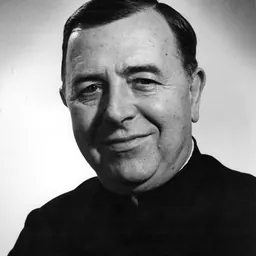
Contemporaries
People whose lives overlapped Prince Georg of Bavaria's




Frequently asked questions
Who was Prince Georg of Bavaria?
Bavarian prince (1880–1943)
When was Prince Georg of Bavaria born?
Prince Georg of Bavaria was born on 2 April 1880 in Munich.
When did Prince Georg of Bavaria die?
Prince Georg of Bavaria died on 31 May 1943 in Rome.
What was Prince Georg of Bavaria's occupation?
Prince Georg of Bavaria was a catholic priest, politician, canon and military officer.
What nationality was Prince Georg of Bavaria?
Prince Georg of Bavaria's recorded nationality: German Reich.
Sources & further reading
· Wikipedia: Prince Georg of Bavaria
· DBpedia: Prince Georg of Bavaria
Cite this page
APA: Biography.guide. (2026). Prince Georg of Bavaria. https://biography.guide/prince-georg-of-bavaria/
MLA: "Prince Georg of Bavaria." Biography.guide, https://biography.guide/prince-georg-of-bavaria/.
Chicago: "Prince Georg of Bavaria." Biography.guide. https://biography.guide/prince-georg-of-bavaria/.
Data last updated: 2026-09-20 · Spot an error? Report a correction.
Page generated 2026-09-27 05:29 UTC