
About Arno Breker
Lived 1900 – 1991 (aged 90). Arno Breker was a German architect, sculptor, politician, university teacher and graphic artist.
Arno Breker (19 July 1900 – 13 February 1991) was a German sculptor who is best known for his public works in Nazi Germany, where he was endorsed by the authorities as the antithesis of degenerate art. He was made official state sculptor and exempted from military service. He began to study architecture, along with stone-carving and anatomy. At age 20 he entered the Düsseldorf Academy of Arts where he concentrated on sculpture, studying under Hubert Netzer and Wilhelm Kreis. He first visited Paris in 1924, shortly before finishing his studies. There he met with Jean Cocteau, Jean Renoir, Pablo Picasso, Daniel-Henry Kahnweiler, and Alfred Flechtheim. He took commissions from the Nazis from 1933 through 1942, for example participating in a show of his work in occupied Paris in 1942, where he met Jean Cocteau, who appreciated his work. He maintained personal relationships with Albert Speer and with Hitler. In 1936 he won the commission for two sculptures representing athletic prowess, to be entered in the 1936 Olympic games arts competition in Berlin, one representing a Decathlete ("Zehnkämpfer"), which won the silver medal for statues, and the other The Victress ("Die Siegerin"). In 1937 he married Demetra Messala (Δήμητρα Μεσσάλα), a Greek model. The same year, Breker joined the Nazi Party and was made "official state sculptor" by Hitler, given a large property and provided a studio with forty-three assistants. In 1946, Breker was offered a commission by Soviet leader Joseph Stalin, but he refused, saying "One dictatorship is sufficient for me". In 1948 Breker was designated as a "fellow traveller" of the Nazis and fired, despite which he continued to thrive professionally.
Breker's rehabilitation led to backlash from anti-Nazi activists, including controversy in Paris when some of his works were exhibited at the Centre Georges Pompidou in 1981.
Portraits (mostly in bronze)
Baron von Mirbach, 1920 Friedrich Ebert, Berlin 1924 (first state commission) Walter Kaesbach, Düsseldorf, 1925 Artur Kaufmann, 1925 Herbert Eulenberg, 1925–26 Otto Dix, Paris 1926–27 Isamu Noguchi, Paris 1927 Hermann Kesser, 1927 Moissey Kogan, Paris 1927/28 Inge Davemann, 1928 Albert Lindgens, 1928 Walter Lindgens, 1928 Illa Fudickar, 1929 Robert Gerling, 1929 Arnold von Guilleaume, 1929 Jean Marchand, 1929 Mossey Kogan, 1929 H. R. von Langen, 1929 Alberto Giacometti Isolde von Conta, 1930 Abraham Frohwein, 1930 Heinrich Heine, 1930 Edith Arnthal, 1930–31 Demetra Breker, 1931 Nico Mazaraki, 1931 Robert Valancey, Paris 1931 Prince Georg of Bavaria, 1932 Andreas von Siemens, Berlin 1932 Nina Bausch, 1933 Demetra Breker, 1933 Olga von Dahlgreen, 1933 Arthur Kampf, 1933 Victor Manheimer, 1933 Nora von Schnitzler, 1933 Robert de Valencay, 1933 Max Liebermann, 1934 Gottfried Bermann Fischer, 1934 Max Baldner, 1934 Kurt Edzard, 1934 Graf von Luckner, 1934 Anne-Marie Merkel, 1934–35 Pütze von Siemens, 1934–35 Kurt Edzard, 1935 Anne-Marie Merkel, 1935 Pütze von Siemens, 1935–36 Carl Friedrich von Siemens, 1936 Leo von König, 1936 Joseph Goebbels, 1937 Paul von Hindenburg, 1937 Wolfgang Reindl, 1938 Adolf Hitler, 1938 Richard Wagner, 1939 Gerda Bormann (wife of Martin Bormann), 1940 Edda Göring (daughter of Hermann Göring), 1941 Albert Speer, 1941 Margarete Speer (wife of Albert Speer), 1941 Bernhard Rust Erika Baeumker (wife of Adolf Baeumker), approx 1941 Gerhart Hauptmann, 1942 Serge Lifar, 1942–43 Aristide Maillol, 1942–43 Alfred Cortot, 1942–43 Abel Bonnard, 1943 Wilhelm Kreis, 1943 Maurice de Vlaminck, 1943 Claude Flammarion, 1944 Gottfried Ude-Bernays, 1945 Johannes Bork, 1946 Lothar Albano Müller, 1950 Ludwig Hoelscher, 1952 Gustav Lindemann, 1952 Wilhelm Kempff, 1953 Emperor Haile Selassie I of Ethiopia, 1955 Rolf Gerling, 1956 Hans Gerling Friedrich Sieburg, 1961 Jean Cocteau, 1963 Jean Marais, 1963 Henry de Montherlant, 1964 Marcel Pagnol, 1964 Roger Peyrefitte, 1964 Jeanne Castel, 1964 Paul Morand, 1965 Jacques Benoist-Méchin, 1965 Henry Picker André Dunoyer de Segonzac, 1966 Marcel Midy Ezra Pound, 1967 King Mohammed V of Morocco Princess Ira von Fürstenberg Louis-Ferdinand Céline, 1970 Salvador Dalí, 1974–75 Ernst Fuchs, 1976–77 Leopold Sedar Senghor, 1978 Anwar El Sadat, 1980 Ernst Jünger, 1981–82 Richard Wagner, Cosima Wagner, Franz Liszt, 1982 Heinrich Heine, 1983 Peter und Irene Ludwig, 1986–87 Gerhard Hauptmann, 1988 Arno Breker (self-portrait), 1991
Sculptures 1935–1945
(1935) Relief on the Nordstern life insurance building, Berlin (1936) (The Decathlete) for the Olympic Stadium, Berlin (1936, Silver medal) (The [female] Victor) for the Olympic Stadium, Berlin (1936) (Dionysius) for the Olympic Village, Berlin (1936) (The Wounded) (1938) (The Horse Leader) (1938) (Grace) (1938) (Torchbearers ("The Party")) in the courtyard of the New Reich Chancellery (1939) (Sword-bearers ("The Wehrmacht")) in the courtyard of the New Reich Chancellery (1939) (Walking horses), front garden, New Reich Chancellery (1939) (The Herald) (1939) (The Risk-Taker / Venturer) (1939) (Readiness) (1939) (The Avenger) (1940) (Comrades) (1940), Breker-Museum (Banner-bearer) (1940) (Farewell) (1940) (Annihilation) (1940) (Victim) (1940) (Striders) (1940) (The Sentry) (1941) (1941) (Calling) (1941) (The Victor) (1942) (Kneeling Woman) (1942) (1942) (1943) (1943)
Reliefs
(1938) (The Fighter) (1938) Apollo and Daphne (Departure for Battle) (1941) (Departure of the Fighters) (1940–41) (The Caller) (1941) Orpheus and Eurydice (1944, Breker-Museum)
Books by Breker 1970 – Paris, Hitler et Moi ("Paris, Hitler and Me") Presses de la Cité. 1983 – ("Writings") Bonn: Marco-Edition . 1987 – ("Encounters and Reflections") Bonn: Marco-Edition . 2000 – ("Above All Beauty") Arnshaugk.
Films and videos , by Arnold Fanck, Hans Cürlis, Riefenstahl-Film GmbH, Berlin (1944) , by Marco J. Bodenstein, 20 minutes, Marco-Edition Bonn. , colour film, 60 minutes, Marco-VG, Bonn (2002) , and interview with Albert Speer. Colour film, 60 minutes, EKS Museum Europäische Kunst, Schloss 52388 Nörvenich. (Time of the Gods) (1992)
Don’t just read it —
keep it.
Full-length biographies made to live with: read them, listen on the way to work, watch them tonight.
- E-book
- Audio
- Video
Instant download · yours to keep · every purchase keeps this site free
Important facts
People in Arno Breker's life
Named in this biography and alive at the same time
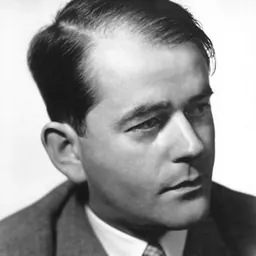
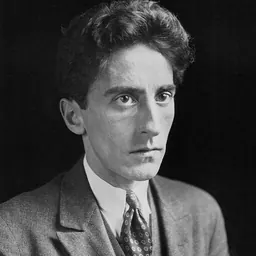



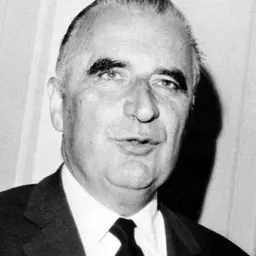

Related people
Same field, nearest in time
Contemporaries
People whose lives overlapped Arno Breker's



Frequently asked questions
Who was Arno Breker?
German sculptor and architect (1900–1991)
When was Arno Breker born?
Arno Breker was born on 19 July 1900 in Wuppertal, Elberfeld.
When did Arno Breker die?
Arno Breker died on 13 February 1991 in Düsseldorf.
What was Arno Breker's occupation?
Arno Breker was an architect, sculptor, politician, university teacher and graphic artist.
What nationality was Arno Breker?
Arno Breker was German.
Sources & further reading
Cite this page
APA: Biography.guide. (2026). Arno Breker. https://biography.guide/arno-breker/
MLA: "Arno Breker." Biography.guide, https://biography.guide/arno-breker/.
Chicago: "Arno Breker." Biography.guide. https://biography.guide/arno-breker/.
Data last updated: 2026-09-20 · Spot an error? Report a correction.
Page generated 2026-09-27 05:28 UTC