
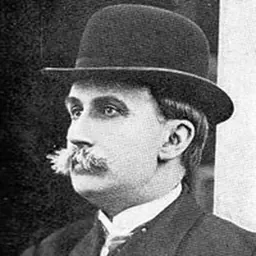
Prasanta Chandra Mahalanobis
Indian scientist and statistician
About Prasanta Chandra Mahalanobis
Lived 1893 – 1972 (aged 78). Prasanta Chandra Mahalanobis was an Indian economist, mathematician, physicist, statistician, university teacher and pedagogue, known for Feldman–Mahalanobis model and Mahalanobis distance.
Early life
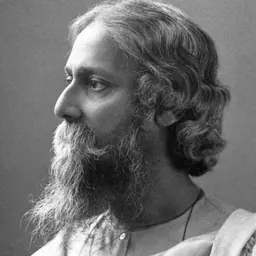
Mahalanobis was born on 29 June 1893, in Calcutta, Bengal Presidency (now West Bengal). Mahalanobis belonged to a prominent Bengali Brahmin family of landed gentry in Bikrampur, Dhaka, Bengal Presidency (now in Bangladesh). His grandfather Gurucharan (1833–1916) moved to Calcutta in 1854 and built up a business, starting a chemist shop in 1860. Gurucharan was influenced by Debendranath Tagore (1817–1905), father of the Nobel Prize-winning poet, Rabindranath Tagore. Gurucharan was actively involved in social movements such as the Brahmo Samaj, acting as its treasurer and president. His house on 210 Cornwallis Street was the centre of the Brahmo Samaj. Gurucharan married a widow, an action against social traditions at that time.
Gurucharan's younger son, Prabodh Chandra (1869–1942), was the father of P. C. Mahalanobis. Born in the house at 210 Cornwallis Street, Mahalanobis grew up in a socially active family surrounded by intellectuals and reformers. Mahalanobis received a Bachelor of Science degree with honours in physics in 1912. He left for England in 1913 to join the University of London.
After missing a train, he stayed with a friend at King's College, Cambridge. He was impressed by King's College Chapel and his host's friend M. A. Candeth suggested that he could try joining there, which he did. He did well in his studies at King's, but also took an interest in cross-country walking and punting on the river. He interacted with the mathematical genius Srinivasa Ramanujan during the latter's time at Cambridge. After his Tripos in physics, Mahalanobis worked with C. T. R. Wilson at the Cavendish Laboratory. He took a short break and went to India, where he was introduced to the Principal of Presidency College and was invited to take classes in physics.
In 1959, the institute was declared as an institute of national importance and a Deemed university.
Contributions to statistics
Mahalanobis distance
Mahalanobis distance is one of the most widely used metrics to find how much a point diverges from a distribution, based on measurements in multiple dimensions. It is widely used in the field of cluster analysis and classification. It was first proposed by Mahalanobis in 1930 in context of his study on racial likeness. From a chance meeting with Nelson Annandale, then the director of the Zoological Survey of India, at the 1920 Nagpur session of the Indian Science Congress led to Annandale asking him to analyse anthropometric measurements of Anglo-Indians in Calcutta. Mahalanobis had been influenced by the anthropometric studies published in the journal Biometrika and he chose to ask the questions on what factors influence the formation of European and Indian marriages. He wanted to examine if the Indian side came from any specific castes. He used the data collected by Annandale and the caste-specific measurements made by Herbert Hope Risley to come up with the conclusion that the sample represented a mix of Europeans mainly with people from Bengal and Punjab but not with those from the Northwest Frontier Provinces or from Chhota Nagpur. He also concluded that the intermixture more frequently involved the higher castes than the lower ones. This analysis was described by his first scientific article in 1922. During the course of these studies he found a way of comparing and grouping populations using a multivariate distance measure. This measure, denoted "D2" and now eponymously named Mahalanobis distance, is independent of measurement scale.
Sample survey His most important contributions are related to large-scale sample surveys. He introduced the concept of pilot surveys and advocated the usefulness of sampling methods. Early surveys began between 1937 and 1944 and included topics such as consumer expenditure, tea-drinking habits, public opinion, crop acreage and plant disease. Harold Hotelling wrote: "No technique of random sample has, so far as I can find, been developed in the United States or elsewhere, which can compare in accuracy with that described by Professor Mahalanobis" and Sir R. A. Fisher commented that "The ISI has taken the lead in the original development of the technique of sample surveys, the most potent fact-finding process available to the administration".
Later life In later life, Mahalanobis was a member of the planning commission contributed prominently to newly independent India's five-year plans starting from the second. In the second five-year plan he emphasized industrialization on the basis of a two-sector model.
In the 1950s, Mahalanobis played a critical role in the campaign to bring India its first digital computers.
Mahalanobis also had an abiding interest in cultural pursuits and served as secretary to Rabindranath Tagore (about whom he would write in the Journal of the Oriental Society of Australia), particularly during the latter's foreign travels, and also worked at his Visva-Bharati University, for some time. He received India's second highest civilian award, the Padma Vibhushan from the Government of India for his contribution to science and services to the country.
Mahalanobis died on 28 June 1972, a day before his seventy-ninth birthday. Even at this age, he was still active doing research work and discharging his duties as the secretary and director of the Indian Statistical Institute and as the honorary statistical advisor to the Cabinet of the Government of India.
Honours
Fellow of the Indian Academy of Sciences (FASc, 1935) Fellow of the Indian National Science Academy (FNA, 1935) Officer of the Order of the British Empire (Civil Division), 1942 New Year Honours list Weldon Memorial Prize from the University of Oxford (1944) Fellow of the Royal Society, London (1945) President of Indian Science Congress (1950) Fellow of the Econometric Society, US (1951) Fellow of the Pakistan Statistical Association (1952) Honorary Fellow of the Royal Statistical Society, UK (1954) Sir Deviprasad Sarvadhikari Gold Medal (1957) Foreign member of the Academy of Sciences of the USSR (1958) Honorary Fellow of King's College, Cambridge (1959) Fellow of the American Statistical Association (1961) Durgaprasad Khaitan Gold Medal (1961) Desikottam by Visva Bharati University (1961) Padma Vibhushan (1968) Srinivasa Ramanujan Gold Medal (1968)
The government of India decided in 2006 to celebrate Prasanta Chandra Mahalanobis's birthday, 29 June, every year as "National Statistics Day" of India.
On the occasion of his 125th birth anniversary on 29 June 2018, Indian Vice-President M Venkaiah Naidu released a commemorative coin at a programme at ISI, Kolkata.
Don’t just read it —
keep it.
Full-length biographies made to live with: read them, listen on the way to work, watch them tonight.
- E-book
- Audio
- Video
Instant download · yours to keep · every purchase keeps this site free
Important facts
People in Prasanta Chandra Mahalanobis's life
Named in this biography and alive at the same time


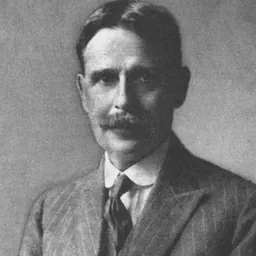
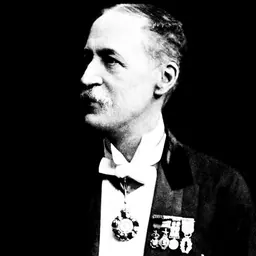


Related people
Same field, nearest in time
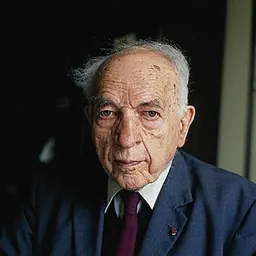



Contemporaries
People whose lives overlapped Prasanta Chandra Mahalanobis's


Frequently asked questions
Who was Prasanta Chandra Mahalanobis?
Indian scientist and statistician (1893–1972)
When was Prasanta Chandra Mahalanobis born?
Prasanta Chandra Mahalanobis was born on 29 June 1893 in Kolkata.
When did Prasanta Chandra Mahalanobis die?
Prasanta Chandra Mahalanobis died on 28 June 1972 in Kolkata.
What was Prasanta Chandra Mahalanobis's occupation?
Prasanta Chandra Mahalanobis was an economist, mathematician, physicist, statistician, university teacher and pedagogue.
What was Prasanta Chandra Mahalanobis known for?
Prasanta Chandra Mahalanobis was known for Feldman–Mahalanobis model and Mahalanobis distance.
What nationality was Prasanta Chandra Mahalanobis?
Prasanta Chandra Mahalanobis was Indian.
Sources & further reading
· Wikipedia: Prasanta Chandra Mahalanobis
· DBpedia: Prasanta Chandra Mahalanobis
Cite this page
APA: Biography.guide. (2026). Prasanta Chandra Mahalanobis. https://biography.guide/prasanta-chandra-mahalanobis/
MLA: "Prasanta Chandra Mahalanobis." Biography.guide, https://biography.guide/prasanta-chandra-mahalanobis/.
Chicago: "Prasanta Chandra Mahalanobis." Biography.guide. https://biography.guide/prasanta-chandra-mahalanobis/.
Data last updated: 2026-09-26 · Spot an error? Report a correction.
Page generated 2026-09-27 05:16 UTC