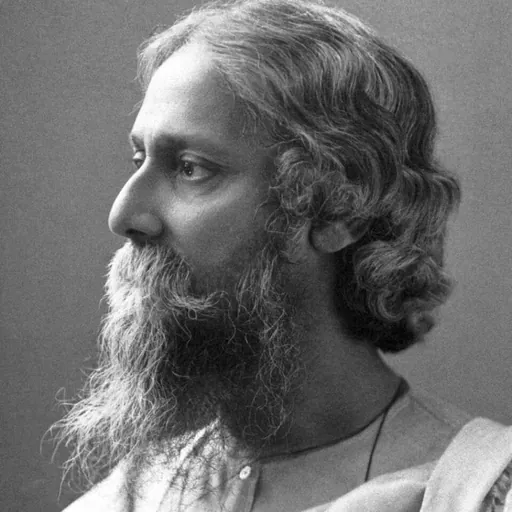
About Rabindranath Tagore
Lived 1861 – 1941 (aged 80). Rabindranath Tagore was an Indian painter, poet, composer, playwright, essayist and philosopher.
Rabindranath Tagore (; 7 May 1861 – 7 August 1941), was a Bengali poet, author, playwright, musician, composer, philosopher, social reformer, painter, and one of the foremost figures of the Bengal Renaissance. In 1913, Tagore became the first Indian and non-European to win a Nobel Prize in any category, and also the first lyricist to win the Nobel Prize in Literature. A significant moulder of culture within Bengal and the Indian subcontinent, he wrote and composed the national anthems of India and Bangladesh.
He reshaped Bengali literature and music as well as Indian art with Contextual Modernism in the late 19th and early 20th centuries. He was the author of the "profoundly sensitive, fresh and beautiful" poetry of Gitanjali. Tagore's poetic songs were viewed as spiritual and mercurial; his elegant prose and magical poetry were widely popular in the Indian subcontinent. He was a fellow of the Royal Asiatic Society. Referred to as "the Bard of Bengal", At the age of sixteen, he released his first substantial poems under the pseudonym Bhānusiṃha ("Sun Lion"), which were seized upon by literary authorities as long-lost classics. By 1877 he graduated to his first short stories and dramas, published under his real name. As a humanist, universalist, internationalist, and ardent critic of nationalism, he denounced the British Raj and advocated independence from Britain. As an exponent of the Bengal Renaissance, he advanced a vast canon that comprised paintings, sketches and doodles, hundreds of texts, and some two thousand songs; his legacy also endures in his founding of Visva-Bharati University.
Tagore modernised Bengali art by spurning rigid classical forms and resisting linguistic strictures. His novels, stories, songs, dance dramas, and essays spoke to topics political and personal. Gitanjali (Song Offerings), Gora (Fair-Faced), and Ghare-Baire (The Home and the World) are his best-known works. His poetry, short stories, and novels were both praised and criticised for their lyricism, colloquial tone, naturalism, and philosophical introspection. His compositions were chosen by two nations as national anthems: India's "Jana Gana Mana" and Bangladesh's "Amar Sonar Bangla". The Sri Lankan national anthem was also inspired by his work. His song "Banglar Mati Banglar Jol" has been adopted as the state anthem of West Bengal.
Family background
The name Tagore is the anglicised transliteration of Thakur. The original surname of the Tagores was Kushari. They were Pirali Brahmin ('Pirali' historically carried a stigmatised and pejorative connotation; an insult that ostracised Piralis from other Brahmin sub-castes) who originally belonged to a village named Kush in the district named Burdwan in West Bengal. The biographer of Rabindranath Tagore, Prabhat Kumar Mukhopadhyaya wrote in the first volume of his book Rabindrajibani O Rabindra Sahitya Prabeshak that
Face of a woman, inspired by Kadambari Devi. Ink on paper. National Gallery of Modern Art, New Delhi India's National Gallery of Modern Art lists 102 works by Tagore in its collections.
In 1937, Tagore's paintings were removed from Berlin's baroque Crown Prince Palace by the Nazi regime and five were included in the inventory of "degenerate art" compiled by the Nazis in 1941–1942.
Philosophy and religion
An early introduction to Tagore's thought for Western readers was written by Sarvepalli Radhakrishnan in 1918, who analyzed Tagore's views on philosophy, religion, art and poetry, using Tagore's works available in English up to that time. He quotes extensively from Tagore's poetry collections Gitanjali (1912), The Crescent Moon (1913), The Gardener (1913), Fruit-Gathering (1916), Stray Birds (1916), the essay collections Sadhana: The Realisation of Life (1913) and Personality (1917), as well as the drama The King of the Dark Chamber (1910) and the principal Upanishads. Radhakrishnan interprets Tagore's thought largely through the lens of Advaita Vedanta, causing differences with Tagore's more poetic, humanistic, and socially critical outlook.
Tagore later elaborated his religious and philosophical ideas in his 1922 lectures published as Creative Unity, and his 1931 Hibbert Lectures at Oxford University, published as The Religion of Man.
A contemporary analysis was done by Kalyan Sen Gupta.
Politics
alt=Photo of a formal function, an aged bald man and old woman in simple white robes are seated side-by-side with legs folded on a rug-strewn dais; the man looks at a bearded and garlanded old man seated on another dais at left. In the foreground, various ceremonial objects are arrayed; in the background, dozens of other people observe. Tagore hosts Gandhi and wife Kasturba at Santiniketan in 1940.
Tagore opposed imperialism and supported Indian nationalists, and these views were first revealed in Manast, which was mostly composed in his twenties. Evidence produced during the Hindu–German Conspiracy Trial and latter accounts affirm his awareness of the Ghadarites and stated that he sought the support of Japanese Prime Minister Terauchi Masatake and former Premier Ōkuma Shigenobu. Yet he lampooned the Swadeshi movement; he rebuked it in The Cult of the Charkha, an acrid 1925 essay. According to Amartya Sen, Tagore rebelled against strongly nationalist forms of the independence movement, and he wanted to assert India's right to be independent without denying the importance of what India could learn from abroad. He urged the masses to avoid victimology and instead seek self-help and education, and he saw the presence of British administration as a "political symptom of our social disease". He maintained that, even for those at the extremes of poverty, "there can be no question of blind revolution"; preferable to it was a "steady and purposeful education".
Such views enraged many. He escaped assassination—and only narrowly—by Indian expatriates during his stay in a San Francisco hotel in late 1916; the plot failed when his would-be assassins fell into an argument. Tagore wrote songs lionising the Indian independence movement. Two of Tagore's more politically charged compositions, "Chitto Jetha Bhayshunyo" ("Where the Mind is Without Fear") and "Ekla Chalo Re" ("If They Answer Not to Thy Call, Walk Alone"), gained mass appeal, with the latter favoured by Gandhi. Though somewhat critical of Gandhian activism, Tagore was key in resolving a Gandhi–Ambedkar dispute involving separate electorates for untouchables, thereby mooting at least one of Gandhi's fasts "unto death".
Repudiation of knighthood
Tagore renounced his knighthood in response to the Jallianwala Bagh massacre in 1919. In the repudiation letter to the Viceroy, Lord Chelmsford, he wrote
Shantiniketan and Visva-Bharati
Tagore despised rote classroom schooling, as shown in his short story, "The Parrot's Training", wherein a bird is caged and force-fed textbook pages—to death. Visiting Santa Barbara in 1917, Tagore conceived a new type of university: he sought to "make Santiniketan the connecting thread between India and the world [and] a world center for the study of humanity somewhere beyond the limits of nation and geography." The school, which he named Visva-Bharati, had its foundation stone laid on 24 December 1918 and was inaugurated precisely three years later. Tagore employed a brahmacharya system: gurus gave pupils personal guidance—emotional, intellectual, and spiritual. Teaching was often done under trees. He staffed the school, he contributed his Nobel Prize monies, and his duties as steward-mentor at Shantiniketan kept him busy: mornings he taught classes; afternoons and evenings he wrote the students' textbooks. He fundraised widely for the school in Europe and the United States between 1919 and 1921.
Theft of Nobel Prize On 25 March 2004, Tagore's Nobel Prize was stolen from the safety vault of the Visva-Bharati University, along with several other of his belongings. On 7 December 2004, the Swedish Academy decided to present two replicas of Tagore's Nobel Prize, one made of gold and the other made of bronze, to the Visva-Bharati University. It inspired the fictional film Nobel Chor. In 2016, a baul singer named Pradip Bauri, accused of sheltering the thieves, was arrested.
Influence and legacy
Every year, many events pay tribute to Tagore: Kabipranam, his birth anniversary, is celebrated by groups scattered across the globe; the annual Tagore Festival held in Urbana, Illinois (US); Rabindra Path Parikrama walking pilgrimages from Kolkata to Santiniketan; and recitals of his poetry, which are held on important anniversaries. Bengali culture is fraught with this legacy: from language and arts to history and politics. Amartya Sen deemed Tagore a "towering figure", a "deeply relevant and many-sided contemporary thinker". Tagore's works were widely translated into English, Dutch, German, Spanish, and other European languages by Czech Indologist Vincenc Lesný, French Nobel laureate André Gide, Russian poet Anna Akhmatova, former Turkish Prime Minister Bülent Ecevit, and others. In the United States, Tagore's lecturing circuits, particularly those of 1916–1917, were widely attended and wildly acclaimed. Some controversies involving Tagore, possibly fictive, trashed his popularity and sales in Japan and North America after the late 1920s, concluding with his "near total eclipse" outside Bengal. Yet a latent reverence of Tagore was discovered by an astonished Salman Rushdie during a trip to Nicaragua.
By way of translations, Tagore influenced Chileans Pablo Neruda and Gabriela Mistral; Mexican writer Octavio Paz; and Spaniards José Ortega y Gasset, Zenobia Camprubí, and Juan Ramón Jiménez. In the period 1914–1922, the Jiménez-Camprubí pair produced twenty-two Spanish translations of Tagore's English corpus; they heavily revised The Crescent Moon and other key titles. In these years, Jiménez developed "naked poetry". Ortega y Gasset wrote that "Tagore's wide appeal [owes to how] he speaks of longings for perfection that we all have [...] Tagore awakens a dormant sense of childish wonder, and he saturates the air with all kinds of enchanting promises for the reader, who [...] pays little attention to the deeper import of Oriental mysticism". Tagore's works circulated in free editions around 1920—alongside those of Plato, Dante, Cervantes, Goethe, and Tolstoy.
Tagore was deemed over-rated by some. Graham Greene doubted that "anyone but Mr. Yeats can still take his poems very seriously." Several prominent Western admirers—including Pound and, to a lesser extent, even Yeats—criticised Tagore's work. Yeats, unimpressed with his English translations, railed against that "Damn Tagore [...] We got out three good books, Sturge Moore and I, and then, because he thought it more important to see and know English than to be a great poet, he brought out sentimental rubbish and wrecked his reputation. Tagore does not know English, no Indian knows English." William Radice, who "English[ed]" his poems, asked: "What is their place in world literature?" He saw him as "kind of counter-cultur[al]", bearing "a new kind of classicism" that would heal the "collapsed romantic confusion and chaos of the 20th century." The translated Tagore was "almost nonsensical", and subpar English offerings reduced his trans-national appeal:
In October 1961 a blue plaque to Tagore was unveiled at Number 3, Villas on the Heath in Hampstead, to mark Tagore's visit in 1912 and to mark the centenary of Tagore's birth. The address was Tagore's home for a few months in the summer of 1912, during his third visit to England. The lodgings were found for him by the artist and writer Sir William Rothenstein, who lived nearby at 11 Oak Hill Park.
In July 2025, a bronze bust of Tagore, sculpted by Ram V. Sutar, was unveiled in Trunk's Close, Edinburgh, opposite a bust of Patrick Geddes who was a friend and collaborator of Tagore.
Museums
Rabindra Bharati Museum, at Jorasanko Thakur Bari, Kolkata, India Tagore Memorial Museum, at Shilaidaha Kuthibadi, Shilaidaha, Bangladesh Rabindra Memorial Museum at Shahzadpur Kachharibari, Shahzadpur, Bangladesh Rabindra Bhavan Museum, in Santiniketan, India Rabindra Museum, in Mungpoo, near Kalimpong, India Patisar Rabindra Kacharibari, Patisar, Atrai, Naogaon, Bangladesh Pithavoge Rabindra Memorial Complex, Pithavoge, Rupsha, Khulna, Bangladesh Rabindra Complex, Dakkhindihi village, Phultala Upazila, Khulna, Bangladesh Jorasanko Thakur Bari (Bengali: House of the Thakurs; anglicised to Tagore) in Jorasanko, north of Kolkata, is the ancestral home of the Tagore family. It is currently located on the Rabindra Bharati University campus at 6/4 Dwarakanath Tagore Lane Jorasanko, Kolkata 700007. It is the house in which Tagore was born, and also the place where he spent most of his childhood and where he died on 7 August 1941.
List of works
The SNLTR hosts the 1415 BE edition of Tagore's complete Bengali works. Tagore Web also hosts an edition of Tagore's works, including annotated songs. Translations can be found at Project Gutenberg and Wikisource. More sources are below.
Original + Works in English Title Year Thought Relics 1921
Translated
In popular culture Rabindranath Tagore is a 1961 Indian documentary film written and directed by Satyajit Ray, released during the birth centenary of Tagore. It was produced by the Government of India's Films Division. Serbian composer Darinka Simic-Mitrovic used Tagore's text for her song cycle Gradinar in 1962. In 1969, American composer E. Anne Schwerdtfeger was commissioned to compose Two Pieces, a work for women's chorus based on text by Tagore. In Sukanta Roy's Bengali film Chhelebela (2002) Jisshu Sengupta portrayed Tagore. In Bandana Mukhopadhyay's Bengali film Chirosakha He (2007) Sayandip Bhattacharya played Tagore. In Rituparno Ghosh's Bengali documentary film Jeevan Smriti (2011) Samadarshi Dutta played Tagore. In Suman Ghosh's Bengali film Kadambari (2015) Parambrata Chatterjee portrayed Tagore.
Don’t just read it —
keep it.
Full-length biographies made to live with: read them, listen on the way to work, watch them tonight.
- E-book
- Audio
- Video
Instant download · yours to keep · every purchase keeps this site free
Important facts
more
Ravindranath Thakur, Bishwakabi, R. Tagore, Gurudev, rabindranath, Bhanu Singha ThakurFamily & relationships
People in Rabindranath Tagore's life
Named in this biography and alive at the same time

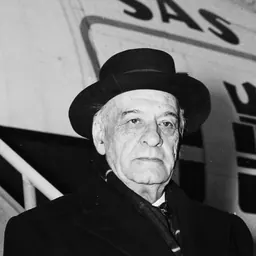



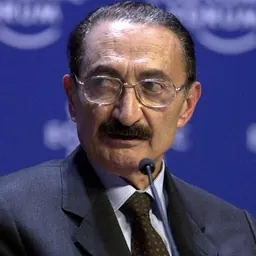

Related people
Same field, nearest in time
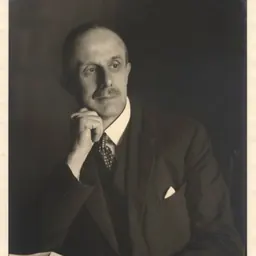


Contemporaries
People whose lives overlapped Rabindranath Tagore's


Frequently asked questions
Who was Rabindranath Tagore?
Bengali poet, philosopher and polymath (1861–1941)
When was Rabindranath Tagore born?
Rabindranath Tagore was born on 7 May 1861 in Kolkata.
When did Rabindranath Tagore die?
Rabindranath Tagore died on 7 August 1941 in Kolkata.
What was Rabindranath Tagore's occupation?
Rabindranath Tagore was a painter, poet, composer, playwright, essayist and philosopher.
What nationality was Rabindranath Tagore?
Rabindranath Tagore was Indian.
Sources & further reading
· Wikipedia: Rabindranath Tagore
· DBpedia: Rabindranath Tagore
Cite this page
APA: Biography.guide. (2026). Rabindranath Tagore. https://biography.guide/rabindranath-tagore/
MLA: "Rabindranath Tagore." Biography.guide, https://biography.guide/rabindranath-tagore/.
Chicago: "Rabindranath Tagore." Biography.guide. https://biography.guide/rabindranath-tagore/.
Data last updated: 2026-09-23 · Spot an error? Report a correction.
Portrait: Wikimedia Commons · author & licence
Page generated 2026-09-27 05:06 UTC