
Sarvepalli Radhakrishnan
2nd President and 1st Vice President of India, Indian philosopher and politician
About Sarvepalli Radhakrishnan
Lived 1888 – 1975 (aged 86). Sarvepalli Radhakrishnan was an Indian politician, diplomat, philosopher, translator, historian and university teacher.
Sarvepalli Radhakrishnan (; 5 September 188817 April 1975) was an Indian academic, philosopher and statesman who served as the Vice President of India from 1952 to 1962 and President of India from 1962 to 1967. He was the ambassador of India to the Soviet Union from 1949 to 1952. He was also the vice-chancellor of Banaras Hindu University from 1939 to 1948 and the vice-chancellor of Andhra University from 1931 to 1936. Radhakrishnan is considered one of the most influential and distinguished 20th century scholars of comparative religion and philosophy,
Radhakrishnan's philosophy was grounded in Advaita Vedanta, reinterpreting this tradition for a contemporary understanding. He has been influential in shaping the understanding of Hinduism, in both India and the west, and earned a reputation as a bridge-builder between India and the West.
Radhakrishnan was awarded several high awards during his life, including a knighthood in 1931, the Bharat Ratna, the highest civilian award in India, in 1954, and honorary membership of the British Royal Order of Merit in 1963. He was also one of the founders of HelpAge India, a non-profit organisation for elderly underprivileged in India. Radhakrishnan believed that "teachers should be the best minds in the country."
Early life and education Radhakrishnan was born as Sarvepalli Radhakrishnayya in a Telugu Niyogi Brahmin family of Sarvepalli Veeraswami and Sithamma. He was the fourth born of six siblings (five brothers and one sister), in Tiruttani of North Arcot district in the erstwhile Madras Presidency (now in Tiruvallur district of Tamil Nadu). His family hails from Sarvepalli village in Nellore district of Andhra Pradesh. His early years were spent in Thiruttani and Tirupati. His father was a subordinate revenue official in the service of a local Zamindar (local landlord). His primary education was at K. V. High School at Thiruttani. In 1896 he moved to the Hermansburg Evangelical Lutheran Mission School in Tirupati and Government High Secondary School, Walajapet.
Education Indian President Sarvepalli Radhakrishnan with US President John F. Kennedy in the Oval Office, 1963 Radhakrishnan was awarded scholarships throughout his academic life. He joined Voorhees College in Vellore for his high school education. After his F.A. (First of Arts) class, he joined the Madras Christian College (affiliated to the University of Madras) at the age of 16. He graduated from there in 1907, and also finished his master's degree from the same college.
Radhakrishnan studied philosophy by chance rather than choice. He had wished to study mathematics. Being a financially constrained student, when a cousin who graduated from the same college passed on his philosophy textbooks to Radhakrishnan, it automatically decided his academics course.
Sarvepalli wrote his bachelor's degree thesis on "The Ethics of the Vedanta and its Metaphysical Presuppositions". It "was intended to be a reply to the charge that the Vedanta system had no room for ethics." Two of his professors, William Meston and Alfred George Hogg, commended Radhakrishnan's dissertation. Radhakrishnan's thesis was published when he was only twenty. According to Radhakrishnan himself, the criticism of Hogg and other Christian teachers of Indian culture "disturbed my faith and shook the traditional props on which I leaned." Radhakrishnan himself describes how, as a student, Radhakrishnan also reinterpreted Shankara's notion of maya. According to Radhakrishnan, maya is not a strict absolute idealism, but "a subjective misperception of the world as ultimately real." According to Radhakrishnan, intuition plays a specific role in all kinds of experience.
Influence
Radhakrishnan was one of world's best and most influential twentieth-century scholars of comparative religion and philosophy.
Rinehart also points out that "perennialist claims notwithstanding, modern Hindu thought is a product of history", which "has been worked out and expressed in a variety of historical contexts over the preceding two hundreds years." This is also true for Radhakrishan, who was educated by missionaries and, like other neo-Vedantins, used the prevalent western understanding of India and its culture to present an alternative to the western critique.
Universalism, communalism and Hindu nationalism According to Richard King, the elevation of Vedanta as the essence of Hinduism, and Advaita Vedanta as the "paradigmatic example of the mystical nature of the Hindu religion" by colonial Indologists but also neo-Vedantins served well for the Hindu nationalists, who further popularised this notion of Advaita Vedanta as the pinnacle of Indian religions. It
This "opportunity" has been criticised. According to Sucheta Mazumdar and Vasant Kaiwar,
Rinehart also criticises the inclusivity of Radhakrishnan's approach, since it provides "a theological scheme for subsuming religious difference under the aegis of Vedantic truth." According to Rinehart, the consequence of this line of reasoning is communalism, the idea that "all people belonging to one religion have common economic, social and political interests and these interests are contrary to the interests of those belonging to another religion." Rinehart notes that Hindu religiosity plays an important role in the nationalist movement, and that "the neo-Hindu discourse is the unintended consequence of the initial moves made by thinkers like Rammohan Roy and Vivekananda." Yet Rinehart also points out that it is
Post-colonialism
Colonialism left deep traces in the hearts and minds of the Indian people, influencing the way they understood and represented themselves. The influences of "colonialist forms of knowledge"
Foreign honours
Other awards A portrait of Radhakrishnan adorns the Chamber of the Rajya Sabha. 1938: elected Fellow of the British Academy. 1947: election as Permanent Member of the Institut International de Philosophie. 1959: Goethe Plaque of the City of Frankfurt. 1961: the Peace Prize of the German Book Trade. 1962: Institution of Teacher's Day in India, yearly celebrated on 5 September, Radhakrishnan's birthday, in honour of Radhakrishnan's belief that "teachers should be the best minds in the country". ("Sir Sarvepalli Radhakrishnan was President of India from 1962 to 1967.) An Oxford Professor of Eastern Religions and Ethics, he consistently advocated non-aggression in India's conflicts with neighbouring Pakistan. His accessible writings underscored his country's religious heritage and sought to convey a universal reality of God that embraced love and wisdom for all people." He was nominated sixteen times for the Nobel Prize in Literature, and eleven times for the Nobel Peace Prize.
Commemorative stamps released by India Post (by year):
In popular culture Sarvepalli Radhakrishna (1988) is a documentary film about Radhakrishnan, directed by N. S. Thapa, produced by the Government of India's Films Division.
Quotes
"It is not God that is worshipped but the authority that claims to speak in His name. Sin becomes disobedience to authority not violation of integrity." "Reading a book gives us the habit of solitary reflection and true enjoyment." "When we think we know, we cease to learn." "A literary genius, it is said, resembles all, though no one resembles him." "There is nothing wonderful in my saying that Jainism was in existence long before the Vedas were composed." "A life of joy and happiness is possible only on the basis of knowledge. "If he does not fight, it is not because he rejects all fighting as futile, but because he has finished his fights. He has overcome all dissensions between himself and the world and is now at rest... We shall have wars and soldiers so long as the brute in us is untamed."
Works
Works by Radhakrishnan The Philosophy of Rabindranath Tagore (1918), Macmillan, London, 276 pages
Indian Philosophy (1923) Vol. 1, 738 pages. (1927) Vol. 2, 807 pages. Oxford: Oxford University Press (1st edition). The Hindu View of Life (1927), London: Allen & Unwin. 92 pages Indian Religious Thought (2016), Orient Paperbacks, Religion, Science and Culture (2010), Orient Paperbacks, An Idealist View of Life (1929), 351 pages Kalki, or the Future of Civilization (1929), 96 pages Gautama the Buddha (London: Milford, 1938); 1st India ed., 1945. Eastern Religions and Western Thought (1939), Oxford University Press, 396 pages Religion and Society (1947), George Allen and Unwin Ltd., London, 242 pages The Bhagavadgītā: with an introductory essay, Sanskrit text, English translation and notes (1948), 388 pages The Dhammapada (1950), 194 pages, Oxford University Press The Principal Upanishads (1953), 958 pages, HarperCollins Publishers Limited Recovery of Faith (1956), 205 pages A Source Book in Indian Philosophy (1957), 683 pages, Princeton University Press, with Charles A. Moore as co-editor. The Brahma Sutra: The Philosophy of Spiritual Life. London: George Allen & Unwin Ltd., 1959, 606 pages. Religion, Science & Culture (1968), 121 pages
Biographies and monographs on Radhakrishnan Several books have been published on Radhakrishnan:
Don’t just read it —
keep it.
Full-length biographies made to live with: read them, listen on the way to work, watch them tonight.
- E-book
- Audio
- Video
Instant download · yours to keep · every purchase keeps this site free
Important facts
Family & relationships
People in Sarvepalli Radhakrishnan's life
Named in this biography and alive at the same time



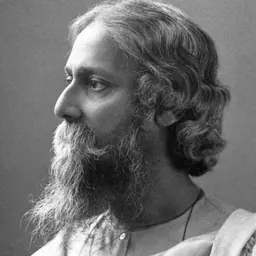

Related people
Same field, nearest in time






Contemporaries
People whose lives overlapped Sarvepalli Radhakrishnan's

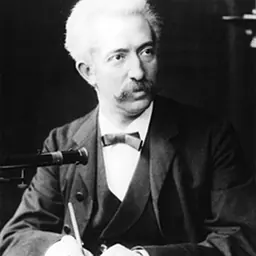


Frequently asked questions
Who was Sarvepalli Radhakrishnan?
2nd President and 1st Vice President of India, Indian philosopher and politician (1888–1975)
When was Sarvepalli Radhakrishnan born?
Sarvepalli Radhakrishnan was born on 5 September 1888 in Tiruttani.
When did Sarvepalli Radhakrishnan die?
Sarvepalli Radhakrishnan died on 17 April 1975 in Chennai.
What was Sarvepalli Radhakrishnan's occupation?
Sarvepalli Radhakrishnan was a politician, diplomat, philosopher, translator, historian and university teacher.
What nationality was Sarvepalli Radhakrishnan?
Sarvepalli Radhakrishnan was Indian.
Sources & further reading
· Wikipedia: Sarvepalli Radhakrishnan
· DBpedia: Sarvepalli Radhakrishnan
Cite this page
APA: Biography.guide. (2026). Sarvepalli Radhakrishnan. https://biography.guide/sarvepalli-radhakrishnan/
MLA: "Sarvepalli Radhakrishnan." Biography.guide, https://biography.guide/sarvepalli-radhakrishnan/.
Chicago: "Sarvepalli Radhakrishnan." Biography.guide. https://biography.guide/sarvepalli-radhakrishnan/.
Data last updated: 2026-09-20 · Spot an error? Report a correction.
Page generated 2026-09-27 05:26 UTC