
About Wassily Leontief
Lived 1906 – 1999 (aged 92). Wassily Leontief was a Russian and American economist, statistician, pedagogue, policy advisor and university teacher, known for Input–output model.
Wassily Wassilyevich Leontief (; August 5, 1905 – February 5, 1999) was a Russian-American economist known for his research on input–output analysis and how changes in one economic sector may affect other sectors.
Leontief was awarded the Nobel Memorial Prize in Economic Sciences in 1973, and four of his doctoral students have also been awarded the prize (Paul Samuelson 1970, Robert Solow 1987, Vernon L. Smith 2002, Thomas Schelling 2005).
Biography
Early life Wassily Leontief was born on August 5, 1905, in Munich, German Empire, the son of Wassily W. Leontief (professor of Economics) and Zlata (German spelling Slata; later Evgenia) Leontief (née Becker). Wassily Leontief Sr. belonged to a family of Russian old-believer merchants living in St. Petersburg since 1741. Evgenia (Genya) Becker belonged to a wealthy Jewish family from Odessa. At 15 in 1921, Wassily Jr. entered Petrograd State University in present-day St. Petersburg. He earned his Learned Economist degree (equivalent to Master of Arts) in 1925 at the age of 19.
Opposition in USSR Leontief sided with campaigners for academic autonomy, freedom of speech and in support of Pitirim Sorokin. As a consequence, he was detained several times by the Cheka. In 1925, he was allowed to leave the USSR, mostly because the Cheka believed that he was mortally ill with a sarcoma, a diagnosis that later proved false.
In 1931, he went to the United States and was employed by the National Bureau of Economic Research.
During World War II, Leontief served as consultant at the U. S. Office of Strategic Services.
Harvard Leontief joined Harvard University's department of economics in 1932 and in 1946 became professor of economics there.
In 1949, Leontief used an early computer at Harvard and data from the U.S. Bureau of Labor Statistics to divide the U.S. economy into 500 sectors. Leontief modeled each sector with a linear equation based on the data and used the computer, the Harvard Mark II, to solve the system, one of the first significant uses of computers for mathematical modeling, along with George W. Snedecor's usage of the Atanasoff–Berry computer.
Leontief set up the Harvard Economic Research Project in 1948 and remained its director until 1973. Starting in 1965, he chaired the Harvard Society of Fellows.
New York University In 1975, Leontief joined New York University and founded and directed the Institute for Economic Analysis. He taught graduate and undergraduate classes.
Personal life In 1932, Leontief married the poet Estelle Marks (1908–2005). Their only child, Svetlana Leontief Alpers, was born in 1936. Estelle wrote a memoir, Genia and Wassily,
Major contributions Leontief is credited with developing early contributions to input–output analysis and was awarded the Nobel Memorial Prize in Economics for his development of its associated theory. He has also made contributions in other areas of economics, such as international trade where he documented the Leontief paradox. He was also one of the first to establish the composite commodity theorem.
Leontief was awarded the Nobel Memorial Prize in economics for his work on input–output tables. Input–output tables analyze the process by which inputs from one industry produce outputs for consumption or for inputs for another industry. With the input–output table, one can estimate the change in demand for inputs resulting from a change in production of the final good. The analysis assumes that input proportions are fixed; thus the use of input–output analysis is limited to rough approximations rather than prediction. Input–output was novel and inspired large-scale empirical work; in 2010 its iterative method was recognized as an early intellectual precursor to Google's PageRank.
Leontief used input–output analysis to study the characteristics of trade flow between the U.S. and other countries, and found what has been named Leontief's paradox; "this country resorts to foreign trade in order to economize its capital and dispose of its surplus labor, rather than vice versa", i.e., U.S. exports were relatively labor-intensive when compared to U.S. imports. This is the opposite of what one would expect, considering the fact that the U.S.'s comparative advantage was in capital-intensive goods. According to some economists, this paradox has since been explained as due to the fact that when a country produces "more than two goods, the abundance of capital relative to labor does not imply that the capital intensity of its exports should exceed that of imports." According to Leontief, too many economists were reluctant to "get their hands dirty" by working with raw empirical facts. To that end, Wassily Leontief did much to make quantitative data more accessible, and more indispensable, to the study of economics.
Publications 1925: Баланс народного хозяйства СССР. ("Balans narodnogo khozyaystva SSSR") in ; translated into Italian in Spulber N.(Ed.) as "Il Bilancio dell'economia nazionale dell'URSS." in La Strategia Sovietica per Sviluppo Economico 1924–1930, Giulio Einaudi ed., Torino [discussing the Soviet "Balance of the National Economy", 1923–24] 1928: Die Wirtschaft als Kreislauf, Tübingen: Mohr: re-published as The economy as a circular flow, pp. 181–212 in: Structural Change and Economic Dynamics, Volume 2, Issue 1, June 1991; this translation is abridged to avoid controversial statements.
1941: Structure of the American Economy, 1919–1929 1953: Studies in the Structure of the American Economy 1966: Input-Output Economics 1966: Essays in Economics
1977: Essays in Economics, II 1977: The Future of the World Economy 1983: Military Spending: Facts and Figures, Worldwide Implications and Future Outlook co-authed with F. Duchin. 1983: The Future of Non-Fuel Minerals in the U.S. And World Economy co-authed with J. Koo, S. Nasar and I. Sohn 1986: The Future Impact of Automation on Workers co-authored with F. Duchin
Awards 1953: Order of the Cherubim, University of Pisa 1962: Dr honoris causa, University of Brussels 1967: Dr of the university, University of York 1968: Officer of the French Légion d'honneur 1970: Bernhard-Harms Prize Economics, West Germany 1971: Dr honoris causa, University of Louvain 1972: Dr honoris causa, University of Paris (Sorbonne) 1973: Bank of Sweden Prize in Economic Sciences in Memory of Alfred Nobel, a.k.a. Nobel Prize in Economics 1976: Dr honoris causa, University of Pennsylvania 1980: Dr honoris causa, University of Toulouse, France 1980: Dr honoris causa, University of Louisville, Kentucky 1980: Doctor of Social Sciences, University of Vermont 1980: Doctor of Laws, C.W. Post Center, Long Island University 1980: Russian-American Hall of Fame 1981: Karl Marx University, Budapest, Hungary 1984: Order of the Rising Sun, Japan 1985: Commandeur, French Order of Arts and Letters 1988: Dr honoris causa, Adelphi College 1988: Foreign member, USSR Academy of Sciences 1989: Society of the Optimate, Italian Cultural Institute, New York 1990: Dr honoris causa, University of Córdoba, Spain 1991: Takemi Memorial Award, Institute of Seizon & Life Sciences, Japan 1995: Harry Edmonds Award for Life Achievement, International House, New York 1995: Dr honoris causa, Humboldt University, Berlin, Germany Award of Excellence, The International Center in New York
In honor The Global Development and Environment Institute at Tufts University awards the Leontief Prize in Economics each year in his honor.
Leontief is listed in the Russian-American Chamber of Fame of Congress of Russian Americans, which is dedicated to Russian immigrants who made outstanding contributions to American science or culture.
Memberships 1954: President of the Econometric Society 1968: Corresponding Member of the Institut de France 1970: President of the American Economic Association 1970: Corresponding Fellow of the British Academy 1974: US-USSR Commission on the Social Sciences and Humanities of the International Research and Exchanges Board 1975: American Committee on East-West Accord 1975: Accademia Nazionale dei Lincei, Italy 1976: President and Section F. of the British Association for the Advancement of Science 1976: Honorary Member of the Royal Irish Academy 1977: Fellow of the American Association for the Advancement of Science 1978: Commission to Study the Organization of Peace 1978–1986: Board of Trustees of North Carolina School of Science and Mathematics 1979: Century Club 1979: Issues Committee of the Progressive Alliance 1980: Committee for National Security 1981: Board of Visitors, College of Liberal Arts, Boston University 1981: Board of Editors, Journal of Business Strategy 1982: International Advisory Council of the Delian Institute of International Relations 1982: Accademia Mediterranea Delle Scienze, Italy 1983: Board of Advisors, Environmental Fund 1983: Board of Directors, Tolstoy Foundation 1985: International Committee, Carnegie Mellon University 1990: Academy of Creative Endeavors, USSR 1992: International Charitable Foundation, Russia 1993: Academie Europeenne 1993: Honorary President of the World Academy for the Progress of Planning Science, Italy 1993: Member of the Academie Universelle des Cultures, France 1994: Fellow of the New York Academy of Sciences 1995: Member of the International Leadership Center on Longevity & Society, Mt. Sinai Hospital American Philosophical Society American Academy of Arts and Sciences International Statistical Institute Honorary Member of the Japan Economic Research Center, Tokyo Honorary Fellow of the Royal Statistical Society, London Trustee of Economists for Peace and Security
Quotes
Don’t just read it —
keep it.
Full-length biographies made to live with: read them, listen on the way to work, watch them tonight.
- E-book
- Audio
- Video
Instant download · yours to keep · every purchase keeps this site free
Important facts
People in Wassily Leontief's life
Named in this biography and alive at the same time





Related people
Same field, nearest in time


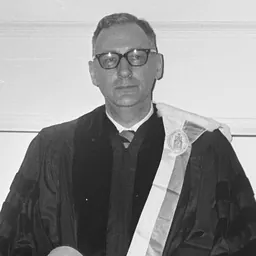
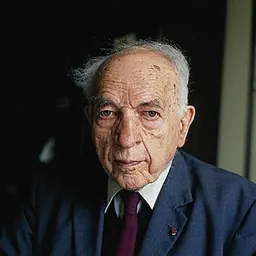
Contemporaries
People whose lives overlapped Wassily Leontief's

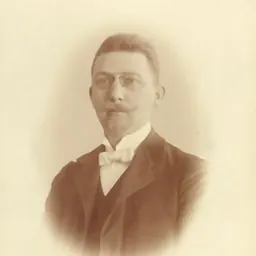
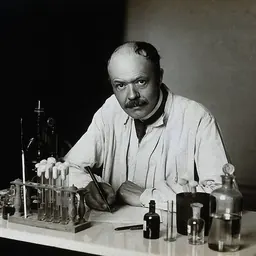

Frequently asked questions
Who was Wassily Leontief?
Russian economist (1906-1999)
When was Wassily Leontief born?
Wassily Leontief was born on 5 August 1906 in Munich.
When did Wassily Leontief die?
Wassily Leontief died on 5 February 1999 in New York City.
What was Wassily Leontief's occupation?
Wassily Leontief was an economist, statistician, pedagogue, policy advisor and university teacher.
What was Wassily Leontief known for?
Wassily Leontief was known for Input–output model.
What nationality was Wassily Leontief?
Wassily Leontief was Russian and American.
Sources & further reading
Cite this page
APA: Biography.guide. (2026). Wassily Leontief. https://biography.guide/wassily-leontief/
MLA: "Wassily Leontief." Biography.guide, https://biography.guide/wassily-leontief/.
Chicago: "Wassily Leontief." Biography.guide. https://biography.guide/wassily-leontief/.
Data last updated: 2026-09-20 · Spot an error? Report a correction.
Page generated 2026-09-27 05:25 UTC