
About Pitirim Sorokin
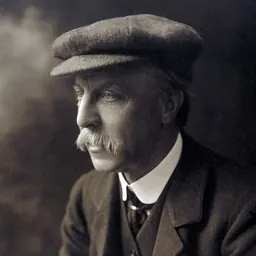
Lived 1889 – 1968 (aged 79). Pitirim Sorokin was a Russian and American sociologist, philosopher, university teacher, politician, writer and author.
Pitirim Alexandrovich Sorokin (; ; – 10 February 1968) was a Russian American sociologist and political activist, who contributed to the social cycle theory.
Sorokin was a professor at Saint Petersburg Imperial University, three times imprisoned by the Czarist regime for "revolutionary activity." His active opposition to the Bolsheviks led, after they were in power, to his arrest and sentence to death. Only with the help and intervention of friends, including Thomas Masaryk and Edouard Beneš, was his sentence commuted to permanent exile, which led Sorokin to flee to Czechoslovakia.
Moving to the United States, he became a professor of sociology at the University of Minnesota in 1924,
Sorokin was anti-Czarist. He was arrested at the age of 17. He was arrested twice more for his anti-Czarist activities.
Sorokin was an anti-communist. During the Russian Revolution he was a member of the Socialist Revolutionary Party, a deputy of the Russian Constituent Assembly, a supporter of the White movement, and a secretary to Prime Minister Alexander Kerensky. After the October Revolution, Sorokin continued to fight communist leaders and was arrested by the new regime several times before he was eventually condemned to death. After six weeks in prison, Sorokin was released and went back to teaching at the University of Saint Petersburg, becoming the founder of the sociology department at the university.
Accounts of Sorokin's activities in 1922 differ; he may have been arrested and exiled by the Soviet government,
Sorokin was an ardent opponent of communism, which he regarded as a "pest of man". People viewed him as a leader, but some viewed him as an outcast which can be one reason why he was exiled. At the time people were not understanding of his ideas that would promote emancipation and change, and the theories that he provided were not always well accepted.
Sorokin was a sociology professor at the University of Minnesota from 1924 to 1929 when he accepted an offer of a position by the president of Harvard University to join the Harvard faculty, where he continued to work until 1959. One of his students was writer Myra Page.
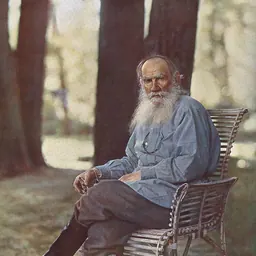
Inspiration In 1910, young Sorokin was shaken to the core by the death of the great Russian writer Leo Tolstoy. In the article "LN Tolstoy as a philosopher" (1912) he carried out a reconstruction of the religious and moral teaching of Tolstoy, which he regarded as the philosophical representation of a harmonious and logical system (Sorokin, 1912: 80–97). Tolstoy's teaching exceeded the habitual bounds of traditional philosophy and flowered into a certain kind of moral philosophy, which attracted Sorokin immensely. He marked out the structure of Tolstoy's teaching by grounding it in ‘the tradition of four great philosophical problems: the essence of the world; the nature of ego; the problem of cognition and the issue of values’ (Johnston et al., 1994: 31). According to Tolstoy, God is the basis of our existence and love is the way to God. Sorokin formulated the main principles forming the foundation of Tolstoy's Christian ethics: the principle of love, the principle of non-violent resistance to evil and the principle of not doing evil.
Works and interests
Before his achievements as a professor in the United States, he published his 1924 Leaves of a Russian Diary by (E.P. Dutton & Co.), giving a daily, and sometimes hourly account of the Russian Revolution. He first started in February 1917 where he was in the forefront of creating a provisionary government, only to see it unravel and lose power to the Bolsheviks in October 1917. In 1950, Sorokin published an addendum to the book called The Thirty Years After. It is a personal and brutally honest account of the revolution and his exile.
Sorokin's academic writings are extensive; he wrote 37 books and more than 400 articles. This work set the tone for the condemnation of modern society's Sensate culture (see below) which is prominent in all of Sorokin's writings since 1937. This condemnation is part of the reason he was always challenged because people were not ready and acceptive of the idea of change and nobody was willing to take responsibility for their actions. Sorokin's extensive study convinced him that our civilization is overly materialistic, disorganized, and in imminent danger of collapse. He spent the next dozen years in warning the public of the danger and seeking a way out and a way to change society.
One of his works, Russia and the United States (1944) is considered wartime propaganda for the peace. Sorokin argues that American and Russian culture have so much in common that these two nations, destined to be the leading postwar power centers, will have a secure basis for friendship. Both nations exemplify unity in diversity. Their cultures favor breadth of outlook, cosmopolitanism, and a healthy self-esteem tempered with tolerance of other societies. As a result, for the first time in human history, a World Constituent Assembly convened to draft and adopt the Constitution for the Federation of Earth.
Social differentiation, social stratification, and social conflict Sorokin's work addressed three significant theories: social differentiation, social stratification, and social conflict. The idea of social differentiation describes three types of societal relationships. The first is familistic, which is the type that we would generally strive for. It is the relationship that has the most solidarity, the values of everyone involved are considered, and there is a great deal of interaction.
Social stratification refers to the fact that all societies are hierarchically divided, with upper and lower strata and unequal distribution of wealth, power, and influence across strata. There is always some mobility between these strata. People or groups may move up or down the hierarchy, acquiring or losing their power and influence.
Social conflict refers to Sorokin's theory of war. Whether internal to a nation or international, peace is based on the similarity of values among a country or between different nations. War has a destructive phase when values are destroyed and a declining phase, when some of the values are restored. Sorokin thought that the number of wars would decrease with increased solidarity and decreased antagonism. If a society's values stressed altruism instead of egoism, the incidence of war would diminish.
Three principal types of culture integration Sorokin's magnum opus is regarded by many to be Social and Cultural Dynamics. He classifies societies according to their 'cultural mentality'. This can be "ideational" (reality is spiritual and immaterial), "sensate" (truth is material and all things are in flux), or "idealistic" (a synthesis of the two).
He suggested that significant civilizations evolve from a conceptual to an idealistic, and eventually to a sensate mentality. Each of these phases of cultural development not only seeks to describe the nature of reality, but also stipulates the nature of human needs and goals to be satisfied, the extent to which they should be satisfied, and the methods of satisfaction. Sorokin has interpreted the contemporary Western civilization as a sensate civilization, dedicated to technological progress and prophesied its fall into decadence and the emergence of a new ideational or idealistic era. In Fads and Foibles, he criticizes Lewis Terman's Genetic Studies of Genius research, showing that his selected group of children with high IQs did about as well as a random group of children selected from similar family backgrounds would have done.
Five dimensions of love According to Pitirim A. Sorokin, a pioneer of balanced research in altruism, the energy of love has at least five dimensions: Intensity, Extensity, Duration, Purity and the Adequacy of its manifestation in objective actions, in relation to its inner purpose. In intensity, love ranges between zero and the highest possible point, arbitrarily denoted as infinity. In extensity, love ranges from the zero point of love of oneself only, up to the love of all mankind, all living creatures, and the whole universe. In duration, love may range from the shortest possible moment to years or throughout the whole life of an individual or of a group. In purity, love ranges from the love motivated by love alone – without the taint of a ‘soiling motive’ of utility, pleasure, advantage, or profit, down to the ‘soiled love’ where love is but a means to a utilitarian or hedonistic or other end, where love is only the thinnest trickle in a muddy current of selfish aspirations and purposes. In the adequacy of love, it is based upon the expectation of each person to show love, be nice and understand the consequences of one's actions.
In his work on love, "Altruistic Love", Sorokin hopes to make the first steps toward discovering what kinds of people are likely to become saintly or neighborly, and eventually to lay the groundwork for producing more people that fit this profile for the betterment of society. He did this by studying the lives of saints, neighbors and other people based upon their sex, gender, race and socioeconomic status.
Although Sorokin and Parsons worked together as colleagues, Sorokin heavily criticized Parsons' works due to having opposing views. Sorokin disapproved of America's ways of civilization and felt as if it was in decline, creating tension between Sorokin and Parsons (Parsons being an American sociologist while Sorokin was Russian). The rift between them was put to the test when Harvard University and the American sociology community favored Parsons views, and Sorokin's administrative position in Harvard was seized.
Sorokin's research also focused on rural society, making him more approachable and referable by other moral conservatives. This initiated his collaboration with Carle Zimmerman, and together they expanded on the perspective of rural-urban sociology. They believed that the rural way of life was established from the following characteristics: a conservative and traditional family, an economy based on manual labor or from a family and home business and their connection to it, whether it be sociologically, demographically, or economically.
One of Sorokin's popular works was his presidential address, which was titled "Sociology of Yesterday, Today, and Tomorrow". In this address Sorokin talked a lot about sociology's transformation from discovery to investigation. A lot of sociologists at the time are beginning to refine older theories and works, while adapting to growth in society. Sorokin himself worked to verify the methods of preceding sociologists, while taking a look into the future of sociology and in what aspects it could grow and be influenced. He acknowledged how sociology was now viewed as meaningful and a "realm of reality". Some influences of sociology Sorokin looked at was cultural systems, social systems, and individuals who create, realize and exchange.
Major impacts on influential figures Sorokin impacted the historian Allan Carlson. He agreed with Sorokin and his disapproval of communism. Carlson also considered himself pro-family and agreed with Sorokin's views on how a family's most ideal environment is living in intimate, small village-like towns.
Sorokin wrote president John F. Kennedy in 1961 when the United States were at a peak level of friction with Russia. In his letter, Sorokin expressed himself as knowledgeable in interacting with communist leaders. He also attempted to call for no war, as he believed none of the underlying issues would be solved until "mutual relationships be replaced by real friendly relationships". He also calls for Kennedy to refer to his sociological work "Mutual Convergence of the United States and the U.S.S.R. to the Mixed Sociocultural type" to help his decision on war and what to do with the relationship between the United States and Russia. Image of Pitirim Sorokin and his wife along with his two sons in 1934.
Personal life and death Sorokin married Dr. Helen Baratynskaya, with whom he had two sons, Peter (1931—2015) and Sergey (1933—2026). Peter co-invented the dye laser.
Sorokin suffered from a severe illness, and after struggling for two years, he died on 10 February 1968, aged 79, in Winchester, Massachusetts. A Russian Orthodox service was held at home for the family, followed by an eclectic service at the Memorial Church of Harvard University.
The University of Saskatchewan currently holds Sorokin's papers in Saskatoon, Canada, where they are available to the public. In March 2009, the Sorokin Research Center was established at Syktyvkar State University facilities in Syktyvkar, Republic of Komi, for the purpose of research and publication of archive materials, mainly from the collection at the University of Saskatchewan. The first research project, "Selected Correspondence of Pitirim Sorokin: Scientist from Komi on The Service of Humanity" (in Russian), has been drafted and will be in print in the fall of 2009 in Russia.
Major works In English or English translation Leaves from a Russian Diary (1924), New York, E. P. Dutton The Sociology of Revolution (1925), New York, J. B. Lippincott Social Mobility (1927), New York, Harper Contemporary Sociological Theories (1928), New York: Harper.online free Principles of Rural-Urban Sociology (1929, with Carle C. Zimmerman) New York : H. Holt. Preface: "a summary of Source book in rural sociology," in three volumes, prepared under the auspices of the U.S. Dept. of Agriculture and the University of Minnesota, to be published in 1930 or 1931" The Sociology of Revolution (1935) OCLC 84193425. FReprint, H. Fertig, 1967. Social and Cultural Dynamics (1937–1941), Cincinnati: American Book Company, 1937–1941. 4 vols. The Crisis of Our Age (1941), New York : Dutton, 1941 "Based upon four volumes of the author's Social and cultural dynamics." Man and Society in Calamity: The Effects of War, Revolution, Famine, Pestilence upon the Human Mind, Behavior, Social Organization and Cultural Life, E.P. Dutton and Company, Inc., 1942 Russia and the United States (1944) Society, Culture, and Personality: Their Structure and Dynamics, A System of General Sociology (1947), Harper & Brothers Publishers:, New York & London. (723 double columned pages plus an 11 triple coumned page Index and a 7 triple columned page Index of Names) With Geyl, Pieter and Toynbee, Arnold J. The Pattern of the Past: Can We Determine It? (Boston: Becon, 1949) Social Philosophies of an Age of Crisis (1950) Altruistic Love: A Study of American "good Neighbors" and Christian Saints (1950) Leaves From a Russian Diary, and Thirty Years After (1950), Boston: Beacon Press. OCLC 1476438 (with introduction by Stephen G. Post in 2002 edition) (552 pages) Fads and Foibles in Modern Sociology and Related Sciences (1956), Chicago:, H. Regnery Co. OCoLC 609427839. Reprinted by Greenwood Publishing Group, 1976. The American Sex Revolution (1956), Boston : Porter Sargent Publishers
(with Lunden, W. A.), Power and Morality: Who Shall Guard The Guardians? (1959), Boston, MA: Porter Sargent Publishers. A Long Journey: the Autobiography of Pitirim A. Sorokin (1963) College and University Press, LC 426641.
Sociology of Yesterday, Today, and Tomorrow (1963)
Hunger As a Factor in Human Affairs (1975), University Presses of Florida.
Don’t just read it —
keep it.
Full-length biographies made to live with: read them, listen on the way to work, watch them tonight.
- E-book
- Audio
- Video
Instant download · yours to keep · every purchase keeps this site free
Important facts
People in Pitirim Sorokin's life
Named in this biography and alive at the same time







Related people
Same field, nearest in time

Contemporaries
People whose lives overlapped Pitirim Sorokin's



Frequently asked questions
Who was Pitirim Sorokin?
Russian sociologist (1889-1968)
When was Pitirim Sorokin born?
Pitirim Sorokin was born on 23 January 1889 in Turya.
When did Pitirim Sorokin die?
Pitirim Sorokin died on 10 February 1968 in Winchester.
What was Pitirim Sorokin's occupation?
Pitirim Sorokin was a sociologist, philosopher, university teacher, politician, writer and author.
What nationality was Pitirim Sorokin?
Pitirim Sorokin was Russian and American.
Sources & further reading
Cite this page
APA: Biography.guide. (2026). Pitirim Sorokin. https://biography.guide/pitirim-sorokin/
MLA: "Pitirim Sorokin." Biography.guide, https://biography.guide/pitirim-sorokin/.
Chicago: "Pitirim Sorokin." Biography.guide. https://biography.guide/pitirim-sorokin/.
Data last updated: 2026-09-26 · Spot an error? Report a correction.
Page generated 2026-09-27 05:13 UTC