
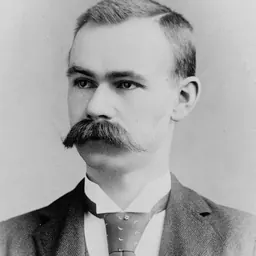
John Ambrose Fleming
English electrical engineer and physicist
About John Ambrose Fleming
Lived 1849 – 1945 (aged 95). John Ambrose Fleming was a British inventor, physicist, university teacher and electrical engineer, known for Fleming valve, Fleming's left hand rule for motors and Fleming's right-hand rule.
Biography Early life John Ambrose Fleming was born on 29 November 1849 in Lancaster, England, the eldest of seven children of James Fleming DD, a Congregational minister at High Street Congregational Chapel, and Mary Ann White. He was baptised on 11 February 1850.
Through his mother, Fleming was the nephew of Ellen Ranyard (née White), founder of The London Bible and Domestic Female Mission, and Edward White, a Free Church minister.
Education In 1867, Fleming enrolled at University College London, where he studied under Augustus De Morgan, Alexander Williamson, and George Carey Foster.
Following graduation, Fleming took a position teaching science at the Rossall School upon the recommendation of Edward Frankland. From January 1878 until May 1879, he was one of two students who attended the finial lectures of James Clerk Maxwell. In the summer of 1879, he obtained a D.Sc. from the University of London.
Career
Fleming served for one year at Cambridge University as a demonstrator of mechanical engineering, before being appointed the first Professor of Physics and Mathematics at University College Nottingham, but he left after less than a year. In 1882, he became an electrician at the Edison Electric Light Company, advising on lighting systems and the new Ferranti alternating current systems.
In 1885, Fleming became head of the newly established Department of Electrical Technology at University College London. Although this offered great opportunities, he recalls in his autobiography that the only equipment provided to him was a blackboard and piece of chalk. In 1897, the Pender Memorial Committee donated £5,000 to the Department, which was used to found the Pender Laboratory—along with the Pender Chair, which Fleming took up.
In 1926, Fleming retired from University College London. He remained active, becoming a committed advocate of the new technology of television which included serving as the second President of the Television Society. His contributions to electronic communications and radar were of vital importance in winning World War II.
Inventions Radio transmitter In 1899, Guglielmo Marconi, the inventor of radiotelegraphy, decided to attempt transatlantic radio communication. This would require a scale-up in power from the small 200–400 watt transmitters he had used up to then. Marconi contracted Fleming, an expert in power engineering, to design a radio transmitter. He designed the world's first large radio transmitter, a complicated spark transmitter powered by a 25 kW alternator driven by a combustion engine—built at Poldhu, Cornwall—which transmitted the first radio transmission across the Atlantic on 12 December 1901.
Although Fleming was responsible for the design, the director of the Marconi Company had made him agree that: "If we get across the Atlantic, the main credit will be and must forever be Mr. Marconi's". Accordingly, the worldwide acclaim that greeted this landmark accomplishment went to Marconi, who only credited Fleming along with several other Marconi employees, saying he did some work on the "power plant". Marconi also forgot a promise to give him 500 shares of Marconi stock if the project was successful; he was bitter about this treatment. He honoured his agreement and did not speak about it throughout Marconi's life, but after his death in 1937 said Marconi had been "very ungenerous".
Fleming valve In 1904, while working for the Marconi Company to improve transatlantic radio reception, Fleming built the first vacuum tube—the two-electrode diode—which he called the "oscillation valve", for which he received a patent on 16 November. It became known as the Fleming valve. The Supreme Court of the United States later invalidated the patent because of an improper disclaimer and, additionally, maintained the technology in the patent was known art when filed.
This invention of the vacuum tube is often considered to have been the beginning of electronics. Fleming's diode was used in radio receivers and radar for many decades afterwards, until it was superseded by solid-state electronic technology more than 50 years later.
Patent dispute
In 1906, American inventor Lee De Forest added a control grid to the valve to create an amplifying vacuum tube RF detector called the Audion, leading Fleming to accuse him of infringing on his patents. De Forest's tube developed into the triode, the first electronic amplifier. The triode was vital in the creation of long-distance telephone and radio communications, radars, and early electronic digital computers (mechanical and electromechanical digital computers already existed using different technology). The court battle over these patents lasted for many years with victories at different stages for both sides.
Personal life Fleming was born with congenital hearing loss. Clara Ripley (1856/7–1917). On 27 July 1928, he married the popular young singer Olive May Franks (b. 1898/9) of Bristol.
Fleming was a noted photographer, painted watercolours, and enjoyed climbing the Alps. He was President of the Victoria Institute from 1927 to 1942.
In 1932, he and Douglas Dewar and Bernard Acworth helped establish the Evolution Protest Movement. Fleming bequeathed much of his estate to Christian charities, especially those for the poor.
Recognition Memberships Year Organisation Type 1892 Royal Society Fellow
Awards Year Organisation Award Citation 1910 Royal Society Hughes Medal "For his researches in electricity and electrical measurements." 1921 Royal Society of Arts Albert Medal 1928 Institution of Electrical Engineers Faraday Medal 1930 Institute of Physics Duddell Medal and Prize 1933 Institute of Radio Engineers IRE Medal of Honor "For the conspicuous part he played in introducing physical and engineering principles into the radio art." 1935 Franklin Institute Franklin Medal "The Invention of the Thermionic Valve."
Chivalric titles Year Head of state Title 1929 George V Knight Bachelor
Commemoration In 1941, the London Power Company commemorated Fleming by naming a new 1,555 GRT coastal collier SS Ambrose Fleming.
In 1971, the Greater London Council erected a blue plaque for Fleming at 9 Clifton Gardens in Maida Vale, London.
Collections In 1945, Fleming's widow donated Fleming's library and papers to University College London. Fleming's library, which totals around 950 items, includes first editions of works by prominent scientists and engineers such as James Clerk Maxwell, Oliver Lodge, James Dewar and Shelford Bidwell. Fleming's archive spans 521 volumes and 12 boxes; it contains his laboratory notebooks, lecture notes, patent specifications, and correspondence.
Publications Physics Electric Lamps and Electric Lighting: A course of four lectures on electric illumination delivered at the Royal Institution of Great Britain (1894) 228 pages. The Alternate Current Transformer in Theory and Practice "The Electrician" Printing and Publishing Company (1896) Magnets and Electric Currents E. & F. N. Spon. (1898) A Handbook for the Electrical Laboratory and Testing Room "The Electrician" Printing and Publishing Company (1901) Waves and Ripples in Water, Air, and Aether MacMillan (1902). The Principles of Electric Wave Telegraphy (1906), Longmans Green, London, 671 pages. The Propagation of Electric Currents in Telephone and Telegraph Conductors (1908) Constable, 316 pages. An Elementary Manual of Radiotelegraphy and Radiotelephony (1911) Longmans Green, London, 340 pages. On the power factor and conductivity of dielectrics when tested with alternating electric currents of telephonic frequency at various temperatures (1912) Gresham, 82 pages, ASIN: B0008CJBIC The Wonders of Wireless Telegraphy : Explained in simple terms for the non-technical reader Society for promoting Christian Knowledge (1913) The Wireless Telegraphist's Pocket Book of Notes, Formulae and Calculations The Wireless Press (1915) The Thermionic Valve and its Development in Radio Telegraphy and Telephony (1919). Fifty Years of Electricity The Wireless Press (1921) Electrons, Electric Waves and Wireless telephony The Wireless Press (1923) Introduction to Wireless Telegraphy and Telephony Sir Isaac Pitman and Sons Ltd. (1924) Mercury-arc Rectifiers and Mercury-vapour Lamps London. Pitman (1925) The Electrical Educator (3 volumes), The New Era Publishing Co Ltd (1927) Television Television Press London. (1928) Memories of a Scientific life Marshall, Morgan & Scott (1934) Mathematics for Engineers George Newnes Ltd (1938) Physics for Engineers George Newnes Ltd (1941)
Creationism The Evidence of Things Not Seen Christian Knowledge Society: London (1904)
Don’t just read it —
keep it.
Full-length biographies made to live with: read them, listen on the way to work, watch them tonight.
- E-book
- Audio
- Video
Instant download · yours to keep · every purchase keeps this site free
Important facts
People in John Ambrose Fleming's life
Named in this biography and alive at the same time

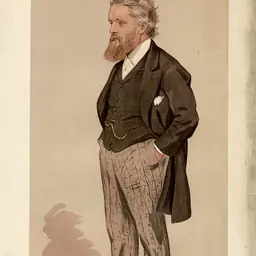

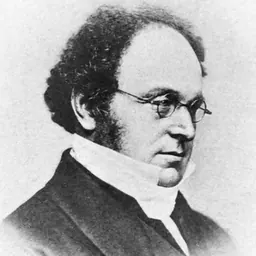
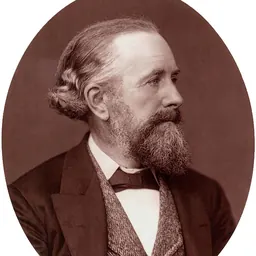

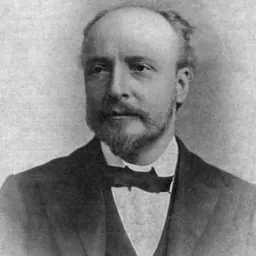
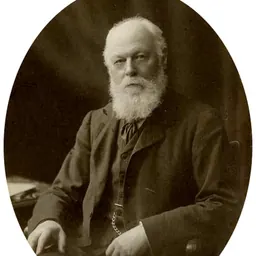
Related people
Same field, nearest in time


Contemporaries
People whose lives overlapped John Ambrose Fleming's






Frequently asked questions
Who was John Ambrose Fleming?
English electrical engineer and physicist (1849-1945)
When was John Ambrose Fleming born?
John Ambrose Fleming was born on 29 November 1849 in Lancaster.
When did John Ambrose Fleming die?
John Ambrose Fleming died on 18 April 1945 in Sidmouth.
What was John Ambrose Fleming's occupation?
John Ambrose Fleming was an inventor, physicist, university teacher and electrical engineer.
What was John Ambrose Fleming known for?
John Ambrose Fleming was known for Fleming valve, Fleming's left hand rule for motors and Fleming's right-hand rule.
What nationality was John Ambrose Fleming?
John Ambrose Fleming was British.
Sources & further reading
· Wikipedia: John Ambrose Fleming
· DBpedia: John Ambrose Fleming
Cite this page
APA: Biography.guide. (2026). John Ambrose Fleming. https://biography.guide/john-ambrose-fleming/
MLA: "John Ambrose Fleming." Biography.guide, https://biography.guide/john-ambrose-fleming/.
Chicago: "John Ambrose Fleming." Biography.guide. https://biography.guide/john-ambrose-fleming/.
Data last updated: 2026-09-20 · Spot an error? Report a correction.
Page generated 2026-09-27 05:23 UTC