
About Paul Samuelson
Lived 1915 – 2009 (aged 94). Paul Samuelson was an American economist, writer, university teacher and political economist.
Death Samuelson died after a brief illness on December 13, 2009, at the age of 94. His death was announced by the Massachusetts Institute of Technology. His second wife died in 2019.
Fields of interest As professor of economics at the Massachusetts Institute of Technology, Samuelson worked in many fields, including: Consumer theory, where he pioneered the revealed preference approach, which is a method by which one can discern a consumer's utility function, by observing their behavior. Rather than postulate a utility function or a preference ordering, Samuelson imposed conditions directly on the choices made by individuals – their preferences as revealed by their choices. Welfare economics and public finance theory, in which he popularised the Lindahl–Bowen–Samuelson conditions (criteria for deciding whether an action will improve welfare) and demonstrated in 1950 the insufficiency of a national-income index to reveal which of two social options was uniformly outside the other's (feasible) possibility function, and he is particularly known for his work on determining the optimal allocation of resources in the presence of both public goods and private goods. Capital theory, where he is known for 1958 consumption loans model and a variety of turnpike theorems and involved in Cambridge capital controversy. Finance theory, in which he is known for the random walk hypothesis and efficient-market hypothesis. International economics, where he influenced the development of two important international trade models: the Balassa–Samuelson effect, and the Heckscher–Ohlin model (with the Stolper–Samuelson theorem). Macroeconomics, where he popularized the overlapping generations model as a way to analyze economic agents' behavior across multiple periods of time, developed multiplier-accelerator model, analyzed Phillips curve, and contributed to formation of the neoclassical synthesis.
Impact Samuelson is considered one of the founders of neo-Keynesian economics and a seminal figure in the development of neoclassical economics. In awarding him the Nobel Memorial Prize in Economic Sciences, the committee stated:
He was also essential in creating the neoclassical synthesis, which ostensibly incorporated Keynesian and neoclassical principles and still dominates current mainstream economics. In 2003, Samuelson was one of the ten Nobel Prize–winning economists signing the Economists' statement opposing the Bush tax cuts.
Samuelson believed unregulated markets have drawbacks, he stated, "free markets do not stabilise themselves. Zero regulating is vastly suboptimal to rational regulating. Libertarianism is its own worst enemy!" Samuelson strongly criticised Friedman and Friedrich Hayek, arguing their opposition to state intervention "tells us something about them rather than something about Genghis Khan or Franklin Roosevelt. It is paranoid to warn against inevitable slippery slopes ... once individual commercial freedoms are in any way infringed upon."
For many years, Samuelson wrote a column for Newsweek. One article included Samuelson's most quoted remark and a favorite economics joke:
To prove that Wall Street is an early omen of movements still to come in GNP, commentators quote economic studies alleging that market downturns predicted four out of the last five recessions. That is an understatement. Wall Street indexes predicted nine out of the last five recessions! And its mistakes were beauties.
In the early editions of his famous, bestselling economics textbook Paul Samuelson joked that GDP falls when a man "marries his maid". The book proposes to: Examine underlying analogies between central features in theoretical and applied economics and Study how operationally meaningful theorems can be derived with a small number of analogous methods (p. 3), in order to derive "a general theory of economic theories" (Samuelson, 1983, p. xxvi). The book showed how these goals could be parsimoniously and fruitfully achieved, using the language of the mathematics applied to diverse subfields of economics. The book proposes two general hypotheses as sufficient for its purposes: Maximizing behavior of agents (including consumers as to utility and business firms as to profit) and Economic systems (including a market and an economy) in stable equilibrium. The first tenet suggests that all actors, whether firms or consumers, are striving to maximize something. They could be attempting to maximize profits, utility, or wealth, but it did not matter because their efforts to improve their well-being would provide a basic model for all actors in an economic system. His second tenet focuses on providing insight on the workings of equilibrium in an economy. Generally in a market, supply would equal demand. However, he noted that this isn't always the case and that the important thing to look at was a system's natural resting point. Foundations presents the question of how an equilibrium would react when it is moved from its optimal point. Written in the shadow of the Great Depression and the Second World War, it helped to popularize the insights of John Maynard Keynes. A main focus was how to avoid, or at least mitigate, the recurring slumps in economic activity.
Samuelson wrote: "It is not too much to say that the widespread creation of dictatorships and the resulting World War II stemmed in no small measure from the world's failure to meet this basic economic problem [the Great Depression] adequately." This reflected the concern of Keynes himself with the economic causes of war and the importance of economic policy in promoting peace.
Samuelson's book was the second to introduce Keynesian economics to a wide audience, and was by far the most successful. Canadian economist Lorie Tarshis, who had been a student attending Keynes's lectures at Harvard in the 1930s, published in 1947 an introductory textbook that incorporated his lecture notes, titled Elements of Economics. the American Philosophical Society, the United States National Academy of Sciences, Fellow of the British Academy President (1965–68) of the International Economic Association Member and past president (1961) of the American Economic Association Member of the editorial board and past president (1951) of the Econometric Society Fellow, council member and past vice-president of the Royal Economic Society. Member of Phi Beta Kappa.
Selected publications
Textbooks and chapters Samuelson, Paul A. (1947), Enlarged ed. 1983. Foundations of Economic Analysis, Harvard University Press. Samuelson, Paul A. (1948), Economics: An Introductory Analysis, ; with William D. Nordhaus (since 1985), 2009, 19th ed., McGraw–Hill. Samuelson, Paul A. (1958), Linear Programming and Economic Analysis with Robert Dorfman and Robert M. Solow, McGraw–Hill. Chapter-preview links.
Chapters
Journal articles
Collected works The Collected Scientific Papers of Paul A. Samuelson, MIT Press. Preview links for vol. 1–3 below. Contents links for vol. 4–7. . Samuelson, Paul A. (1966), Vol. 1 → via Google Books, 1937–mid-1964. ––. (1966), Vol. 2 → via Google Books, 1937–mid-1964. ––. (1972), Vol. 3 → via Google Books, mid-1964–1970. ––.(1977), Vol. 4 → via Internet Archive , 1971–76. ––. (1986), Vol. 5 → via Google Books, 1977–1985 Description → via ––. (2011), Vol. 6, 1986–2009. Description → via Wayback Machine ––. (2011), Vol. 7, 1986–2009.
Essays Samuelson, Paul A. (1983). "My Life Philosophy", The American Economist, 27(2), pp. 5–12. Samuelson, Paul A. (2007), Inside the Economist's Mind: Conversations with Eminent Economists with William A. Barnett, Blackwell Publishing, Samuelson, Paul A. (2002), Paul Samuelson and the Foundations of Modern Economics, Transaction Publishers,
Papers Paul A. Samuelson Papers, 1933–2010, Rubenstein Library, Duke University. .
Don’t just read it —
keep it.
Full-length biographies made to live with: read them, listen on the way to work, watch them tonight.
- E-book
- Audio
- Video
Instant download · yours to keep · every purchase keeps this site free
Important facts
People in Paul Samuelson's life
Named in this biography and alive at the same time
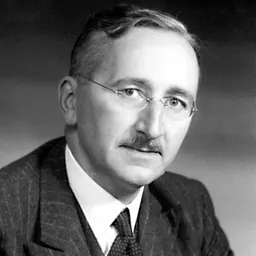




Related people
Same field, nearest in time


Contemporaries
People whose lives overlapped Paul Samuelson's




Frequently asked questions
Who was Paul Samuelson?
American economist (1915–2009)
When was Paul Samuelson born?
Paul Samuelson was born on 15 May 1915 in Gary.
When did Paul Samuelson die?
Paul Samuelson died on 13 December 2009 in Belmont.
What was Paul Samuelson's occupation?
Paul Samuelson was an economist, writer, university teacher and political economist.
What nationality was Paul Samuelson?
Paul Samuelson was American.
Sources & further reading
Cite this page
APA: Biography.guide. (2026). Paul Samuelson. https://biography.guide/paul-samuelson/
MLA: "Paul Samuelson." Biography.guide, https://biography.guide/paul-samuelson/.
Chicago: "Paul Samuelson." Biography.guide. https://biography.guide/paul-samuelson/.
Data last updated: 2026-09-20 · Spot an error? Report a correction.
Page generated 2026-09-27 05:26 UTC