
About Ludwig Aschoff
Lived 1866 – 1942 (aged 76). Ludwig Aschoff was a German physician, university teacher, pathologist and medical historian, known for Aschoff body and Atrioventricular node.
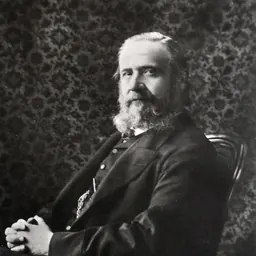
Karl Albert Ludwig Aschoff (10 January 1866 – 24 June 1942) was a German physician and pathologist. He is considered to be one of the most influential pathologists of the early 20th century and is regarded as the most important German pathologist after Rudolf Virchow.
Early life and education Aschoff was born in Berlin, Prussia on 10 January 1866. He studied medicine at the University of Bonn, University of Strasbourg, and the University of Würzburg.
Career After his habilitation in 1894, Ludwig Aschoff was appointed professor for pathology at the University of Göttingen in 1901. Aschoff transferred to the University of Marburg in 1903 to head the department for pathological anatomy. In 1906, he accepted a position as ordinarius at the University of Freiburg, where he remained until his death.
Aschoff was interested in the pathology and pathophysiology of the heart. He discovered nodules in the myocardium present during rheumatic fever, the so-called Aschoff bodies. Aschoff's reputation attracted students from all over the world, among them Sunao Tawara. Together they discovered and described the atrioventricular node (AV node, Aschoff-Tawara node). Numerous travels abroad, to England, Canada, Japan, and the U.S. led to many research connections, whereas the trips to Japan proved to be especially productive. Aschoff's popularity in Japanese medicine had its roots in his work with Tawara and a journey through Japan in 1924. In the early 20th century, 23 of 26 Japanese pathological institutes were headed by students of Aschoff.
Among his pathological studies was also the issue of racial differences. "Pathology of constitution" invented by him became a special branch of research of National Socialist (Nazi) doctors under the name of "military pathology". Franz Buechner is reported to be Aschoff's most prominent pupil. One of Aschoff's sons, Jürgen Aschoff, went on to become one of the founders of the field of chronobiology.
Death
Aschoff died on 24 June 1942 in Freiburg, Germany.
Personal life His grave is preserved in the Protestant Friedhof I der Jerusalems- und Neuen Kirchengemeinde (Cemetery No. I of the congregations of Jerusalem's Church and New Church) in Berlin-Kreuzberg, south of Hallesches Tor.
Don’t just read it —
keep it.
Full-length biographies made to live with: read them, listen on the way to work, watch them tonight.
- E-book
- Audio
- Video
Instant download · yours to keep · every purchase keeps this site free
Important facts
People in Ludwig Aschoff's life
Named in this biography and alive at the same time




Related people
Same field, nearest in time


Contemporaries
People whose lives overlapped Ludwig Aschoff's


Frequently asked questions
Who was Ludwig Aschoff?
German physician/pathologist (1866–1942)
When was Ludwig Aschoff born?
Ludwig Aschoff was born on 10 January 1866 in Berlin.
When did Ludwig Aschoff die?
Ludwig Aschoff died on 24 June 1942 in Freiburg im Breisgau.
What was Ludwig Aschoff's occupation?
Ludwig Aschoff was a physician, university teacher, pathologist and medical historian.
What was Ludwig Aschoff known for?
Ludwig Aschoff was known for Aschoff body and Atrioventricular node.
What nationality was Ludwig Aschoff?
Ludwig Aschoff was German.
Sources & further reading
Cite this page
APA: Biography.guide. (2026). Ludwig Aschoff. https://biography.guide/ludwig-aschoff/
MLA: "Ludwig Aschoff." Biography.guide, https://biography.guide/ludwig-aschoff/.
Chicago: "Ludwig Aschoff." Biography.guide. https://biography.guide/ludwig-aschoff/.
Data last updated: 2026-09-26 · Spot an error? Report a correction.
Page generated 2026-09-27 05:14 UTC