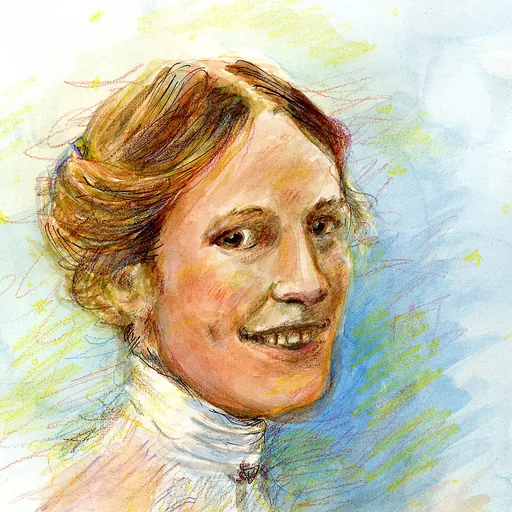
About Phoebe Waterman Haas
Lived 1882 – 1967 (aged 84–85). Phoebe Waterman Haas was an American astronomer, known for American Association of Variable Star Observers.
Phoebe Waterman Haas (September 20, 1882 – 1967) was one of the earliest American women to be awarded a doctorate in astronomy. While her formal professional career ended upon her marriage, she contributed as a citizen scientist, volunteering for the American Association of Variable Star Observers (AAVSO). The Phoebe Waterman Haas Public Observatory was supported by donations from her family and is named in her honor.
Life Phoebe Waterman Haas was born in North Dakota, United States, in 1882, as Emma Phoebe Waterman. Her father was John Charles Waterman.
Education and early work
Phoebe Waterman moved from North Dakota to New York to study at Vassar College, a university for women, where she received an AB degree in 1904. Two years later she earned a master's degree in mathematics and astronomy, working with Caroline E. Furness. Her thesis title was "The Visual Region of the Spectrum of the Brighter Class A Stars." who was awarded her degree on the same day.)
Marriage
In 1913, Phoebe was appointed as an assistant to the Argentine National Observatory at Cordoba, Argentina. On the ship traveling to Buenos Aires she met chemist Otto Haas. They were married on February 22, 1914. They had two children: Fritz Otto and John C. Haas.
AAVSO work
For many years, Phoebe was an observer, volunteer and benefactor of the American Association of Variable Star Observers (AAVSO). The AAVSO, founded in 1911, was an organization which fostered collaboration between citizen scientists and professionals. John Crane willed his 4-inch Clark refractor to the AAVSO. After he died in 1927, Phoebe Waterman Haas was able to obtain it. She reported her observations of variable stars to the American Association of Variable Star Observers (AAVSO), submitting 338 observations from 1928 to 1933.
Legacy
In 1945, following World War II, Phoebe and Otto Haas created the Phoebe Waterman Foundation to help fatherless children and to support medical and educational institutions.
Phoebe Waterman Haas Public Observatory
The observatory of the National Air and Space Museum in Washington, D.C. was named the Phoebe Waterman Haas Public Observatory in recognition of a US$6 million donation from the Thomas W. Haas Foundation (founded by Phoebe's grandson) to establish an endowment for the museum's Public Observatory Program.
Don’t just read it —
keep it.
Full-length biographies made to live with: read them, listen on the way to work, watch them tonight.
- E-book
- Audio
- Video
Instant download · yours to keep · every purchase keeps this site free
Important facts
Family & relationships
People in Phoebe Waterman Haas's life
Named in this biography and alive at the same time

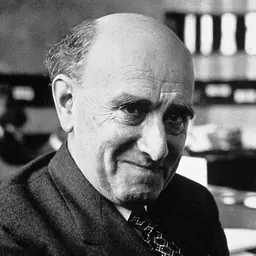

Related people
Same field, nearest in time


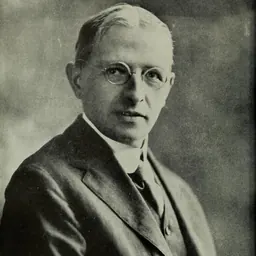


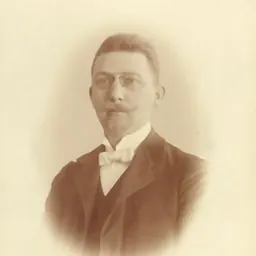
Contemporaries
People whose lives overlapped Phoebe Waterman Haas's




Frequently asked questions
Who was Phoebe Waterman Haas?
American astronomer (1882–1967)
When was Phoebe Waterman Haas born?
Phoebe Waterman Haas was born on 20 September 1882 in North Dakota.
When did Phoebe Waterman Haas die?
Phoebe Waterman Haas died in 1967 in Villanova.
What was Phoebe Waterman Haas's occupation?
Phoebe Waterman Haas was an astronomer.
What was Phoebe Waterman Haas known for?
Phoebe Waterman Haas was known for American Association of Variable Star Observers.
What nationality was Phoebe Waterman Haas?
Phoebe Waterman Haas was American.
Sources & further reading
· Wikipedia: Phoebe Waterman Haas
· DBpedia: Phoebe Waterman Haas
Cite this page
APA: Biography.guide. (2026). Phoebe Waterman Haas. https://biography.guide/phoebe-waterman-haas/
MLA: "Phoebe Waterman Haas." Biography.guide, https://biography.guide/phoebe-waterman-haas/.
Chicago: "Phoebe Waterman Haas." Biography.guide. https://biography.guide/phoebe-waterman-haas/.
Data last updated: 2026-09-22 · Spot an error? Report a correction.
Portrait: Wikimedia Commons · author & licence
Page generated 2026-09-27 05:04 UTC