
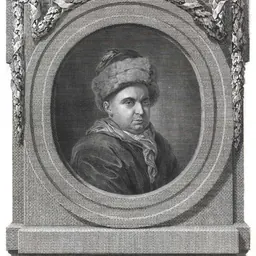
Philip James de Loutherbourg
Franco-British painter of Swiss descent (1740–1812), born in Alsace region
About Philip James de Loutherbourg
Lived 1740 – 1812 (aged 71). Philip James de Loutherbourg was a French, British and Swiss painter, scenographer, costume designer and artist.
Philip James de Loutherbourg, RA (born Philippe Jacques de Loutherbourg; 31 October 174011 March 1812) was a French-born British painter who became known for his large naval works, his elaborate set designs for London theatres, and his invention of a mechanical theatre called the "Eidophusikon". He also had an interest in faith-healing and the occult, and was a companion of the confidence-trickster Alessandro Cagliostro.
Early life
Battle of Maida. Engraving based on Loutherbourg's painting.
Loutherbourg was born in Strasbourg in 1740, the son of a Swiss miniature painter. Intended for the Lutheran ministry, he was educated at the University of Strasbourg.
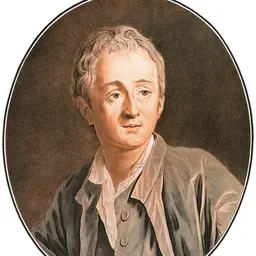
Paris Rejecting a religious calling, Loutherbourg decided to become a painter, and in 1755 placed himself under Charles-André van Loo in Paris, and later under Francesco Giuseppe Casanova. His talent developed rapidly, and he became a figure in the fashionable society of the day. He first exhibited at the Salon of 1763 where his Landscape with Figures and Animals attracted praise from Denis Diderot. He followed this up with further success at the Salon of 1765 with two paintings including Morning After the Rain. In 1767 he was elected to the French Academy, although below the age required by the rules of the institution, and painted landscapes, sea storms, and battles, all of which work had a celebrity above those of the specialists then working in Paris. He made his debut with the exhibition of twelve pictures, including Storm at Sunset, Night, and Morning after Rain. He continued to work at the theatre until 1785.
He was made a member of the Royal Academy in 1781.
Publications Two sets of drawings by de Loutherbourg were published, reproduced in aquatint, under the title Picturesque English Scenery in 1801 and 1805. He also contributed illustrations to a Bible published by Thomas Macklin in 1800. After his death Cadell and Davies published a volume of the Apocrypha. All 110 of his drawings for the vignettes (but not the Apocrypha) are pasted in the Bowyer Bible in Bolton Museum in Greater Manchester.
Esoteric interests In 1789 Loutherbourg temporarily gave up painting, in order to pursue an interest in alchemy and the supernatural.
Death Loutherbourg died in Chiswick in west London in 1812.
There are paintings by him in the collections of many British institutions including Tate Britain, the Victoria and Albert Museum, the National Portrait Gallery, the Royal Academy of Art, Leicester, Farnham and Derby Art Gallery.
Loutherbourg was buried in Chiswick Old Cemetery, adjoining the graveyard of St Nicholas Church, Chiswick. Buried nearby are the artists William Hogarth and James Abbott McNeill Whistler.
Don’t just read it —
keep it.
Full-length biographies made to live with: read them, listen on the way to work, watch them tonight.
- E-book
- Audio
- Video
Instant download · yours to keep · every purchase keeps this site free
Important facts
more
Philip James de Loutherburgh, R. A. Loutherbourg, Philipp Jakob Lutherbourg, Philip James de Louthebourg, P. P. De Loutherbourch, Philippe-Jacques De Loutherbourg, Philip James de Loutherbourgh, P. P. De Loutherbourgh, P. J. de Loutherbourg, Philip James Lauterbourg, Philip James dePeople in Philip James de Loutherbourg's life
Named in this biography and alive at the same time




Related people
Same field, nearest in time


Contemporaries
People whose lives overlapped Philip James de Loutherbourg's




Frequently asked questions
Who was Philip James de Loutherbourg?
Franco-British painter of Swiss descent (1740–1812), born in Alsace region
When was Philip James de Loutherbourg born?
Philip James de Loutherbourg was born on 31 October 1740 in Strasbourg.
When did Philip James de Loutherbourg die?
Philip James de Loutherbourg died on 11 March 1812 in Chiswick.
What was Philip James de Loutherbourg's occupation?
Philip James de Loutherbourg was a painter, scenographer, costume designer and artist.
What nationality was Philip James de Loutherbourg?
Philip James de Loutherbourg was French, British and Swiss.
Sources & further reading
· Wikipedia: Philip James de Loutherbourg
· DBpedia: Philip James de Loutherbourg
Cite this page
APA: Biography.guide. (2026). Philip James de Loutherbourg. https://biography.guide/philip-james-de-loutherbourg/
MLA: "Philip James de Loutherbourg." Biography.guide, https://biography.guide/philip-james-de-loutherbourg/.
Chicago: "Philip James de Loutherbourg." Biography.guide. https://biography.guide/philip-james-de-loutherbourg/.
Data last updated: 2026-09-25 · Spot an error? Report a correction.
Page generated 2026-09-27 05:12 UTC