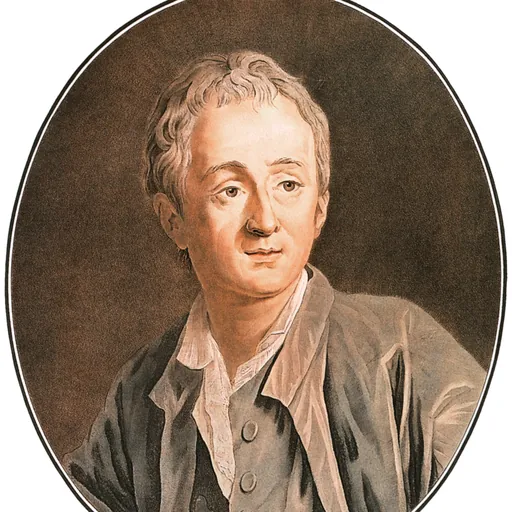
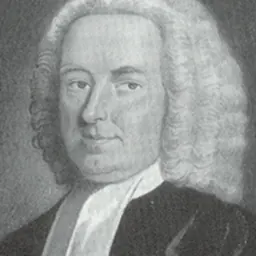
Denis Diderot
French Enlightenment philosopher writer and encyclopædist
About Denis Diderot
Lived 1713 – 1784 (aged 70). Denis Diderot was a French philosopher, novelist, essayist, encyclopédistes, art critic and playwright.
Early life
Denis Diderot was born in Langres, Champagne. His parents were Didier Diderot, a cutler, maître coutelier, and Angélique Vigneron. Of Denis' five siblings, three survived to adulthood: Denise Diderot, their youngest brother Pierre-Didier Diderot and, their sister Angélique Diderot. Denis Diderot greatly admired his sister Denise, sometimes referring to her as "a female Socrates".
Diderot began his formal education at a Jesuit college in Langres. In 1732 he received the degree of Master of Arts from the University of Paris. He abandoned the idea of entering the clergy in 1735 and, instead, decided to study at the Paris Law Faculty. His study of law was short-lived and in the early 1740s he decided to become a writer and translator.
In 1742 he formed a friendship with Jean-Jacques Rousseau, whom he met while watching games of chess and drinking coffee at the Café de la Régence. named Angélique, after both Diderot's dead mother and his sister. The death in 1749 of his sister Angélique, a nun, in her convent, may have affected Diderot's opinion of religion. She is assumed to have been the inspiration for his novel about a nun, La Religieuse, in which he depicts a woman who is forced to enter a convent, where she suffers at the hands of her fellow nuns.
Diderot was unfaithful to his wife, and had affairs with Anne-Gabrielle Babuty (who would marry and later divorce the artist Jean-Baptiste Greuze), Madeleine de Puisieux, Sophie Volland, and Mme de Maux (Jeanne-Catherine de Maux), to whom he wrote numerous surviving letters and who eventually left him for a younger man.
Philosophical Thoughts
In 1746, Diderot wrote his first original work: the Philosophical Thoughts (Pensées philosophiques). In this book, Diderot argued for a reconciliation of reason with feeling so as to establish harmony. According to Diderot, without feeling there is a detrimental effect on virtue, and no possibility of creating sublime work. However, since feeling without discipline can be destructive, reason is necessary to control feeling. in which a deist, an atheist, and a pantheist have a dialogue on the nature of divinity. The deist gives the argument from design. The atheist says that the universe is better explained by physics, chemistry, matter, and motion. The pantheist says that the cosmic unity of mind and matter, which are co-eternal and comprise the universe, is God. This work remained unpublished until 1830. Accounts differ as to why. It was either because the local police, warned by the priests of another attack on Christianity, seized the manuscript, or because the authorities forced Diderot to give an undertaking that he would not publish this work.
The book about the magical ring of a Sultan that induces any woman's "discreet jewels"
On 20 August, Diderot was moved to a comfortable room in the fortress and allowed to meet visitors and walk within the gardens. On 23 August, Diderot signed another letter promising never to leave the prison without permission. The seminal work combined scholarship with information on trades. Diderot emphasized the abundance of knowledge within each subject area. Everyone would benefit from these insights.
Controversies Diderot's work, however, was mired in controversy from the beginning; the project was suspended by the courts in 1752. Just as the second volume was completed, accusations arose regarding seditious content, concerning the editor's entries on religion and natural law. Diderot was detained and his house was searched for manuscripts for subsequent articles: but the search proved fruitless as no manuscripts could be found. They had been hidden in the house of an unlikely confederate—Chretien de Lamoignon Malesherbes, who originally ordered the search. Although Malesherbes was a staunch absolutist, and loyal to the monarchy—he was sympathetic to the literary project. Along with his support, and that of other well-placed influential confederates, the project resumed. Diderot returned to his efforts only to be constantly embroiled in controversy.
These twenty years were to Diderot not merely a time of incessant drudgery, but harassing persecution and desertion of friends. The ecclesiastical party detested the Encyclopédie, in which they saw a rising stronghold for their philosophic enemies. By 1757, they could endure it no longer—the subscribers had grown from 2,000 to 4,000, a measure of the growth of the work in popular influence and power. It asserted the doctrine that the main concern of the nation's government ought to be the nation's common people. It was believed that the Encyclopédie was the work of an organized band of conspirators against society, and that the dangerous ideas they held were made truly formidable by their open publication. In 1759, the Encyclopédie was formally suppressed. He damaged his eyesight correcting proofs and editing the manuscripts of less scrupulous contributors. He spent his days at workshops, mastering manufacturing processes, and his nights writing what he had learned during the day. He was incessantly harassed by threats of police raids. The last copies of the first volume were issued in 1765.
In 1764, when his immense work was drawing to an end, he encountered a crowning mortification: he discovered that the bookseller, Le Breton, fearing the government's displeasure, had struck out from the proof sheets, after they had left Diderot's hands, all passages that he considered too dangerous. "He and his printing-house overseer", writes Furbank, "had worked in complete secrecy, and had moreover deliberately destroyed the author's original manuscript so that the damage could not be repaired." The monument to which Diderot had given the labor of twenty long and oppressive years was irreparably mutilated and defaced.
La Religieuse (The Nun or Memoirs of a Nun) La Religieuse was a novel that claimed to show the corruption of the Catholic Church's institutions.
Plot The novel began not as a work for literary consumption, but as an elaborate practical joke aimed at luring the Marquis de Croismare, a companion of Diderot's, back to Paris. The Nun is set in the 18th century, that is, contemporary France. Suzanne Simonin is an intelligent and sensitive sixteen-year-old French girl who is forced against her will into a Catholic convent by her parents. Suzanne's parents initially inform her that she is being sent to the convent for financial reasons. However, while in the convent, she learns that she is actually there because she is an illegitimate child, as her mother committed adultery. By sending Suzanne to the convent, her mother thought she could make amends for her sins by using her daughter as a sacrificial offering.
At the convent, Suzanne suffers humiliation, harassment and violence because she refuses to make the vows of the religious community. She eventually finds companionship with the Mother Superior, Sister de Moni, who pities Suzanne's anguish. After Sister de Moni's death, the new Mother Superior, Sister Sainte-Christine, does not share the same empathy for Suzanne that her predecessor had, blaming Suzanne for the death of Sister de Moni. Suzanne is physically and mentally harassed by Sister Sainte-Christine, almost to the point of death.
Suzanne contacts her lawyer, Monsieur Manouri, who attempts to legally free her from her vows. Manouri manages to have Suzanne transferred to another convent, Sainte-Eutrope. At the new convent, the Mother Superior is revealed to be a lesbian, and she grows affectionate towards Suzanne. The Mother Superior attempts to seduce Suzanne, but her innocence and chastity eventually drives the Mother Superior to insanity, leading to her death.
Suzanne escapes the Sainte-Eutrope convent using the help of a priest. Following her liberation, she lives in fear of being captured and taken back to the convent as she awaits the help from Diderot's friend the Marquis de Croismare.
Analysis Diderot's novel was not aimed at condemning Christianity as such but at criticizing cloistered religious life.
Le Dîner des philosophes painted by Jean Huber. Denis Diderot is the second from the right (seated).
Synopsis The narrator in the book recounts a conversation with nephew of the famous composer Jean-Philippe Rameau. The nephew composes and teaches music with some success but feels disadvantaged by his name and is jealous of his uncle. Eventually he sinks into an indolent and debauched state. After his wife's death, he loses all self-esteem and his brusque manners result in him being ostracized by former friends. A character profile of the nephew is now sketched by Diderot: a man who was once wealthy and comfortable with a pretty wife, who is now living in poverty and decadence, shunned by his friends. And yet this man retains enough of his past to analyze his despondency philosophically and maintains his sense of humor. Essentially he believes in nothing—not in religion, nor in morality; nor in the Roussean view about nature being better than civilization since in his opinion every species in nature consumes one another.
Posthumous publication The publication history of the Nephew is circuitous. Written between 1761 and 1774, Diderot never saw the work through to publication during his lifetime, and apparently did not even share it with his friends. After Diderot's death, a copy of the text reached Schiller, who gave it to Goethe, who, in 1805, translated the work into German. Goethe's translation entered France, and was retranslated into French in 1821. Another copy of the text was published in 1823, but it had been expurgated by Diderot's daughter prior to publication. The original manuscript was only found in 1891.
In 1759, Grimm asked Diderot to report on the biennial art exhibitions in the Louvre for the Correspondance. Diderot reported on the Salons between the Salon of 1759 and Salon of 1771 and again in 1775 and 1781. Diderot appreciated Greuze's sentimentality, and more particularly Greuze's portrayals of his wife who had once been Diderot's mistress. He also wrote Paradoxe sur le comédien (Paradox of the Actor), written between 1770 and 1778 but first published after his death in 1830, which is a dramatic essay elucidating a theory of acting in which it is argued that great actors do not experience the emotions they are displaying.
He would occasionally make his point by slapping her thighs. In a letter to Madame Geoffrin, Catherine wrote:
Your Diderot is an extraordinary man. I emerge from interviews with him with my thighs bruised and quite black. I have been obliged to put a table between us to protect myself and my members. She should publicly declare that "there is no true sovereign other than the nation, and there can be no true legislator other than the people." She should create a new Russian legal code establishing an independent legal framework and starting with the text: "We the people, and we the sovereign of this people, swear conjointly these laws, by which we are judged equally."
Ultimately, Diderot decided not to send these notes to Catherine; however, they were delivered to her with his other papers after he died. When she read them, she was furious and commented that they were an incoherent gibberish devoid of prudence, insight, and verisimilitude.
Philosophy
In his youth, Diderot was originally a follower of Voltaire and his deist Anglomanie, but gradually moved away from this line of thought towards materialism and atheism, a move which was finally realised in 1747 in the philosophical debate in the second part of his The Skeptic's Walk (1747). Diderot opposed mysticism and occultism, which were highly prevalent in France at the time he wrote, and believed religious truth claims must fall under the domain of reason, not mystical experience or esoteric secrets. However, Diderot showed some interest in the work of Paracelsus. He was "a philosopher in whom all the contradictions of the time struggle with one another" (Rosenkranz).
In his 1754 book On the interpretation of Nature, Diderot expounded on his views about nature, evolution, materialism, mathematics, and experimental science. It is speculated that Diderot may have contributed to his friend Baron d'Holbach's 1770 book The System of Nature. Diderot had enthusiastically endorsed the book stating that: What I like is a philosophy clear, definite, and frank, such as you have in the System of Nature. The author is not an atheist on one page and a deist on another. His philosophy is all of one piece. Why be moral in a world without god? How should we appreciate art? What are we and where do we come from? What are sex and love? How can a philosopher intervene in political affairs?
Death and burial Diderot died of pulmonary thrombosis in Paris on 31 July 1784, and was buried in the city's Église Saint-Roch. His heirs sent his vast library to Catherine II, who had it deposited at the National Library of Russia. He has several times been denied burial in the Panthéon with other French notables.
Diderot's remains were unearthed by grave robbers in 1793, leaving his corpse on the church's floor. His remains were then presumably transferred to a mass grave by the authorities.
Appreciation and influence
Marmontel and commented on the great pleasure of having intellectual conversations with Diderot. Diderot's contemporary, and rival, Jean Jacques Rousseau wrote in his Confessions that after a few centuries Diderot would be accorded as much respect by posterity as was given to Plato and Aristotle.
As atheism fell out of favor during the French Revolution, Diderot was vilified and considered responsible for the excessive persecution of the clergy.
In the next century, Diderot was admired by Balzac, Delacroix, Stendhal, Zola, and Schopenhauer. According to Comte, Diderot was the foremost intellectual in an exciting age.
Modern tributes
Otis Fellows and Norman Torrey have described Diderot as "the most interesting and provocative figure of the French eighteenth century."
In 1993, American writer Cathleen Schine published Rameau's Niece, a satire of academic life in New York that took as its premise a woman's research into an (imagined) 18th-century pornographic parody of Diderot's Rameau's Nephew. The book was praised by Michiko Kakutani in the New York Times as "a nimble philosophical satire of the academic mind" and "an enchanting comedy of modern manners."
French author Eric-Emmanuel Schmitt wrote a play titled Le Libertin (The Libertine) which imagines a day in Diderot's life including a fictional sitting for a woman painter which becomes sexually charged but is interrupted by the demands of editing the Encyclopédie. It was first staged at Paris' Théâtre Montparnasse in 1997 starring Bernard Giraudeau as Diderot and Christiane Cohendy as Madame Therbouche and was well received by critics.
In 2013, the 300th anniversary of Diderot's birth, his hometown of Langres held a series of events in his honor and produced an audio tour of the town highlighting places that were part of Diderot's past, including the remains of the convent where his sister Angélique took her vows. On 6 October 2013, a museum of the Enlightenment focusing on Diderot's contributions to the movement, the Maison des Lumières Denis Diderot, was inaugurated in Langres.
The French government considered memorializing the 300th anniversary of his birth, but this did not come to pass.
Don’t just read it —
keep it.
Full-length biographies made to live with: read them, listen on the way to work, watch them tonight.
- E-book
- Audio
- Video
Instant download · yours to keep · every purchase keeps this site free
Important facts
People in Denis Diderot's life
Named in this biography and alive at the same time



Related people
Same field, nearest in time



Contemporaries
People whose lives overlapped Denis Diderot's



Frequently asked questions
Who was Denis Diderot?
French Enlightenment philosopher writer and encyclopædist (1713–1784)
When was Denis Diderot born?
Denis Diderot was born on 5 October 1713 in Langres.
When did Denis Diderot die?
Denis Diderot died on 31 July 1784 in Paris.
What was Denis Diderot's occupation?
Denis Diderot was a philosopher, novelist, essayist, encyclopédistes, art critic and playwright.
What nationality was Denis Diderot?
Denis Diderot was French.
Sources & further reading
Cite this page
APA: Biography.guide. (2026). Denis Diderot. https://biography.guide/denis-diderot/
MLA: "Denis Diderot." Biography.guide, https://biography.guide/denis-diderot/.
Chicago: "Denis Diderot." Biography.guide. https://biography.guide/denis-diderot/.
Data last updated: 2026-09-22 · Spot an error? Report a correction.
Portrait: Wikimedia Commons · author & licence
Page generated 2026-09-27 05:04 UTC