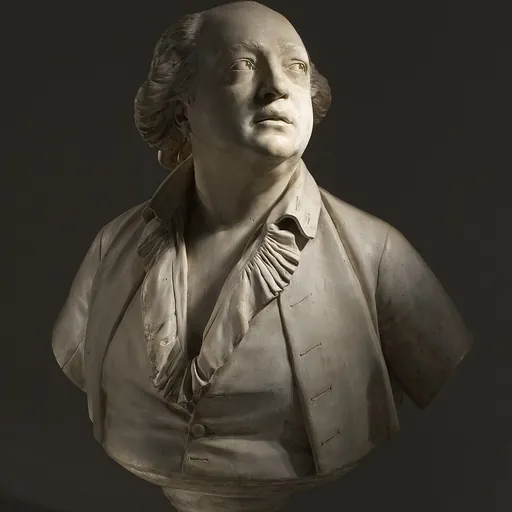
Alessandro Cagliostro
Italian occultist, alchemist, and impostor
About Alessandro Cagliostro
Lived 1743 – 1795 (aged 52). Alessandro Cagliostro was a French physician, alchemist, adventurer, confidence trickster, impostor and occultist.
Giuseppe Balsamo (2 June 1743 – 26 August 1795), known by the alias Count Alessandro di Cagliostro, was an Italian occultist, self-styled magician and confidence trickster. He became a glamorous figure associated with the royal courts of Europe where he pursued various occult arts, including psychic healing, alchemy, and scrying. In his 1833 essay, Count Cagliostro, Thomas Carlyle (1795–1881) pronounced him the "Quack of Quacks".
Early life and education Cagliostro was born Giuseppe Balsamo on June 8, 1743 in Albergheria, Palermo, Kingdom of Sicily. Several sources, including Cagliostro himself, state that he was descended from the Byzantine Greek family of Komnenos; specifically the Megas Komnenos branch, which ruled the Empire of Trebizond. Given that 'Balsamo' is a name of Greek origin, and that Albergheria was largely inhabited by people of Greek descent, Cagliostro's claim to Greek ancestry seems valid. Albergheria was also known as the Jewish Quarter, which led later biographers to state that Cagliostro was at least part Jewish, despite the fact that he was from a Catholic family. They were eventually caught and had to flee Rome.
From then on, Cagliostro and Serafina spent years traveling. They tried to settle in Bergamo but Cagliostro's identity was discovered; they were briefly jailed then stripped of their funds and expelled from the city. They went through Galicia, to Genoa, then Antibes, Barcelona, Madrid and Lisbon, living on the proceeds of Serafina's prostitution and Cagliostro's various scams, which included the sale of 'amulets' and 'cures'.
In 1772, the Cagliostros traveled to Paris in the company of another man, known only as 'M. Duplaisir', who was likely Serafina's lover. After Cagliostro had stolen all of his money, Duplaisir urged Serafina to flee and return to her parents. She took his advice but was thwarted by her husband, who used his connections to have her arrested. While Serafina spent several months in Sainte-Pélagie Prison, Cagliostro made a considerable sum of money selling a potion to "beautify the complexion". He then went further, claiming to be in possession of the solutions offered by the Hermetic Mystery, of the Elixir of life, and of the skills of the Philosopher's stone and mesmerism. Eventually, as people discovered his fraud, he was forced to flee. With Serafina once again in tow, he fled to Brussels, across Germany and Italy and, eventually, back to his native city of Palermo. Cagliostro also found a book on Egyptian Masonry and, from then on, claimed to be a master of that art. Referring to himself as the "Grand Cophta", he brought others into lodge meetings and there, and at private homes, practiced increasingly bizarre rituals on people, promising them "perfection" through "physical and moral regeneration". Eventually, he was arrested and spent some time in King's Bench Prison.
In London, Cagliostro had finally been able to deal with Le Courier de l'Europe, by forcing Charles Morande to print a public retraction and apology for all that he had written about him. In his 1787 Letter to England, which he sent to several newspapers and magazines, Cagliostro claimed to set the record straight, blaming various other parties for misunderstandings and unjust accusations and prosecutions. But the damage had been done; his 'Egyptian Pills', potions and rituals were not selling, the English government was investigating him, and he knew he was being watched by French spies.
In May 1787, the couple left London, but they had nowhere to go. They were thrown out of Switzerland, Savoy and Turin and began pawning their belongings to survive. By May 1789, Serafina had had enough and insisted that they return to Rome. Cagliostro tried to establish a Masonic Lodge in Rome; for this, on December 29, 1789, he was arrested by the Inquisition and locked up in the Castel Sant'Angelo. Serafina was also jailed. She had begun to tell others the truth about her husband months earlier; now, she confessed everything. Thinking that he could talk his way out of prison, Cagliostro began to offer counter-confessions. Serafina was sent to a convent, where she died in 1794, age 43. In April 1791, the Inquisition, now in possession of the Palermo lawyer's investigatory results, officially condemned Egyptian Masonry and sentenced Cagliostro to life in prison. He died in his cell at the Forte di San Leo on August 26, 1795, age 52.
Legacy Portuguese author Camilo Castelo Branco credits Joseph Balsamo with the creation of the Egyptian Rite of the Freemasons and intensive work in the diffusion of Freemasonry, by opening lodges all over Europe and by introducing the acceptance of women into the community. The idea of an "Egyptian freemasonry" was maintained in Italy by the Rite of Misraïm, founded in 1813 by the three Jewish Bédarride brothers and in France, the Rite of Memphis founded in 1838 by Jacques Etienne Marconis de Nègre; these unified under Giuseppe Garibaldi as the Ancient and Primitive Rite of Memphis-Misraïm in 1881.
Cagliostro is also rumored to have received initiation into the Egyptian Rite in Naples under the guidance of Raimondo di Sangro, Prince of Sansevero, around 1767.
Cagliostro was an extraordinary forger. Giacomo Casanova, in his autobiography, narrated an encounter in which Cagliostro was able to forge a letter by Casanova, despite being unable to understand it. Occult historian Lewis Spence comments in his entry on Cagliostro that the swindler put his finagled wealth to good use by starting and funding a chain of maternity hospitals and orphanages around the continent. He carried an alchemistic manuscript, The Most Holy Trinosophia, amongst others with him on his ill-fated journey to Rome, and it is alleged that he wrote it.
In popular culture
Stage After her experience with Cagliostro and other charlatans, Catherine the Great wrote three anti-occult plays, in German and in Russian: Der Betrüger (The Fraudster; 1785), Der Verblendete (The Deluded One; 1785), and Der Sibirische Schaman (The Siberian Shaman; 1786). Johann Wolfgang von Goethe wrote a comedy based on Cagliostro's life, Der Gross-Cophta (The Great Cophta; 1791). Latvian playwright Mārtiņš Zīverts wrote the play Kaļostro Vilcē (Cagliostro in Vilce) in 1967.
Literature In the 1816 short story "The Sandman" by E. T. A. Hoffmann, Spallanzani is said to resemble a portrait of Cagliostro by Daniel Chodowiecki.
George Sand includes Cagliostro as a minor character in her historical novel The Countess of Rudolstadt (1843). Alexandre Dumas père used Cagliostro in several of his novels, especially in Le Collier de la Reine (The Queen's Necklace, 1850), Joseph Balsamo (1853) and The Countess de Charny (1855). Mikhail Kuzmin wrote a novella called The Marvelous Life of Giuseppe Balsamo, Count Cagliostro (1916). Aleksey Nikolayevich Tolstoy wrote the supernatural love story Count Cagliostro (1921), in which the Count brings to life a long-dead Russian princess. The story inspired the 1984 Soviet TV movie Formula of Love. Harry Stephen Keeler paid tribute to the magician in his 1929 novel The Spectacles of Mr. Cagliostro. William Bolitho Ryall's Twelve Against the Gods (1929) has a section on Cagliostro. Josephine Balsamo, a descendant of Joseph Balsamo who calls herself Countess Cagliostro, appears in Maurice Leblanc's Arsène Lupin novels (1905–1932). Cagliostro Street appears as a location in John Dickson Carr's 1935 novel The Hollow Man, aka The Three Coffins. In The Book and the Beast, a 1943 short story by Robert Arthur Jr., the use of a grimoire attributed to Cagliostro causes gruesome deaths. Cagliostro is featured in three stories by Rafael Sabatini, The Lord of Time, The Death Mask and The Alchemical Egg, which are included in his 1946 collection Turbulent Tales. There are numerous references to Cagliostro in the 1946 detective novel He Who Whispers by John Dickson Carr. In Robert A. Heinlein's Glory Road (1963), the Empress Star uses "Balsamo" as an alias, and refers to Giuseppe Balsamo as her uncle. Cagliostro is frequently mentioned in Umberto Eco's 1988 novel Foucault's Pendulum. Cagliostro is a character in Robert Anton Wilson's The Historical Illuminatus Chronicles (1991). Cagliostro makes a number of appearances as a vampire in Kim Newman's Anno Dracula series of novels (1992-2022). Cagliostro is a character in the 1997 novel Superstition by David Ambrose. Cagliostro is a character in Psychoshop, a 1998 novel by Alfred Bester and Roger Zelazny. Cagliostro is often mentioned in the 2007 novel Napoleon's Pyramids by William Dietrich in connection with Freemasons and ancient Egyptian artifacts. In the novel Kun Lun by Kilburn Hall (2014), Alessandro Cagliostro, Joseph Balsamo and Giuseppe Balsamo are names that the time traveler Count St. Germain has used.
Music Cagliostro appears as a principal character in the 1794 opera Le congrès des rois, a collaborative work of 12 composers. The French composer Victor Dourlen (1780–1864) composed the first act to Cagliostro, ou Les illuminés which premiered on 27 November 1810. Adolphe Adam wrote the opéra comique Cagliostro which premiered on 10 February 1844. The Irish composer William Michael Rooke (1794–1847) wrote the (unperformed) opera Cagliostro. In 1850, Albert Lortzing wrote the libretto for a comic opera Cagliostro, but did not compose music for it. In 1875, Johann Strauß (Sohn) wrote the operetta Cagliostro in Wien (Cagliostro in Vienna). The French composer Claude Terrasse (1867–1923) wrote Le Cagliostro which premiered in 1904. The Polish composer Jan Maklakiewicz (1899–1954) wrote the ballet Cagliostro w Warszawie which premiered in 1938. The opera Cagliostro by the Italian composer Ildebrando Pizzetti (1880–1968) was performed on Italian radio in 1952 and at La Scala on 24 January 1953. The Romanian composer Iancu Dumitrescu (1944–) wrote the 1975 work Le miroir de Cagliostro for choir, flute and percussion. The comic opera Graf Cagliostro was written by Mikael Tariverdiev in 1983. The American composer John Zorn (1953–) composed Cagliostro for solo viola in 2015.
Film Cagliostro has been portrayed in film by: Georges Méliès, Le Miroir de Cagliostro (Cagliostro's Mirror), 1899 Fryderyk Jarossy, Kaliostro, 1918 Reinhold Schünzel, The Count of Cagliostro, 1920 Hans Stüwe, Cagliostro, 1929 Boris Karloff, The Mummy (1932) Ferdinand Marian, Münchhausen, 1943 Orson Welles, Black Magic, 1949 Howard Vernon, The Erotic Rites of Frankenstein, 1972 Bekim Fehmiu, Cagliostro, 1975 Tarō Ishida, Lupin III: The Castle of Cagliostro, 1979 Nodar Mgaloblishvili, Formula of Love, 1984 Nicol Williamson, Spawn, 1997 Christopher Walken, The Affair of the Necklace, 2001 Robert Englund, The Return of Cagliostro, 2003
Television Cagliostro appears as a depraved sorcerer, played by Henry Daniell, in a 1961 episode of the series Thriller, entitled "The Prisoner in the Mirror". Jean Marais portrays Cagliostro in the 1973 mini-series . In "Diana's Disappearing Act", a 1978 episode of the Wonder Woman TV series, a descendant of Cagliostro's (played by Dick Gautier) is the villain. Attempting alchemy, he succeeds in temporarily turning lead into gold. A magician named Cagliostro (Jose Ferrer) is murdered in "Death Casts a Spell," a 1984 episode of Murder She Wrote. In "The Pharaoh's Curse", episode 36 of the 2002 series The Twilight Zone, an illusionist played by Xander Berkeley strives to learn the secrets behind a centuries-old illusion, which has originated with Cagliostro. Cagliostro and Lorentzia (Serafina), appear as antagonists in the 2006 TV anime Le Chevalier d'Eon. While Cagliostro is portrayed as a bumbling money-grubber, Lorentzia has magic powers. Cagliostro is a swindling alchemist in the 2012 anime TV series Senki Zesshou Symphogear AXZ. In Samurai Jack (the seventh episode of the third season, 2020), the title character follows a quest for the crystal of Cagliostro. In the Marvel Cinematic Universe series What If...? (2021-2024), Cagliostro is an ancient, millennia-old sorcerer.
Comics The Phantom comic book (based on a comic strip of the same name) featured Cagliostro as a character in the story "The Cagliostro Mystery" from 1988. written by Norman Worker and drawn by Carlos Cruz. The third Kid Eternity comic book, published in 1946, featured Cagliostro's risen spirit. In the DC Comics universe, Cagliostro is described as an immortal (JLA Annual 2), a descendant of Leonardo da Vinci as well as an ancestor of Zatara and Zatanna (Secret Origins 27). In Marvel Comics' Tomb of Dracula and Dracula Lives comic books, Cagliostro is a frequent enemy of Dracula. In Iron Man #149, Cagliostro trains Doctor Doom in sorcery. The manga Rozen Maiden gives Count Cagliostro as one of many aliases adopted by the legendary dollmaker Rozen. He was shown to be in prison whittling wood. He is a character in Todd McFarlane's comic book Spawn. He was introduced to the series by writer Neil Gaiman. Here, Cogliostro was once a spawn of Hell bound to his duty to the daemon Malebolgia. Having freed himself of the curse through alchemy and sorcery, he is teaching Spawn to do the same throughout the series.
Video games Cagliostro is the namesake of a playable character in the Japanese Mobile game Granblue Fantasy. Payday 2 by Overkill and Starbreeze studios features Cagliostro's manuscript as a key story item and opens a deep mystery within the game involving secret societies, immortality and nephilims. Cagliostro is a villain in the Spiders video game Steelrising. His penchant for magic and alternative medicine is referenced; for example, in one scene, he is shown practicing hypnosis with a pendulum. Cagliostro is featured in Fate/Grand Order as a Pretender-class servant. Cagliostro appears as an opponent in the card cheating game Card Shark.
Don’t just read it —
keep it.
Full-length biographies made to live with: read them, listen on the way to work, watch them tonight.
- E-book
- Audio
- Video
Instant download · yours to keep · every purchase keeps this site free
Important facts
People in Alessandro Cagliostro's life
Named in this biography and alive at the same time



Related people
Same field, nearest in time


Contemporaries
People whose lives overlapped Alessandro Cagliostro's





Frequently asked questions
Who was Alessandro Cagliostro?
Italian occultist, alchemist, and impostor (1743–1795)
When was Alessandro Cagliostro born?
Alessandro Cagliostro was born on 2 June 1743 in Palermo.
When did Alessandro Cagliostro die?
Alessandro Cagliostro died on 26 August 1795 in Fortress of San Leo.
What was Alessandro Cagliostro's occupation?
Alessandro Cagliostro was a physician, alchemist, adventurer, confidence trickster, impostor and occultist.
What nationality was Alessandro Cagliostro?
Alessandro Cagliostro was French.
Sources & further reading
· Wikipedia: Alessandro Cagliostro
· DBpedia: Alessandro Cagliostro
Cite this page
APA: Biography.guide. (2026). Alessandro Cagliostro. https://biography.guide/alessandro-cagliostro/
MLA: "Alessandro Cagliostro." Biography.guide, https://biography.guide/alessandro-cagliostro/.
Chicago: "Alessandro Cagliostro." Biography.guide. https://biography.guide/alessandro-cagliostro/.
Data last updated: 2026-09-23 · Spot an error? Report a correction.
Portrait: Wikimedia Commons · author & licence
Page generated 2026-09-27 05:05 UTC