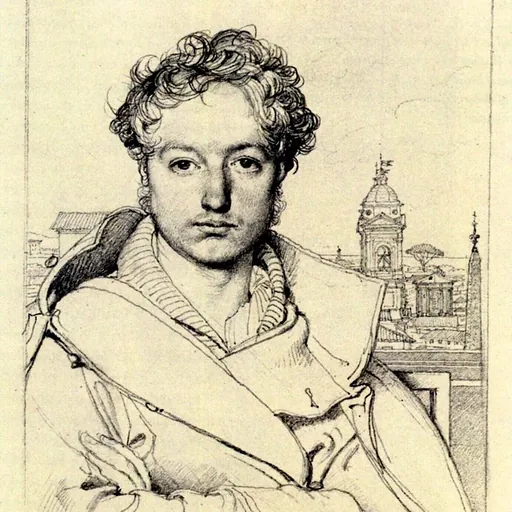
About Victor Dourlen
Lived 1780 – 1864 (aged 83). Victor Dourlen was a French composer and music educator.
Victor Charles Paul Dourlen (3 November 1780 – 8 January 1864) was a French composer and music teacher at the Conservatoire de Paris during the first half of the nineteenth century. He is primarily known as a theorist on account of his treatises on harmony, based on the methods of Charles Simon Catel, which were widely used as reference works, especially his Traité d'harmonie (c. 1838), the Traité d'accompagnement pratique (c. 1840), and his Méthode élémentaire pour le pianoforte (c. 1820).
Biography Victor Dourlen was born in Dunkerque. He entered the Paris Conservatory in 1799 at the age of 19, becoming a pupil of Charles-Simon Catel (harmony), François-Joseph Gossec (counterpoint), and Benoit Mozin (piano). He became a teacher of elementary singing at the institution in 1800.
In 1805, he won the Prix de Rome for musical composition with his cantata Cupidon pleurant Psyché. Although he was prevented by war from going to Rome immediately, his opera Philoclès was performed at the Opéra-Comique in October 1806. However, with only four performances, the opera was not successful. Dourlen then went to Rome in 1807, and on July 14 his Te Deum for the Battle of Friedland was performed, followed in 1808 by the Dies irae, another large-scale cantata.
On his return to Paris, Dourlen produced several comic operas, all public failures, including Linnée (1808), La Dupe de son Art (1809), and Cagliostro (1810). In 1816, he was appointed full professor of harmony and counterpoint, a position he held until 1842. Among his pupils were Charles-Valentin Alkan, François Bazin, Louis Désiré Besozzi, Alexandre Goria, Henri Herz, Félix Le Couppey, Antoine François Marmontel, Joseph O'Kelly, and Ambroise Thomas. His only operatic success was Le Frère Philippe (1818) after a libretto by Auguste Duport, which was performed 91 times. His last opera, Le Petit souper (1822) became a public fiasco for the all too liberal depiction of the French king François I and was consequently banned by the French censors. From then on, Dourlen did not write any further opera but concentrated on teaching and writing theoretical treatises.
In 1838, Dourlen was made a chevalier of the Legion d'honneur. He died in Paris.
Selected works Operas Philoclès (text by Justin Gensoul), 2 acts (1806) Linnée, ou Le Mines de Suède (Jean-Élie Bédéno Dejaure), 3 acts (1808) La Dupe de son Art, ou Les Deux amants (Louis-Charles Sapey), 1 act (1809) Cagliostro, ou La Séduction (Emmanuel Dupaty / Jacques-Antoine de Révéroni Saint-Cyr), 3 acts (act 1 by Dourlen, acts 2 and 3 by Anton Reicha) (1810) Plus heureux que sage (Louis Mézières-Miot), 1 act (1816) Le Frère Philippe (Auguste Duport), 1 act (1818) Le Mariage en poste (Pierre Adolphe Capelle) (1818, not performed) À deux de jeu (Paul de Kock), 1 act (1818, not performed) Marini, ou Le Muet de Venise (Étienne Joseph Bernard Delrieu), 3 acts (1819) La Vente après décès (Charles-Guillaume Étienne), 1 act (1821) Le Petit souper, ou La Belle féronnière (Jean-Baptiste-Rose-Bonaventure Violet d'Épagny), 1 act (1822)
Cantatas Scène d'Alcyone (text by Antoine Vincent Arnault), for voices and orchestra (1804) Psyché et l'amour (A. V. Arnault), for voices and orchestra (1805)
Sacred choral works Te Deum, for choir and orchestra (1807) Dies irae, for choir and orchestra (1808)
Instrumental music La Bataille de Marengo. Sonate militaire, for piano (1800) Sonates, Op. 1, for piano (n. d.) Piano Concerto, Op. 3 Piano Trio, Op. 4 Trois Sonates, Op. 5, for violin and piano Sonates faciles, Op. 6, for piano Sonate à quatre mains, Op. 10, for 2 pianists Grande sonate à quatre mains, Op. 12, for 2 pianists Fantaisie sur "Bélisaire", for piano Fantaisie en duo, for harp and piano Pot-pourri sur des airs de Jean de Paris, for piano
Writings Méthode élémentaire pour le pianoforte (c. 1820) Traité d'harmonie, contenant un cours complet tel qu'il est enseigné au Conservatoire de Paris (c. 1838) Traité d'accompagnement (c. 1840) Principes d'harmonie et tableau général de tous les accords, de leur origine, leur préparation, leur renversement (n. d.)
Don’t just read it —
keep it.
Full-length biographies made to live with: read them, listen on the way to work, watch them tonight.
- E-book
- Audio
- Video
Instant download · yours to keep · every purchase keeps this site free
Important facts
People in Victor Dourlen's life
Named in this biography and alive at the same time

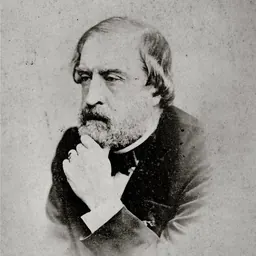
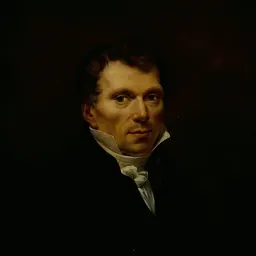

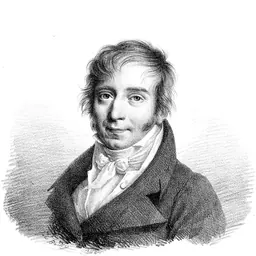

Related people
Same field, nearest in time


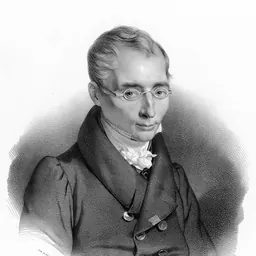
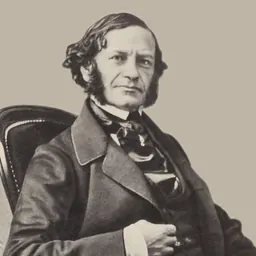
Contemporaries
People whose lives overlapped Victor Dourlen's

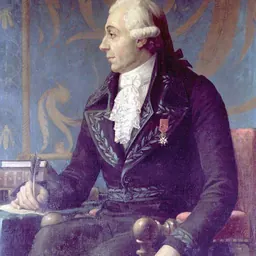
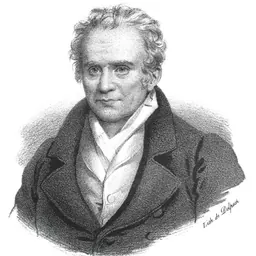
Frequently asked questions
Who was Victor Dourlen?
French composer and pedagogue
When was Victor Dourlen born?
Victor Dourlen was born on 3 November 1780 in Dunkirk.
When did Victor Dourlen die?
Victor Dourlen died on 8 January 1864 in 17th arrondissement of Paris.
What was Victor Dourlen's occupation?
Victor Dourlen was a composer and music educator.
What nationality was Victor Dourlen?
Victor Dourlen was French.
Sources & further reading
Cite this page
APA: Biography.guide. (2026). Victor Dourlen. https://biography.guide/victor-dourlen/
MLA: "Victor Dourlen." Biography.guide, https://biography.guide/victor-dourlen/.
Chicago: "Victor Dourlen." Biography.guide. https://biography.guide/victor-dourlen/.
Data last updated: 2026-09-20 · Spot an error? Report a correction.
Page generated 2026-09-27 05:09 UTC