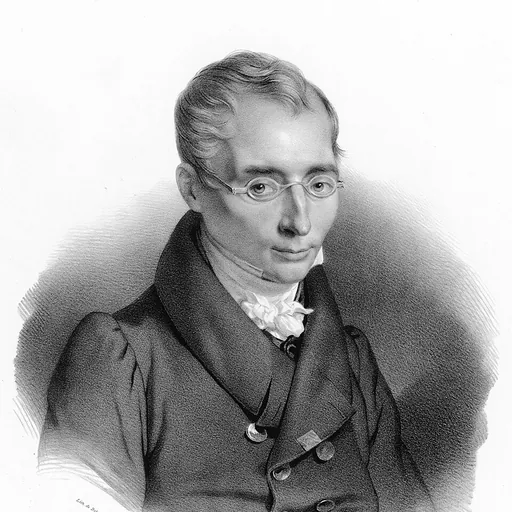
About Ferdinand Hérold
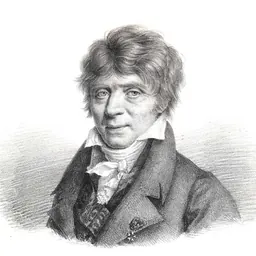
Lived 1791 – 1833 (aged 41). Ferdinand Hérold was a French composer, choreographer, pianist, scenographer and costume designer.
Louis Joseph Ferdinand Herold (28 January 1791 – 19 January 1833), better known as Ferdinand Hérold , was a French composer. He was celebrated in his lifetime for his operas, of which he composed more than twenty, but he also wrote ballet music, works for piano and choral pieces. He is best known today for the ballet La Fille mal gardée and the overture to the opera Zampa.
Born in Paris to a musical family, Hérold trained at the Paris Conservatoire and won France's premier musical prize, the Prix de Rome in 1812. After a time in Italy he returned to Paris and worked first at the Théâtre Italien and then at the Opéra. He wrote several ballets for the latter, but was best known as a composer of opéra comique. Some of them, particularly in his early days, were hampered by poor librettos, but later he had more successes than failures, and his last two operas, Zampa (1831) and Le Pré aux clercs (The Clerk's Meadow, 1832) were immensely popular, and remained in the repertory in France and elsewhere for decades after his early death from tuberculosis in 1833.
As a ballet composer Hérold was a pioneer, raising the standard of ballet scores from being simple arrangements of popular tunes to well-orchestrated music illustrating the action of the ballets. His operas influenced later composers from Bizet and Offenbach to Wagner and Smetana.
Life and career
Background and early years
The Herold family was of Alsatian origin (the surname was written without an acute accent). The composer's father, François-Joseph Herold (1755–1802) was the son of an organist in Seltz. François-Joseph studied music with C. P. E. Bach in Hamburg and moved to Paris in about 1780, where he worked as a composer, pianist and teacher. In 1790 he married Jeanne-Gabrielle Pascal. Their only child, Louis Joseph Ferdinand Herold, later widely known as Ferdinand Hérold, was born in what is now the rue Herold in the 1st arrondissement on 28 January 1791. Wanting the boy to have an all-round education, François-Joseph sent him, aged eleven, to one of the best boarding schools in Paris, the Hix institute in the Champs-Élysées. The school included music in the curriculum, and Hérold studied solfège with François-Joseph Fétis. At the same time he continued his piano studies with his godfather, Louis Adam.
François-Joseph did not intend his son to follow him into the musical profession, but his death, from tuberculosis, in 1802 left Hérold free to do so. In 1806, when he was nearly 16, he entered the Paris Conservatoire, where he studied piano with Adam, harmony with Charles-Simon Catel and violin with Rodolphe Kreutzer. In 1810 he won the conservatoire's first prize for piano, playing one of his own compositions. During 1812 works by Hérold were performed publicly for the first time. They included a piano concerto given on 6 April at the Théâtre Italien with the composer as soloist. Like his father, Hérold suffered from tuberculosis, and the climate of Rome did not suit him; he moved south to Naples in 1815.
Return to Paris
Hérold arrived back in Paris in August 1815, where he took the post of maestro al cembalo (deputy conductor and répétiteur) at the Théâtre Italien. He had another success with La Clochette (The Bell, 1817), based on the story of Aladdin and his lamp; |group=n After these, he had difficulty finding adequate librettos, and suffered four failures in a row between 1818 and 1821, following which he gave up composing operas for more than two years. and his principal commissions there over the next three years were for ballet music: Astolphe et Jaconde (1827), La Somnambule (The Sleepwalker) (1827), La Fille mal gardée (1828) Lydie (1828), La Belle au bois dormant (The Sleeping Beauty) (1829) and La Noce de village (Village Wedding) (1830).
Hérold married Adèle Elise Rollet in 1827. They had three children: Ferdinand, who became a lawyer and subsequently a senator; Adèle, who married a member of the Paris Conseil municipal; and Eugénie, a gifted musician, who, like her father and grandfather was consumptive, and died aged 20.
Final years
Betzwieser writes that the composer's last three years were dominated by the writing of "his two masterpieces": Zampa (1831) and Le Pré aux clercs (1832). The first had a romantic libretto by Mélesville that appealed to the public and brought out the best in Hérold.
In mid-1832 the Opéra-Comique had to close because of a cholera outbreak and civil disorder. During this period Hérold finished Le Pré aux clercs, to a libretto by Eugène de Planard based on Prosper Mérimée's historical novel Les Chroniques du temps de Charles IX (1829). Betzwieser writes that it aroused wild enthusiasm at its premiere on 15 December 1832. Five weeks after the premiere he died, nine days short of 42, at his house in Paris, and was buried at Père Lachaise Cemetery.
Hérold left an unfinished opera, Ludovic. His friend Fromental Halévy completed the score, and it was performed three months after Hérold's death. By the end of the 19th century Le Pré aux clercs had been performed more than 1,500 times in Paris. Hérold, and his friend Adolphe Adam (son of his godfather and piano teacher), made the first steps to elevating ballet scores to a higher musical level. Hérold continued the practice of using familiar operatic tunes (partly to aid audiences' comprehension of mime scenes), but he borrowed carefully and with discrimination. La Belle au bois dormant is an early example, using music from, inter alia, Weber's Der Freischütz and showing, ("if in a crude form", in Nørlyng's phrase) the first steps towards more dramatically penetrating ballet music.
Although Hérold's name is associated in the public mind with the music for La Fille mal gardée, the score he wrote for the Opéra in 1828 differs substantially from that played in modern productions of the ballet. His score is known to have incorporated some music from an earlier production of the ballet, as well as other contemporary sources, notably Rossini. Later productions have added music by Peter Ludwig Hertel, and the most famous number in the piece, the clog dance, is a modern invention, based on one of Hertel's tunes, by John Lanchbery, who revised the whole score in 1959 for Frederick Ashton's production. Lanchbery maintained that the orchestration of Hérold's score is inferior to that of his operas, probably because it was hurriedly composed. But Betzwieser observes that Zampa'''s Romantic features made it highly successful outside France, and writing in Grove's Dictionary of Music and Musicians the British critic Elizabeth Forbes commented in 1992, "All the music is perfectly suited to its subject, while the portions devoted to Zampa and the statue are highly dramatic as well as melodious".
Forbes writes that Le Pré aux clercs is acknowledged by composers and musicians as one of the finest of its period. The story covers similar ground to Meyerbeer's Les Huguenots, but in an intimate, more personal way. Forbes finds the score "a chain of fine numbers, extremely melodious and pretty, but also dramatically well suited to the various characters", with a balance between comedy and romance. In the overture Hérold does not use themes from the opera, but ranges from an opening fugue to a quick march. Wagner and Smetana both knew the opera well, and in another 2016 analysis, Damien Colas writes that echoes of Le Pré aux clercs may be found in the former's Das Liebesverbot (1836) and the latter's The Bartered Bride (1866). In The Oxford Companion to Music (2011) Sarah Hibberd writes, "the power of Le Pré aux clercs in particular suggests that [Hérold] might have fulfilled his ambition to compose a grand opéra had he lived".
1815 La gioventù di Enrico quinto 1816 Charles de France ou Amour et gloire 1816–1817 Corinne au capitole 1817 Les Rosières 1817 La Clochette ou Le diable page 1818 Le Premier venu ou Six lieues de chemin 1819 Les Troqueurs 1819 L'Amour platonique 1820 L'Auteur mort et vivant 1823 Le Muletier 1823 L'Asthenie 1823 Vendôme en Espagne 1832 La Médecine sans médecin 1832 Le Pré aux clercs 1833 Ludovic (completed by Halévy)
Ballets Source: Pougin. La Duchesse de la Vallièr, cantataRegrets des Braves, stances sur la mort de le duc de BerryLes Grandes Journées, chant national Hymne aux Morts de JuilletLe Chasseur des montagnes, romance
Piano music Source: Pougin.
Four concertos for piano and orchestra 7 Sonatas, opp. 1, 3 ,5 and 9 9 Caprices, in three suites, opp. 4, 6 and 7: Caprice with string quartet accompaniment, op. 8 Caprice on la Clochette, op. 12 Caprice on la Médecine sans médecin, op. 58 11 Fantaisies brillantes on themes from operas, op. 21, 23, 24, 28, 32, 33, 38, 39, 43, 45 and 49 23 Rondos, op. 14, 16, 17, 18, 22, 27, 29, 31, 34, 36, 37 40 41, 42, 44, 46, 47, 53, 54, 55, 57 and 59
Variations (on diverse themes), op. 2, 11, 19, 30, 35, 48, 56 La Promenade sur mer, fantasie on a Neapolitan barcarolle, op. 15 Polonaise on les Voitures versées, op. 20 Air de ballet, op. 50 Allegro-bacchanale, op. 51 Scène du ballet de la Belle au bois dormant, op. 52 Divertissement on les Rosières, op. 10 Grande Bacchanale de Spontini, for piano with accompaniment of violin, double bass and tambour de basque (ad libitum''), op. 13
Instrumental music Source: Pougin. 2 symphonies: No.1 in C Major & No.2 in D Major Air varié for bassoon, with two violons, viola, double bass, two clarinets and two horns Trio concertant for two bassoons and horn 3 String Quartets: No.1 in D Major, No.2 in C Major & No.3 in G minor
Notes, references and sources
Don’t just read it —
keep it.
Full-length biographies made to live with: read them, listen on the way to work, watch them tonight.
- E-book
- Audio
- Video
Instant download · yours to keep · every purchase keeps this site free
Important facts
People in Ferdinand Hérold's life
Named in this biography and alive at the same time

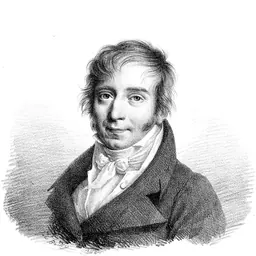

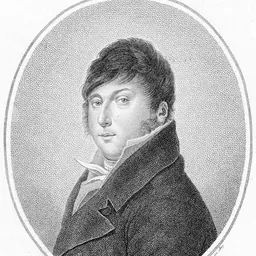

Related people
Same field, nearest in time


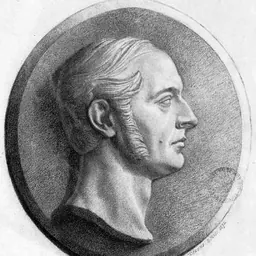

Contemporaries
People whose lives overlapped Ferdinand Hérold's
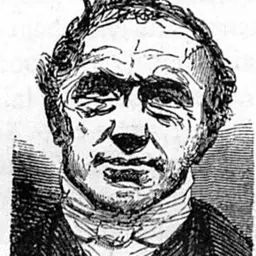


Frequently asked questions
Who was Ferdinand Hérold?
French composer (1791–1833)
When was Ferdinand Hérold born?
Ferdinand Hérold was born on 28 January 1791 in Paris, 10 rue Hérold.
When did Ferdinand Hérold die?
Ferdinand Hérold died on 19 January 1833 in Neuilly-sur-Seine.
What was Ferdinand Hérold's occupation?
Ferdinand Hérold was a composer, choreographer, pianist, scenographer and costume designer.
What nationality was Ferdinand Hérold?
Ferdinand Hérold was French.
Sources & further reading
Cite this page
APA: Biography.guide. (2026). Ferdinand Hérold. https://biography.guide/ferdinand-herold/
MLA: "Ferdinand Hérold." Biography.guide, https://biography.guide/ferdinand-herold/.
Chicago: "Ferdinand Hérold." Biography.guide. https://biography.guide/ferdinand-herold/.
Data last updated: 2026-09-24 · Spot an error? Report a correction.
Portrait: Wikimedia Commons · author & licence
Page generated 2026-09-27 05:09 UTC