
About Daniel François Esprit Auber
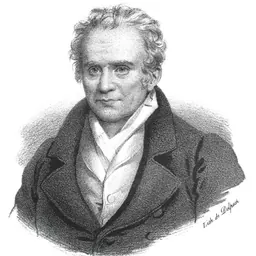
Lived 1782 – 1871 (aged 89). Daniel François Esprit Auber was a French composer, choreographer, pedagogue, musicologist, violinist and conductor.
Daniel-François-Esprit Auber (; 29 January 178212 May 1871) was a French Romantic composer and director of the Paris Conservatoire.
Born into an artistic family, Auber was at first an amateur composer before he took up writing operas professionally when the family's fortunes failed in 1820. He soon established a professional partnership with the librettist Eugène Scribe that lasted for 41 years and produced 39 operas, most of them commercial and critical successes. He is mostly associated with opéra-comique and composed 35 works in that genre. With Scribe he wrote the first French grand opera, La Muette de Portici (The Dumb Woman of Portici) in 1828, which paved the way for the large-scale works of Giacomo Meyerbeer.
Auber held two important official musical posts. From 1842 to 1871 he was director of France's premier music academy, the Paris Conservatoire, which he expanded and modernised. From 1852 until the fall of the Second Empire in 1870 he was director of the imperial chapel in the Louvre, for which he wrote a substantial number of liturgical works and other religious music.
A devotee of Paris, Auber refused to leave the city when the Franco Prussian War led to the siege of Paris and the subsequent rise of the Paris Commune. He died in his house in Paris, aged 89, shortly before the French government regained control of the capital.
Life and career
Early years
Auber was born on 29 January 1782 in Caen in Normandy, where his mother was visiting. The family was of Norman extraction but was based in Paris. Auber's grandfather had been "peintre du Roi" – the king's painter – responsible for sculpting and gilding the royal coaches, and Auber's father, Jean-Baptiste Daniel, was an officer of the royal hunt, based at the "petites écuries du Roi" – the king's small stables – in the Faubourg Saint-Denis in Paris. He and his wife, Françoise Adelaïde Esprit, née Vincent, had three sons and a daughter. When Auber was seven the French Revolution began, and his father had to find another occupation to allow him to go on providing for his family. He set up as a publisher, and opened a print shop in the rue Saint-Lazare, where he survived the Reign of Terror and prospered under the Directory and the Consulate. He had a salon, attended by artists of all kinds, where the young Auber sometimes performed: he was, by his teens, an accomplished violinist, pianist and singer. His shyness became well known. He never appeared before the public as a conductor, and throughout his career he was too nervous to attend his own first nights. He never married. There, he was admitted to the Société académique des Enfants d'Apollon, a prestigious association of musicians and music-loving painters, of which his father had been a member since 1784. Among Auber's compositions from this period were five cello concertos premiered by the soloist Lamare, in whose name at least three of them were originally published, although their real authorship soon emerged. The orchestra consisted of two violins, two violas, cello, and double-bass, but Auber made effective use of the small forces, and the piece was well received. Luigi Cherubini, the dominant figure in Parisian operatic circles, was in the audience, and recognising the powerful though untrained talent of the young composer, he took him as a private pupil. and was "a failure". Schneider (2001) writes that it had "a satisfactory 16 performances, and was revived in 1826 and staged in the provinces". Auber's biographer Robert Letellier writes that the names of Scribe and Auber became as linked in French minds as those of Gilbert and Sullivan later were in British ones. The partners' first collaboration was Leicester, ou Le château de Kenilworth, a three-act opéra comique, with a plot derived by Scribe, in collaboration with Mélesville, from Walter Scott's historical romance Kenilworth. It was given by the Opéra-Comique company at the Salle Feydeau in January 1823 with Antoine Ponchard and Antoinette Lemonnier in the leading roles, and received 60 performances over the next five seasons. Schneider writes of the collaboration:
blockindent|Scribe and Auber became the leading exponents of opéra comique in France, enjoying success in the German-speaking states, Denmark and England as well – reflected in the numbers of vocal scores, piano arrangements and translations of the librettos. By contrast, his only opera without Scribe from this period ran for seven performances. By 1825 Auber was eminent enough in his profession to be made a chevalier of the Legion of Honour by the government of Charles X. (He was promoted successively within the order to officier (1835), commandeur (1847) and grand officier (1861).) A spectacular ballet, Masaniello, with the same story, using Auber's music, was popular in London in the later 1820s. Schneider writes that Auber consolidated his international reputation with La Fiancée (1829) and Fra Diavolo (1830), both with Scribe. During his 42 years as a member he was joined by composers including Adolphe Adam, Hector Berlioz, Charles Gounod and Ambroise Thomas. Schneider writes that in the latter post Auber's term of office was marked by: blockindent|special emphasis on vocal tuition, the separation of classes for male and female singers, provision of boarding accommodation for students, performances of opera in costume, and performances in the Conservatoire of music-theatre works by winners of the Prix de Rome. he ran a less conservative regime than his predecessor, and introduced changes such as permitting applause at Conservatoire concerts, and giving members of the faculty more freedom in what they taught their students. He enlarged the composition, piano and orchestral instrument departments. His customary modesty extended to banning any of his works from being performed at the Conservatoire during the whole of his directorship. Several winners of the Prix de Rome – France's premier music prize – trained under him, including Georges Bizet, Ernest Guiraud, Théodore Dubois and Jules Massenet.
Auber's productivity as an opera composer slowed somewhat in the years after his appointment to the Conservatoire, but he completed 13 new operas between 1843 and 1869, including La part du diable (The Devil's Share, 1843), Haydée, ou Le secret (1847), L'enfant prodigue (The Prodigal Son. 1850), Manon Lescaut (1856 – 28 years before Massenet's version and 37 years before Puccini's), and his last collaboration with Scribe, La Circassienne (The Circassian Woman, 1861). After Scribe's death in 1861, Auber composed only two more operas, both with librettos by Adolphe d'Ennery and Eugène Cormon: Le premier jour de bonheur (The First Day of Happiness, 1868) and Rêve d'amour (Dream of Love, 1869). It was an exceptional box-office success, given 167 times in Paris over the next few seasons and staged in Vienna, Berlin, Budapest and other European cities.
Under the Second Empire Auber was appointed director of the chapelle impériale by Napoleon III in 1852,
By the time of the Franco-Prussian War in 1870, Auber was old and ailing. He refused to leave Paris, and remained there during the siege of Paris and the subsequent rise of the Paris Commune. He resigned as director of the Conservatoire so that the building could be used as a hospital. He was briefly succeeded as director by Francisco Salvador-Daniel – appointed by the Communards and shot by the French government eleven days later – and more permanently by Ambroise Thomas, who held the post from 1871 to 1896.
Auber's health deteriorated and in May 1871 he took to his bed. Two friends – Thomas and his fellow composer Jean-Baptiste Weckerlin – took turns watching over him. In the early hours of 12 May he died at his house in the Rue Saint-Georges, aged 89.
Music
Opera
The total number of operas or other stage works by Auber given by various sources differs slightly, depending on whether collaborations with other composers are included.Auber collaborated with other composers on four stage works: Vendôme en Espagne (1823, with Ferdinand Hérold); Les trois genres (1824, with Adrien Boieldieu); La Marquise de Brinvilliers (1831, with Désiré-Alexandre Batton, Henri-Montan Berton, Felice Blangini, Boïeldieu, Michele Carafa, Luigi Cherubini and Ferdinando Paer); and Les premiers pas (1847, with Adolphe Adam, Carafa and Fromental Halévy). Macdonald judges the finest of the Auber-Scribe collaborations to be La Muette de Portici, "a grand opera that served as a model for the Meyerbeerian genre". He comments that despite the success of that work, Auber rarely essayed serious opera thereafter, confining himself in general to lighter operatic forms. The same writer concludes: blockindent|His melodies are attractive and popular, his orchestral textures piquant and simple. He never explored the harmonic avenues suggested in La Muette de Portici; he eschewed the sentimental. In his later years he reached his peak with Haydée, based on a story by Mérimée, and in Manon Lescaut, in which he anticipated the better-known settings of Prévost's novel by Massenet and Puccini. Letellier comments on Auber's sensitivity to the French language "celebrating with wit and piquancy the natural inflections and nuances of the text that Scribe could so effortlessly provide". In his later works, beginning with La Part du diable (1843), Auber developed a more lyrical manner and became less conservative harmonically. Letellier writes that within the confines of the opèra-comique genre Auber "deepened the scope of dramatic expressiveness". Letellier lists the vocal genres the Auber introduced into his scores: the ballad, the barcarolle, the bolero, the canon, the Bourbonnaise (laughing song), the chanson, the couplet, the galop, the nocturne, the round, the Tyrolienne and the waltz song. Auber's orchestration, which reflects the influence of his friend Rossini, became the model for French operatic compositions throughout the 19th century, including those of Bizet and Massenet. In the opéras-comiques Auber's orchestra generally consists of piccolo, two flutes, two oboes, two clarinets, two bassoons, four horns, two trumpets or cornets à pistons, trombones, timpani, snare drum, triangle, bass drum, cymbals, harp and strings.
Church music
Opening of Benedictus No 2, for voice, harp and organ, c. 1855 Although Auber was and is best known for his operas, he wrote a substantial quantity of religious music, beginning with a Messe solennelle, for three solo voices and orchestra in 1812. Among his better-known religious pieces is a Dona nobis pacem (1828) which the composer reused in La Muette de Portici. Church works for the imperial chapel include a Pie Jesu, a Stabat Mater and numerous settings of sections of the Mass, including Kyries, Glorias, Benedictuses and Agnus Deis. Other religious works include 12 settings of O salutaris hostia, written between 1854 and 1870.
Most of the pieces Auber wrote for the imperial chapel are, in Schneider's words, "plain in style, homophonic and melody-led". Few have been published, but most survive in manuscript, often in two versions: one with orchestral accompaniment, and one with organ.
Other music From the 1790s, Auber composed chamber and orchestral works, including a piano sonata, two string quartets, a piano trio, a piano quartet, a violin concerto, the five cello concertos written for Jacques-Michel Hurel de Lamare, and variations on a theme by Handel.
In addition to his liturgical music, Auber wrote a substantial number of secular choral or other vocal works, including cantatas to commemorate the wedding of Napoleon III and other events of imperial or national importance.
Notes, references and sources
Don’t just read it —
keep it.
Full-length biographies made to live with: read them, listen on the way to work, watch them tonight.
- E-book
- Audio
- Video
Instant download · yours to keep · every purchase keeps this site free
Important facts
People in Daniel François Esprit Auber's life
Named in this biography and alive at the same time
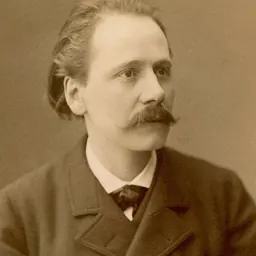

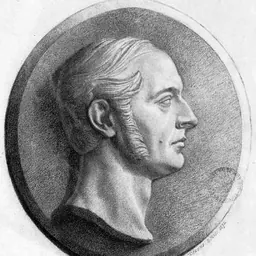

Related people
Same field, nearest in time


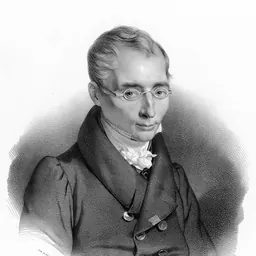

Contemporaries
People whose lives overlapped Daniel François Esprit Auber's

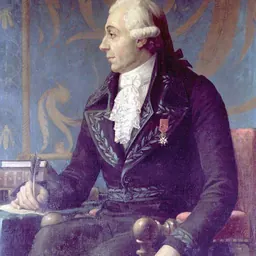
Frequently asked questions
Who was Daniel François Esprit Auber?
French composer (1782-1871)
When was Daniel François Esprit Auber born?
Daniel François Esprit Auber was born on 29 January 1782 in Caen.
When did Daniel François Esprit Auber die?
Daniel François Esprit Auber died on 12 May 1871 in 9th arrondissement of Paris.
What was Daniel François Esprit Auber's occupation?
Daniel François Esprit Auber was a composer, choreographer, pedagogue, musicologist, violinist and conductor.
What nationality was Daniel François Esprit Auber?
Daniel François Esprit Auber was French.
Sources & further reading
· Wikipedia: Daniel François Esprit Auber
Cite this page
APA: Biography.guide. (2026). Daniel François Esprit Auber. https://biography.guide/daniel-francois-esprit-auber/
MLA: "Daniel François Esprit Auber." Biography.guide, https://biography.guide/daniel-francois-esprit-auber/.
Chicago: "Daniel François Esprit Auber." Biography.guide. https://biography.guide/daniel-francois-esprit-auber/.
Data last updated: 2026-09-20 · Spot an error? Report a correction.
Page generated 2026-09-27 05:27 UTC