
About Charles Gounod
Lived 1818 – 1893 (aged 75). Charles Gounod was a French classical composer, musicologist, music educator, organist and composer.
Charles-François Gounod ( , ; ; 17 June 181818 October 1893) was a French composer, conductor, and organist of the Romantic era. He wrote twelve operas, of which the most popular has always been Faust; his Roméo et Juliette (1867) also remains in the international repertoire. He composed a large amount of church music, many songs, and popular short pieces including his "Ave Maria" (an elaboration of a Bach piece) and "Funeral March of a Marionette".
Born in Paris into an artistic and musical family, Gounod was a student at the Conservatoire de Paris and won France's most prestigious musical prize, the Prix de Rome. His studies took him to Italy, Austria and then Prussia, where he met Felix Mendelssohn, whose advocacy of the music of Bach was an early influence on him. He was deeply religious, and after his return to Paris, he briefly considered becoming a priest. He composed prolifically, writing church music, songs, orchestral music and operas.
Gounod's career was disrupted by the Franco-Prussian War. He moved to England with his family for refuge from the Prussian advance on Paris in 1870. After peace was restored in 1871 his family returned to Paris but he remained in London, living in the house of an amateur singer, Georgina Weldon, who became the controlling figure in his life. After nearly three years he broke away from her and returned to his family in France. His absence, and the appearance of younger French composers, meant that he was no longer at the forefront of French musical life; although he remained a respected figure he was regarded as old-fashioned during his later years, and operatic success eluded him. He died at his house in Saint-Cloud, near Paris, at the age of 75.
Few of Gounod's works remain in the regular international repertoire, but his influence on later French composers was considerable. In his music there is a strand of romantic sentiment that is continued in the operas of Jules Massenet and others; there is also a strand of classical restraint and elegance that influenced Gabriel Fauré. Claude Debussy wrote that Gounod represented the essential French sensibility of his time.
Life and career
Early years
Gounod was born on 17 June 1818 in the Latin Quarter of Paris, the second son of François-Louis Gounod (1758–1823) and his wife Victoire, née Lemachois (1780–1858). The elder son, Louis Urbain (1807–1850), became a successful architect. Shortly after Charles's birth François was appointed official artist to the Duc de Berry, a member of the royal family, and the Gounods' home in Charles's early years was at the Palace of Versailles, where they were allotted an apartment.
After François's death in 1823, Victoire supported the family by returning to her old occupation as a piano teacher. The young Gounod attended a succession of schools in Paris, ending with the Lycée Saint-Louis. He was a capable scholar, excelling in Latin and Greek. His mother, the daughter of a magistrate, hoped Gounod would pursue a secure career as a lawyer, but his interests were in the arts: he was a talented painter and outstandingly musical. Early influences on him, in addition to his mother's musical instruction, were operas, seen at the Théâtre-Italien: Rossini's Otello and Mozart's Don Giovanni. Of a performance of the latter in 1835 he later recalled, "I sat in one long rapture from the beginning of the opera to its close". Later in the same year he heard performances of Beethoven's Pastoral and Choral symphonies, which added "fresh impulse to my musical ardour".
While still at school Gounod studied music privately with Anton Reicha – who had been a friend of Beethoven and was described by a contemporary as "the greatest teacher then living" – and in 1836 he was admitted to the Conservatoire de Paris. His various teachers made only a moderate impression on Gounod's musical development, but during his time at the Conservatoire he encountered Hector Berlioz. He later said that Berlioz and his music were among the greatest emotional influences of his youth. In 1838, after Lesueur's death, some of his former students collaborated to compose a commemorative mass; the Agnus Dei was allocated to Gounod. Berlioz said of it, "The Agnus, for three solo voices with chorus, by M. Gounod, the youngest of Lesueur's pupils, is beautiful – very beautiful. Everything in it is novel and distinguished – melody, modulation, harmony. In this piece M. Gounod has given proof that we may expect everything of him".
Prix de Rome In 1839, at his third attempt, Gounod won France's most prestigious musical prize, the Prix de Rome for composition, for his cantata Fernand. In doing so he was surpassing his father: François had taken the second prize in the Prix de Rome for painting in 1783. The Prix brought the winner two years' subsidised study at the French Institute in Rome and a further year in Austria and Germany. For Gounod this not only launched his musical career, but made impressions on him both spiritually and musically that stayed with him for the rest of his life.
Among the artistic notables the composer met in Rome were the singer Pauline Viardot and the pianist Fanny Hensel, sister of Felix Mendelssohn. Viardot became of great help to Gounod in his later career, and through Hensel he got to know the music not only of her brother but also of J.S.Bach, whose music, long neglected, Mendelssohn was enthusiastically reviving. Gounod was also introduced to "various masterpieces of German music which I had never heard before". While in Italy, Gounod read Goethe's Faust, and began sketching music for an operatic setting, which came to fruition over the next twenty years. He also came to know and revere the sacred music of Palestrina, which he described as a musical translation of Michelangelo's art. |group=n The music of some of his own Italian contemporaries did not appeal to him. He severely criticised operas by Donizetti, Bellini and Mercadante, composers he described as merely "vines twisted around the great Rossinian trunk, without its vitality and majesty" and lacking Rossini's spontaneous melodic genius. Count Ferdinand von Stockhammer, a leading patron of the arts in Vienna, arranged for Gounod's setting of the Requiem Mass to be performed. It was warmly received, and its success led Stockhammer to commission a second Mass from the composer.
From Vienna, Gounod moved on to Prussia. He renewed his acquaintance with Fanny Hensel in Berlin and then went on to Leipzig to meet her brother. At their first encounter Mendelssohn greeted him, "So you're the madman my sister has told me about", (Ah!) c'est vous le fou dont ma soeur m'a parlé! He arranged a special concert of the Leipzig Gewandhaus Orchestra so that his guest might hear the Scottish Symphony, and played him some of the works of Bach on the organ of the Thomaskirche. Reciprocating, Gounod played the Dies Irae from his Viennese Requiem, and was gratified when Mendelssohn said of one passage that it was worthy to be signed by Luigi Cherubini. Gounod commented, "Words like this from such a master are a true honour and one wears them with more pride than many a ribbon".
The outset of Gounod's theatrical career was greatly helped by his reacquaintance with Pauline Viardot in Paris in 1849. Viardot, then at the peak of her fame, was able to secure for him a commission for a full-length opera. In this Gounod was exceptionally fortunate: a novice composer in the 1840s would usually, at the most, be asked to write a one-act curtain raiser. Gounod and his librettist, Émile Augier, created Sapho, drawing on Ancient Greek legend. It was intended as a departure from the three genres of opera then prevalent in Paris – Italian opera, grand opera and opéra comique. It later came to be regarded as the first of a new type, opéra lyrique, but at the time it was thought by some to be a throwback to the operas of Gluck, written sixty or seventy years earlier. After difficulties with the censor, who found the text politically suspect and too erotic, Sapho was given at the Paris Opéra at the Salle Le Peletier on 16 April 1851. It was reviewed by Berlioz in his capacity as a music critic; he found some parts "extremely beautiful … the highest poetic level of drama", and others "hideous, unbearable, horrible". The opera received a single performance at the Royal Opera House in London later in the same year, with Viardot again in the title role. The music received more praise than the libretto, and the performers received more than either, but The Morning Post recorded, "The opera, we regret to say, was received very coldly".
In April 1851 Gounod married Anna Zimmerman, daughter of his former piano professor at the Conservatoire. He also frequently stood in for his elderly and often ill father-in-law, giving music lessons to private pupils. One of them, Georges Bizet, found Gounod's teaching inspiring, praised "his warm and paternal interest" and remained a lifelong admirer.
Despite the brevity of Saphos run, the piece advanced Gounod's reputation, and the Comédie-Française commissioned him to write incidental music for François Ponsard's five-act verse tragedy Ulysse (1852), based on the Odyssey. The score included twelve choruses as well as orchestral interludes. It was not a successful production: Ponsard's play was not well received, and the audience at the Comédie-Française had little interest in music. During the 1850s Gounod composed his two symphonies for full orchestra and one of his best-known religious works, the Messe solennelle en l'honneur de Sainte-Cécile. It was written for the St Cecilia's day celebrations of 1855 at Saint-Eustache, and in Flynn's view demonstrates Gounod's success in "blending the operatic style with church music – a task at which many of his colleagues tried and failed". The librettists, Eugène Scribe and Germain Delavigne, reworked the text for Gounod and the piece opened at the Opéra on 18 October 1854. The critics derided the libretto but praised the music and production; the work was doing well at the box-office until it fell victim to musical politics. The director of the Opéra, Nestor Roqueplan, was supplanted by his enemy, François-Louis Crosnier, who described La Nonne sanglante as "filth" and shut the production down after its eleventh performance.
Operatic successes and failures In January 1856 Gounod was appointed a knight of the Legion of Honour. In June of that year he and his wife had the first of their two children, a son Jean (1856–1935). (Their daughter Jeanne (1863–1945) was born seven years later. ) In 1858 Gounod composed his next opera, Le Médecin malgré lui. With a good libretto by Jules Barbier and Michel Carré, faithful to the Molière comedy on which it is based, it gained excellent reviews, but its good reception was overshadowed for Gounod by the death of his mother the day after the premiere. At the time an initial run of 100 performances was considered a success; Le Médecin malgré lui achieved that and was revived in Paris and elsewhere during the rest of the 19th century and into the 20th. In 1893 the British Musical Times praised its "irresistible gaiety". another praised the work but doubted if it would have enough popular appeal to be a commercial triumph. The composer later recalled that the opera "did not strike the public very much at first", but after some revision and with a good deal of vigorous promotion by Gounod's publisher, Antoine de Choudens, it became an international success. There were productions in Vienna in 1861, and in Berlin, London and New York in 1863. Faust has remained Gounod's most popular opera and one of the staples of the operatic repertoire. The opera had originally been intended for the theatre at Baden-Baden, but Offenbach and his authors expanded it for its eventual first performance, in Paris at the Théâtre Lyrique. but the reviews were damning and the run finished after fifteen performances. The composer, depressed by the failure, sought comfort in a long trip to Rome with his family. The city enchanted him as much as ever: in Huebner's words "renewed exposure to Rome's close entwining of Christianity and classical culture energized him for the travails of his career back in Paris". The opera was not a great success at first; there were strong objections from some quarters that Gounod had given full tragic status to a mere farmer's daughter.
In 1866 Gounod was elected to the Académie des Beaux-Arts and was promoted within the Legion of Honour. During the 1860s his non-operatic works included a Mass (1862), a Stabat Mater (1867), twenty shorter pieces of liturgical or other religious music, two cantatas – one religious, one secular – and a Marche pontificale for the anniversary of the coronation of Pius IX (1869), later adopted as the official anthem of the Vatican City.
Away from opera, Gounod wrote the large-scale Messe du Sacré-Coeur de Jésus in 1876 and ten other masses between then and 1893. His greatest popular successes in his later career were religious works, the two large oratorios La Rédemption (1882) and Mors et vita (1885), both composed for and premiered at the Birmingham Triennial Music Festival in England. The two were enthusiastically taken up by the British public and on the continent, and in their day were widely ranked with the oratorios of Handel and Mendelssohn. The Philharmonic Society in London unsuccessfully sought to commission a symphony from the composer in 1885 (the commission eventually went to Saint-Saëns); fragments of a third symphony exist from late in Gounod's career, but are thought to date from a few years later.
Gounod lived his last years at Saint-Cloud, composing sacred music and writing his memoirs and essays. His oratorio Saint Francois d'Assise was completed in 1891. On 15 October 1893, after returning home from playing the organ for Mass at his local church, he suffered a stroke while working on a setting of the Requiem in memory of his grandson Maurice, who had died in infancy. After being in a coma for three days Gounod died on 18 October, at the age of 75.
A state funeral was held at L'église de la Madeleine, Paris, on 27 October 1893. Among the pallbearers were Ambroise Thomas, Victorien Sardou and the future French President Raymond Poincaré. (In their respective capacities as Director of the Conservatoire, President of the Society of Dramatists and Composers, and Minister of Education, Fine Arts and Religion.)
Music
Gounod is best known for his operas – in particular Faust. Celebrated during his lifetime, Gounod's religious music became unfashionable in the 20th century and little of it is regularly heard. His songs, an important influence on later French composers, are less neglected, although only a few are well known. There is wide agreement among commentators that he was at his finest more often in the earlier decades of his career than later. Robert Orledge judges that in the 1850s and 1860s Gounod introduced to French opera a combination of "tender, lyrical charm, consummate craftsmanship, and genuine musical characterization", but his later works tend to "sentimentality and banality ... in his quest for inspired simplicity".
Cooper writes that as Gounod grew older he began to suffer from "what might be described as the same cher grand maître complex as infected Hugo and Tennyson".
Cooper classes Le Médecin malgré lui (1858) as one of Gounod's finest works, "witty, quick-moving and full of life". In complete contrast to its predecessor, it is a three-act comedy, regarded as a masterpiece by Richard Strauss and Igor Stravinsky. Cooper says of the score that Gounod seems to have learned more from Mozart than from Rossini or Auber, and to have "divined by instinct the great comic possibilities of what passed at that time for a ferociously 'learned' style, namely counterpoint." For his revival Diaghilev commissioned Erik Satie to compose recitatives to replace the original spoken dialogue, and that version is sometimes used in the occasional modern productions of the piece, such as that by Laurent Pelly at the Grand Théâtre de Genève in 2016. The authors labelled Faust "a lyric drama", and some commentators find the lyrical scenes stronger than the dramatic and supernatural ones. Another popular song is Valentin's "Avant de quitter ces lieux", which Gounod, rather reluctantly, wrote for the first London production because the star baritone, Charles Santley, requested an extra number. Among the popular numbers from the score is the ballet music, written when the Opéra – where a ballet interlude was mandatory – took over presentation of the work in 1869. The ballet makes full use of the Opéra's large orchestral resources; it is now frequently omitted in live performances, particularly in productions outside France, but the ballet suite became a popular concert item, independent of the opera. The recitatives generally used instead of the original spoken dialogue were composed by Gounod in an early revision of the score. Although La Reine de Saba was a failure, it contains three numbers that gained moderate popularity: the Queen's big aria‚ "Plus grand dans son obscurité", King Solomon's "Sous les pieds d'une femme" and the tenor solo "Faiblesse de la race humaine".
Mireille (1865) was a moderate success, and although it did not emulate Faust in becoming an international hit, it remained popular in France into the 20th century. The most famous number, the waltz-song "O légère hirondelle", a favourite display piece for many coloratura sopranos, was written to order for the prima-donna of the Théâtre Lyrique a year after the premiere. Another popular number is Ourrias's swaggering "Si les filles d'Arles" described by the critic Patrick O'Connor as an attempt by the composer to repeat the success of Méphistophélès' Veau d'or from Faust. Gounod revised the work, even giving it a happy ending, but in the 1930s Reynaldo Hahn and Henri Büsser prepared a new edition for the Opéra-Comique, restoring the work to its original tragic five acts. Some reviewers thought it inappropriate that Juliet was allotted a waltz song ("Je veux vivre, dans ce rêve"), but Romeo's "Ah! levè-toi, soleil" was judged one of Gounod's finest tenor arias. Like many other composers of the mid-19th-century Gounod found Beethoven's shadow daunting when contemplating the composition of a symphony, and there was even a feeling among the French musical public that composers could write operas or symphonies but not both. The influence of Beethoven is apparent in Gounod's two symphonies, and the musical scholar Roger Nichols and the composer's biographer Gérard Condé also find a debt to Mendelssohn's Italian Symphony in the slow movement of the First. Gounod's Ave Maria gained considerable popularity. It consists of a descant superimposed over a version of the first prelude of Bach's The Well-Tempered Clavier. In its original form it is for violin with piano; the words of the Hail Mary were added to the melody later. In the 20th century views changed considerably. In 1916, Gustave Chouquet and Adolphe Jullien wrote of "a monotony and heaviness which must weary the best-disposed audience". In 1918, in a centenary tribute to Gounod, Julien Tiersot described La Rédemption and Mors et Vita as "imbued with pure and elevated lyricism", but this view did not prevail. Other critics have referred to "the ooze of the erotic priest" and called the oratorios "the height of nineteenth-century hypocritical piety".
Orledge judges the early masses as the best of Gounod's religious music. He comments that the composer moved away from "Palestrinian austerity" towards "a more fluid, operatic style" in his Messe solennelle de Sainte Cécile (1855). He comments that in general Gounod's work in the 1860s "became more Italianate, while retaining its French attributes of precision, taste, and elegance". The pianist and musical scholar Graham Johnson, quoting this, adds that although Berlioz might be thought to have a claim to that title, it was Gounod who brought the mélodie widespread popularity in France: Gounod's gift for singable melody enabled him to smuggle the art song – a high-born and demanding infant – into the homes and hearts of the French middle class where operatic airs, operetta, romance, and chansonnette had previously held sway.
From his earliest period, during and just after his time as a Prix de Rome student, Gounod's songs include some of his best, in the view of both Huebner and Johnson. Examples include "Où voulez-vous aller?" (words by Gautier, 1839) – which challenged comparison with Berlioz, who had already set the poem in his Les Nuits d'été – and "Venice" (Musset), 1842, described by Johnson as "astonishingly evocative with its turbulent interludes painting that city's ability both to intoxicate and disturb". Gounod's time in Britain also produced arrangements of Scottish folk songs, and settings of poetry by Wordsworth, Charles Kingsley, Thomas Hood, Byron, Shelley and Francis Palgrave.
Legacy Although only a comparatively small amount of Gounod's music endures in the regular musical repertoire, his influence on later French composers was important. In Cooper's words, "he was more than an individual composer: he was the voice of a deep and permanent strain in the French character ... whole range of emotion, which had been voiceless before, had found in him its ideal expression, and his influence will perhaps never quite disappear for that reason".
Music files
Notes, references and sources
Don’t just read it —
keep it.
Full-length biographies made to live with: read them, listen on the way to work, watch them tonight.
- E-book
- Audio
- Video
Instant download · yours to keep · every purchase keeps this site free
Important facts
People in Charles Gounod's life
Named in this biography and alive at the same time

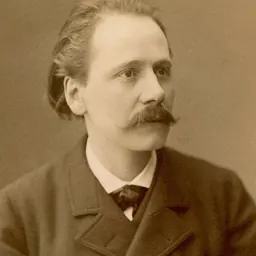
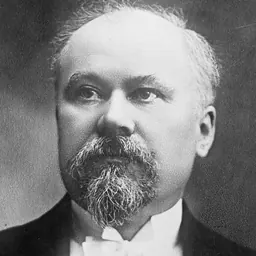
Related people
Same field, nearest in time
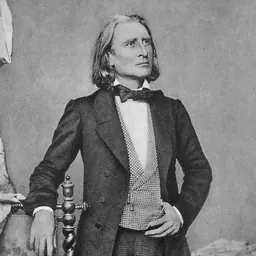


Contemporaries
People whose lives overlapped Charles Gounod's



Frequently asked questions
Who was Charles Gounod?
French composer (1818–1893)
When was Charles Gounod born?
Charles Gounod was born on 17 June 1818 in Paris.
When did Charles Gounod die?
Charles Gounod died on 18 October 1893 in Saint-Cloud.
What was Charles Gounod's occupation?
Charles Gounod was a classical composer, musicologist, music educator, organist and composer.
What nationality was Charles Gounod?
Charles Gounod was French.
Sources & further reading
Cite this page
APA: Biography.guide. (2026). Charles Gounod. https://biography.guide/charles-gounod/
MLA: "Charles Gounod." Biography.guide, https://biography.guide/charles-gounod/.
Chicago: "Charles Gounod." Biography.guide. https://biography.guide/charles-gounod/.
Data last updated: 2026-09-20 · Spot an error? Report a correction.
Page generated 2026-09-27 05:30 UTC