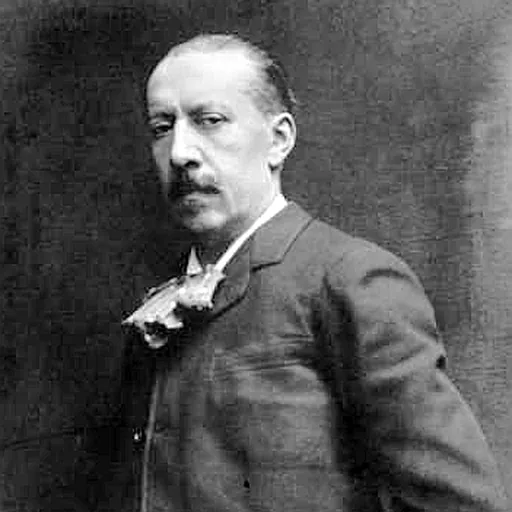
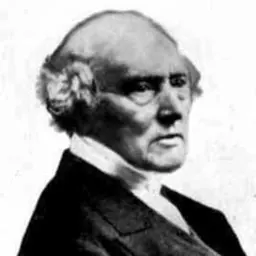
Charles-Marie Widor
French organist and composer
About Charles-Marie Widor
Lived 1844 – 1937 (aged 93). Charles-Marie Widor was a French classical composer, organist, music educator, music critic, university teacher and pedagogue.
Charles-Marie-Jean-Albert Widor (21 February 1844 – 12 March 1937) was a French organist, composer and teacher of the late Romantic era. As a composer he is known for his ten organ symphonies, especially the toccata of his fifth organ symphony, which is frequently played as recessional music at weddings and other celebrations. The Sixth Symphony is also famous for its opening movement Allegro. The Seventh and Eighth Symphonies are the longest and least performed of Widor's Symphonies. The Seventh Symphony contains six movements, and the first version of the Eighth Symphony had seven. (Widor subsequently removed the Prélude for the 1901 edition.)
The ninth and tenth symphonies, respectively termed "Gothique" (Op. 70, of 1895) and "Romane" (Op. 73, of 1900), are much more introspective. They both derive thematic material from plainchant: Symphonie Gothique uses the Christmas Day Introit "Puer natus est" in the third and fourth movements, while the Symphonie Romane has the Easter Gradual "Haec dies" woven throughout all four movements. They also honored, respectively, the Gothic Church of St. Ouen, Rouen and the Romanesque Basilica of St. Sernin, Toulouse, with the new Cavaillé-Coll organs installed in each. The second movement of the Symphonie Gothique, entitled "Andante sostenuto", is one of Widor's most-beloved pieces. Dating from this same period, and also based on a plainsong theme, is the "Salve Regina" movement, a late addition to the much earlier second symphony.
Widor's best-known piece for the organ is the final movement of his Symphony for Organ No. 5, a toccata, which is often played as a recessional at wedding ceremonies and at the close of the Christmas Midnight Mass at Saint Peter's Basilica, Vatican City. Although the Fourth Symphony also opens with a Toccata, it is in a dramatically different (and earlier) style. The Toccata from Symphony No. 5 is the first of the toccatas characteristic of French Romantic organ music, and served as a model for later works by Gigout, Boëllmann, Mulet, Vierne and Dupré. Widor was pleased with the worldwide renown this single piece afforded him, but he was unhappy with how fast many other organists played it. Widor himself always played the Toccata rather deliberately. Many organists play it at a very fast tempo whereas Widor preferred a more controlled articulation to be involved. He recorded the piece, at St. Sulpice in his eighty-ninth year; the tempo used for the Toccata is quite slow. Isidor Philipp transcribed the Toccata for two pianos.
Over his long career, Widor returned again and again to edit his earlier music, even after publication. His biographer, John Near, reports: "Ultimately, it was discovered that over a period of about sixty years, as many as eight different editions were issued for some of the symphonies." Symphonie pour orgue et orchestre, Op. 42 1882 repr. A-R Editions organ and orchestra (arr. by Widor of movements from Op. 42) Chant séculaire, Op. 49 1881 Julien Hamelle soprano solo, chorus and orchestra Symphony No. 2, Op. 54 1882 Heugel orchestra La Nuit de Walpurgis, Op. 60 1887 Julien Hamelle chorus and orchestra Fantaisie, Op. 62 1889 Auguste Durand piano and orchestra Suite, from Conte d'avril, Op. 64 1892 Heugel orchestra Symphony No. 3, Op. 69 1894 Schott organ and orchestra Choral et variations, Op. 74 1900 Éditions Alphonse Leduc harp and orchestra Piano Concerto No. 2, Op. 77 1906 Heugel piano and orchestra Sinfonia sacra, Op. 81 1908 Otto Junne organ and orchestra Symphonie antique, Op. 83 1911 Heugel soloists, chorus, organ and orchestra Ouverture espagnole 1897 Heugel orchestra
Organ solo CompositionYearPublisherSymphonie pour orgue No. 1, Op. 13 No. 1
Prélude Allegretto Adagio Intermezzo Marche pontificale (revised 1887) Méditation (revised 1887) Final1872 (revised 1887, 1901 and 1918)Julien HamelleSymphonie pour orgue No. 2, Op. 13 No. 2
præludium circulare Pastorale Andante Scherzo (version 1872 La Chasse – revision 1901 Salve Regina) Adagio Final1872 (revised 1901)Julien HamelleSymphonie pour orgue No. 3, Op. 13 No. 3
Prélude Minuetto Marcia Adagio Final (the 1872 version has a Fugue instead of the Final)1872 (revised 1887, 1901 and 1918)Julien HamelleSymphonie pour orgue No. 4, Op. 13 No. 4
Toccata Fugue Andante cantabile Scherzo Adagio Final1872 (revised 1887, 1901 and 1920)Julien HamelleMarche américaine (transc. by Marcel Dupré: No. 11 from 12 Feuillets d'album, Op. 31???Julien HamelleSymphonie pour orgue No. 5, Op. 42 No. 1
Allegro vivace Allegro cantabile Andantino quasi allegretto Adagio Toccata1879 (revised 1901 and 1918)Julien HamelleSymphonie pour orgue No. 6, Op. 42 No. 2
Allegro Adagio Intermezzo Cantabile Final1879Julien HamelleSymphonie pour orgue No. 7, Op. 42 No. 3
Moderato Choral Andante Allegro ma non troppo Lento Final1887 (revised 1900-1 and 1918)Julien HamelleSymphonie pour orgue No. 8, Op. 42 No. 4
Allegro risoluto Moderato cantabile Allegro Prélude (later removed) Variations Adagio Final1887Julien HamelleMarche nuptiale, Op. 64 (1892) (transc., from Conte d'avril, Schott)1892???Symphonie gothique pour orgue [No. 9], Op. 70
Moderato Andante sostenuto Allegro Moderato (Final)1895SchottSymphonie romane pour orgue [No. 10], Op. 73
Moderato Choral Cantilène
Chamber work (Salvum fac populum tuum Op. 84 is also known in English as "Lord, Save Thy People")
Piano solo CompositionYearPublisherVariations de concert sur un thème original, Op. 11867HeugelSérénade, Op. 3 No. 4 (arr. Leistner)???Julien HamelleAirs de ballet, Op. 41868Julien HamelleScherzo-valse, Op. 5 1868Julien HamelleLa Barque (Fantaisie italienne), Op. 61877Auguste DurandLe Corricolo (Fantaisie italienne), Op. 61877Auguste DurandCaprice, Op. 91868Julien Hamelle3 Valses, Op. 11 1871Julien HamelleImpromptu, Op. 121871Julien Hamelle6 Morceaux de salon, Op. 151872Julien HamellePrélude, andante et final, Op. 171874Julien HamelleScènes de bal, Op. 201875Julien Hamelle6 Valses caractéristiques, Op. 261877Julien HamelleVariations sur un thème original, Op. 29 (revision of op. 1)1877Julien Hamelle12 Feuillets d'album, Op. 311877Julien Hamelle5 Valses, Op. 33???Julien HamelleDans les bois, Op. 441880Julien HamellePages intimes, Op. 481879Julien HamelleSuite polonaise, Op. 511881Julien HamelleSuite, Op. 58 1887Julien HamelleCarnaval, 12 pièces, Op. 611889Julien HamelleNocturne, from Contes d'avril, Op. 64??????5 Valses, Op. 711894Julien HamelleSuite écossaise, Op. 781905Joseph WilliamsIntroduction???Julien HamelleIntermezzo ???Julien Hamelle
Songs and choral works
Stage music
Writings Technique de l'orchestre moderne faisant suite au Traité d'instrumentation de H. Berlioz (1904, Paris: Lemoine) L'Orgue moderne, la décadence dans la facture contemporaine (1928, Paris: Durand) Vieilles Chansons pour les Petits Enfants: avec Accompagnements de Ch. M. Widor From the Collections at the Library of Congress
Recordings Complete organ works by Ben van Oosten The 10 symphonies for organ, by Pierre Pincemaille, on 10 Cavaillé-Coll organs - Solstice SOCD 181-185. , et symphonies for organ, performed by Marc Dubugnon at the Swiss Reformed Church of Saint Martin, in Vevey, the three symphonies on YouTube
Don’t just read it —
keep it.
Full-length biographies made to live with: read them, listen on the way to work, watch them tonight.
- E-book
- Audio
- Video
Instant download · yours to keep · every purchase keeps this site free
Important facts
People in Charles-Marie Widor's life
Named in this biography and alive at the same time




Related people
Same field, nearest in time

Contemporaries
People whose lives overlapped Charles-Marie Widor's

Frequently asked questions
Who was Charles-Marie Widor?
French organist and composer (1844–1937)
When was Charles-Marie Widor born?
Charles-Marie Widor was born on 21 February 1844 in Lyon.
When did Charles-Marie Widor die?
Charles-Marie Widor died on 12 March 1937 in 16th arrondissement of Paris.
What was Charles-Marie Widor's occupation?
Charles-Marie Widor was a classical composer, organist, music educator, music critic, university teacher and pedagogue.
What nationality was Charles-Marie Widor?
Charles-Marie Widor was French.
Sources & further reading
· Wikipedia: Charles-Marie Widor
· DBpedia: Charles-Marie Widor
Cite this page
APA: Biography.guide. (2026). Charles-Marie Widor. https://biography.guide/charles-marie-widor/
MLA: "Charles-Marie Widor." Biography.guide, https://biography.guide/charles-marie-widor/.
Chicago: "Charles-Marie Widor." Biography.guide. https://biography.guide/charles-marie-widor/.
Data last updated: 2026-09-20 · Spot an error? Report a correction.
Portrait: Wikimedia Commons · author & licence
Page generated 2026-09-27 04:58 UTC