
About Joaquin Turina
Lived 1882 – 1949 (aged 66). Joaquin Turina was a Spanish classical composer, conductor, musicologist, university teacher, pianist and composer.
Joaquín Turina Pérez (9 December 188214 January 1949) was a Spanish composer of classical music.
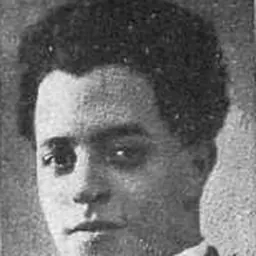
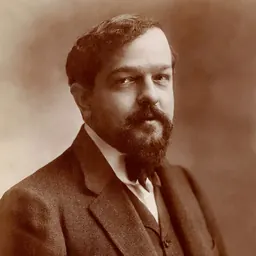
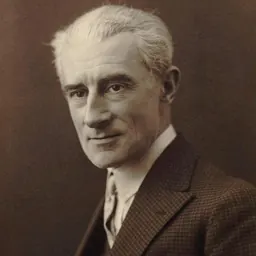
Biography Turina was born in Seville. He studied in Seville as well as in Madrid. He lived in Paris from 1905 to 1914 where he took composition lessons from Vincent d'Indy at the Schola Cantorum de Paris and studied the piano under Moritz Moszkowski. Like his countryman and friend, Manuel de Falla, while in Paris he familiarized himself with the impressionist composers Maurice Ravel and Claude Debussy, whose music had a profound influence on his compositional practice.
On 10 December 1908 he married Obdulia Garzón In the early months of 1929, he visited Havana, Cuba, where he gave a series of seven lectures at the Hispanic-Cuban Institute of Culture.
Works See: List of compositions by Joaquín Turina
His works include the operas Margot (1914) and Jardín de Oriente (1923), the Danzas fantásticas (1919, versions for piano and orchestra), La oración del torero (written first for a lute quartet, then string quartet, then string orchestra), chamber music, piano works, guitar pieces and songs. Much of his work shows the influence of traditional Andalusian music. He also wrote a short one-movement Rapsodia sinfónica (1931) for piano and orchestra. His music often conveys a feeling of rapture or exaltation. His guitar works include Fandanguillo and Hommage à Tárrega, which were written for Andrés Segovia. The dedicatee and/or first performer of a number of his piano works was José Cubiles. He also collaborated with various musical institutions, such as the Associació Música da Camera, the Barcelona Municipal Band or the Pau Casals Orchestra. in which he denounced the increasing numbers of women participating in composition. While praising performers such as Wanda Landowska and Teresa Carreño, he declared that composition should be a region forbidden to women, whose compositions were of pretentious but banal complexity (contornos banales). He went so far as to suggest that the process of composition involved masculinising the female brain, and asked if these composers are really women. As Lerena points out, his comparison of women's composition to lace-making invokes the traditional female crafts that were the only ways in which women could express a creativity aligned with Modernist aestheticism.
Don’t just read it —
keep it.
Full-length biographies made to live with: read them, listen on the way to work, watch them tonight.
- E-book
- Audio
- Video
Instant download · yours to keep · every purchase keeps this site free
Important facts
People in Joaquin Turina's life
Named in this biography and alive at the same time




Related people
Same field, nearest in time


Contemporaries
People whose lives overlapped Joaquin Turina's




Frequently asked questions
Who was Joaquin Turina?
Spanish composer
When was Joaquin Turina born?
Joaquin Turina was born on 9 December 1882 in Seville.
When did Joaquin Turina die?
Joaquin Turina died on 14 January 1949 in Madrid.
What was Joaquin Turina's occupation?
Joaquin Turina was a classical composer, conductor, musicologist, university teacher, pianist and composer.
What nationality was Joaquin Turina?
Joaquin Turina was Spanish.
Sources & further reading
Cite this page
APA: Biography.guide. (2026). Joaquin Turina. https://biography.guide/joaquin-turina/
MLA: "Joaquin Turina." Biography.guide, https://biography.guide/joaquin-turina/.
Chicago: "Joaquin Turina." Biography.guide. https://biography.guide/joaquin-turina/.
Data last updated: 2026-09-20 · Spot an error? Report a correction.
Page generated 2026-09-27 05:29 UTC