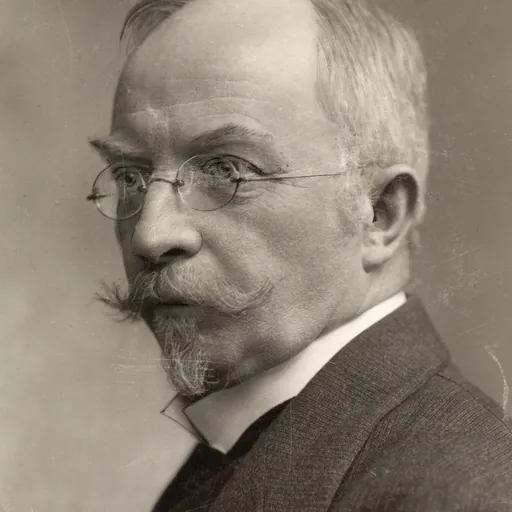
About Christian Sinding
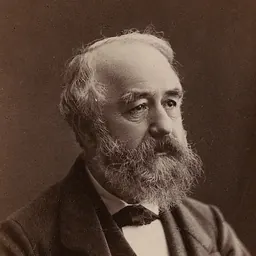
Lived 1856 – 1941 (aged 85). Christian Sinding was a Norwegian classical composer, academic musician, musicologist and composer.
Christian August Sinding (11 January 18563 December 1941) was a Norwegian composer. He is best known for his lyrical work for piano Frühlingsrauschen (Rustle of Spring, 1896). He was often compared to Edvard Grieg and regarded as his successor.
Personal life Sinding was born at Kongsberg in Buskerud, Norway. His parents were mine superintendent Matthias Wilhelm Sinding and Cecilie Marie Mejdell. He was a brother of the painter Otto Sinding and the sculptor Stephan Sinding. His sister Thora Cathrine Sinding was married to jurist Glør Thorvald Mejdell.
Christian Sinding was a nephew of Nicolai Mejdell and Thorvald Mejdell. He was also a first cousin of journalist and writer Alfred Sinding-Larsen.
In November 1898 he married actress Augusta Gade, née Smith-Petersen (1858–1936). She was the daughter of Morten Smith-Petersen and Cathrine von der Lippe. She had previously been married to physician and art patron Fredrik Georg Gade.
Career He studied music first in Christiania (now Oslo) before going to Germany, where he studied at the conservatory in Leipzig under Salomon Jadassohn and fell under the musical influences of Wagner and Liszt. He lived in Germany for much of his life, but received regular grants from the Norwegian government. In 1921–22 he went to the United States of America to teach composition for a season at the Eastman School of Music in Rochester, New York.
Sinding's publishers required from him piano and chamber music, which had broader sales than the symphonic works he preferred. His own instrument was the violin. The large number of short, lyrical piano pieces and songs that Sinding wrote has led to many seeing him as the heir to his fellow countryman, Edvard Grieg, not so much in musical style but as a Norwegian composer with an international reputation. Sinding is best remembered today for one of his piano works, Frühlingsrauschen (Rustle of Spring, 1896). Among his other works are four symphonies, three violin concertos, a piano concerto, chamber music, songs and choral works to Norwegian texts, and an opera, Der Heilige Berg (The Holy Mountain, 1914).
Awards Sinding was made a member of the Order of St. Olav in 1905 and Commander in 1916, and in 1938, received the Grand Cross. He was appointed a Commander of the Order of Vasa and in 1905, he was made a member of the Royal Swedish Academy of Music.
Legacy Sinding had suffered from severe senile dementia since the late 1930s. Eight weeks before his death in 1941, Sinding joined the Norwegian Nazi party, Nasjonal Samling - however, his membership card was unsigned. The Nazis had strong motivation to recruit Sinding, as he was tremendously popular before the war in both Norway and Germany. Following the liberation of Norway at the end of World War II, it was official practice for the national broadcasting system to boycott people seen as Nazi sympathisers. As a consequence, Sinding's post-war reputation in Norway became relatively obscure. The circumstances surrounding the composer's membership continue to raise controversy. Sinding had made several remarks against the Nazi occupation. He had fought for the rights of Jewish musicians during the early 1930s and was a close friend of Nordahl Grieg.
Compositions
Documents Letters by Christian Sinding held by the State Archives in Leipzig, company archives of the Music Publishing House C.F.Peters (Leipzig).
Don’t just read it —
keep it.
Full-length biographies made to live with: read them, listen on the way to work, watch them tonight.
- E-book
- Audio
- Video
Instant download · yours to keep · every purchase keeps this site free
Important facts
People in Christian Sinding's life
Named in this biography and alive at the same time




Related people
Same field, nearest in time


Contemporaries
People whose lives overlapped Christian Sinding's



Frequently asked questions
Who was Christian Sinding?
Norwegian composer (1856–1941)
When was Christian Sinding born?
Christian Sinding was born on 11 January 1856 in Kongsberg.
When did Christian Sinding die?
Christian Sinding died on 3 December 1941 in Oslo.
What was Christian Sinding's occupation?
Christian Sinding was a classical composer, academic musician, musicologist and composer.
What nationality was Christian Sinding?
Christian Sinding was Norwegian.
Sources & further reading
· Wikipedia: Christian Sinding
Cite this page
APA: Biography.guide. (2026). Christian Sinding. https://biography.guide/christian-sinding/
MLA: "Christian Sinding." Biography.guide, https://biography.guide/christian-sinding/.
Chicago: "Christian Sinding." Biography.guide. https://biography.guide/christian-sinding/.
Data last updated: 2026-09-21 · Spot an error? Report a correction.
Portrait: Wikimedia Commons · author & licence
Page generated 2026-09-27 05:00 UTC