
Abraham Hume, 2nd Baronet
British floriculturist and Tory politician
About Abraham Hume, 2nd Baronet
Lived 1749 – 1838 (aged 89). Abraham Hume, 2nd Baronet was a British painter, politician, botanist and art collector.
Sir Abraham Hume, 2nd Baronet (29 February 1749 – 24 March 1838, in London) was a British floriculturist and Tory politician who sat in the House of Commons between 1774 and 1818.
Life and Politics He was born the eldest son of Sir Abraham Hume, 1st Baronet, of Wormleybury, Hertfordshire, whom he succeeded in 1772, inheriting his title and the Wormleybury estate.
He was appointed High Sheriff of Hertfordshire for 1774 and also elected at the 1774 general election as a Member of Parliament (MP) for the borough of Petersfield in Hampshire, and holding the seat until the 1780 general election, when he did not contest Petersfield again.
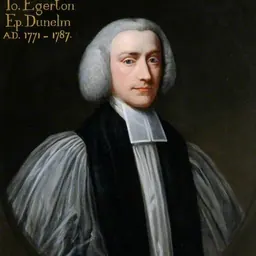
He was returned to the House of Commons 27 years later, at the 1807 general election as an MP for the borough of Hastings in Sussex. He resigned the seat in early 1812 in order to contest a by-election in Boston, and was then re-elected for Hastings at a by-election later the same month. when he contested neither Boston He had married Amelia Egerton (25 November 1751 – 8 August 1809), daughter of John Egerton, Bishop of Durham. They had two daughters, both of whom predeceased him: Amelia Hume (21 January 1772 – 15 January 1837), who married Charles Long, 1st Baron Farnborough Amelia Sophia Hume (31 July 1788 – 21 February 1814), who married John Cust, 1st Earl Brownlow.
The Baronetcy thereby became extinct and the Wormleybury estate passed to the male children of Lady Brownlow (Viscount Alford and the Hon. Charles Henry Cust) who jointly sold it in 1853 to a Henry John Grant.
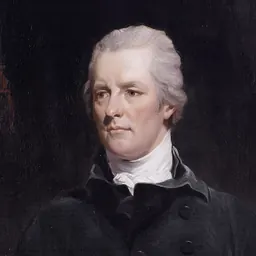
Yeomanry career After Britain was drawn into the French Revolutionary Wars, Prime Minister William Pitt the Younger proposed in 1794 that the counties should form a part-time force of Volunteer Yeoman Cavalry (Yeomanry) for home defence and internal security. Hertfordshire began raising its Yeomanry in June, and Hume was commissioned as Lieutenant in the Southern Troop commanded by his neighbour, Captain Sir George Prescott, 1st Baronet, of Theobalds Park, Cheshunt. In the spring of 1798 the increased threat of invasion led the government to encourage the formation of armed associations of cavalry and infantry for purely local defence. Hume formed a Troop of horse or 'flying' artillery to support the Yeomanry cavalry, with himself as captain. The volunteers were disbanded after the Treaty of Amiens, but the peace was shortlived, and on the resumption of war the Hertfordshire units were reformed in August 1803. Hume took over command of the Southern Troop as well as his horse artillery, with the rank of Major. He assumed command of an unofficial 'all arms' force, the South Hertfordshire Legion consisting of the Southern Troop of Yeomanry Cavalry, the Horse Artillery Troop, and the Cheshunt and Wormley Volunteer Infantry. After the Battle of Waterloo the remaining volunteers were disbanded and the Yeomanry declined. Hume's Southern Troop and Artillery Troop were the last remaining parts of the Hertfordshire Yeomanry when they were disbanded in 1824. Although too old to serve himself, Hume took a close interest when the Hertfordshire Yeomanry was re-raised in 1830, providing advice and funding, and the regimental historian notes that he occupied a position in the regiment akin to a present-day Honorary Colonel.
Rosarian and Art Collector
Both Sir Abraham Hume and his wife Amelia Egerton were active as rosarians and developed several rose cultivars at their estate in Hertfordshire. He was elected a Fellow of the Royal Society in December 1775, and one of the founding members of the Geological Society and the British Institution.
He was a keen art collector, especially of Old Master prints and drawings (drawings by Polidoro da Caravaggio were a particular favourite). He was friends with Sir Joshua Reynolds who painted portraits of him and his wife and left him in his will the choice of his Claude Lorrain including a small painting now in the Metropolitan Museum of Art, New York. The earliest of Hume's portraits by Reynolds is now in the National Gallery. In 1783 John Jones and in 1791 C. H. Hodges issued engravings of the portraits of Hume. There is also a Portrait of Lady Hume by Cosway. And 1783 Valentine Green engraved the portrait of Lady Hume by Reynolds. In 1815 a 'Catalogue Raisonné' of the diamonds of Sir Abraham Hume was published and in 1824 a 'Descriptive Catalogue' of his collection, which was for sale. Most of the artworks including works by Titian had been acquired at Venice and Bologna between 1786 and 1800.
Don’t just read it —
keep it.
Full-length biographies made to live with: read them, listen on the way to work, watch them tonight.
- E-book
- Audio
- Video
Instant download · yours to keep · every purchase keeps this site free
Important facts
more
Sir A. Hume, Hume, S A Hume, Sir Abm Hume, Sir A Hume, Sir Ab Hume, Sir, 2nd Bart. Hume, A Hume, Sr A Hume, Sir [2nd Bart.] Hume, 2nd Bt.People in Abraham Hume, 2nd Baronet's life
Named in this biography and alive at the same time




Related people
Same field, nearest in time


Contemporaries
People whose lives overlapped Abraham Hume, 2nd Baronet's




Frequently asked questions
Who was Abraham Hume, 2nd Baronet?
British floriculturist and Tory politician
When was Abraham Hume, 2nd Baronet born?
Abraham Hume, 2nd Baronet was born on 28 February 1749.
When did Abraham Hume, 2nd Baronet die?
Abraham Hume, 2nd Baronet died on 24 March 1838.
What was Abraham Hume, 2nd Baronet's occupation?
Abraham Hume, 2nd Baronet was a painter, politician, botanist and art collector.
What nationality was Abraham Hume, 2nd Baronet?
Abraham Hume, 2nd Baronet was British.
Sources & further reading
· Wikipedia: Abraham Hume, 2nd Baronet
· DBpedia: Sir Abraham Hume, 2nd Baronet
Cite this page
APA: Biography.guide. (2026). Abraham Hume, 2nd Baronet. https://biography.guide/abraham-hume-2nd-baronet/
MLA: "Abraham Hume, 2nd Baronet." Biography.guide, https://biography.guide/abraham-hume-2nd-baronet/.
Chicago: "Abraham Hume, 2nd Baronet." Biography.guide. https://biography.guide/abraham-hume-2nd-baronet/.
Data last updated: 2026-09-20 · Spot an error? Report a correction.
Page generated 2026-09-27 05:30 UTC