
About Guillaume Guillon-Lethière
Lived 1760 – 1832 (aged 72). Guillaume Guillon-Lethière was a French painter and professor.
Guillaume Guillon-Lethière (; 10 January 1760 – 21 April 1832) was a French painter. Lethière was an artist of the neoclassical style specializing in history paintings and one of the first notable artist of colour in France at the time.
Life Youth He was born in Sainte-Anne, Guadeloupe, out of wedlock, to Marie-Françoise Dupepaye, a free person of color, and Pierre Guillon, a colonial Royal Notary. He was the third child in the family which is reflected in his name, Lethière, a corruption of “le tiers,” or “the third”. He and his sister, Andrèze, could not be legally recognized as Guillon's children until 1794, when the Code Noir was abolished.
In 1774, after displaying an early aptitude for art, his father took him to France, where he was placed with the painter Jean-Baptiste Descamps, at the new free drawing school in Rouen. It was there that he adopted the name "Lethière", derived from "letier" (third, as in "third son"). He remained there for three years, then went to Paris and became a student of Gabriel François Doyen at the Académie royale de peinture et de sculpture. In 1787, he too had a son out of wedlock, with a woman named Marie-Agathe Lapôtre. In 1792, he returned to Paris and opened his own painting studio in the Saint-Germain-des-Prés district. He held his first exhibit at the Salon in 1795, with paintings he had created in Rome.
Later years In 1799, he married the widow Marie-Joseph-Honorée Vanzenne. She can be seen in his portraiture Woman Leaning on a Portfolio. A daughter from her first marriage, Eugénie, would also become a painter. The following year, he accompanied the newly appointed Ambassador, Lucien Bonaparte, to Spain, where he helped him build an art collection. Through Bonaparte's recommendation, he was appointed Director of the French Academy in Rome in 1807.
Return to France
Lethière returned to Paris in 1792, where he undertook artistic production for a decade – a critical success. However, there were many societal transformations that came with this period, notably the execution of the king and queen of France, and the abolition of the monarchy. Despite the political turmoil, Lethière established a studio in Paris and became one of the most renowned artists of the time. He created Erminia and the Shepherds (Dallas Museum of Art), a love story during the Renaissance and the Middle Ages. There was also the Frieze Representing the Neuf Thermidor (Musée d’art et d’histoire), which was exhibited at the Salon of 1798, and Woman Leaning on a Portfolio (Worcester Art Museum), which was exhibited at the Salon of 1799. The latter is more personal, depicting his stepdaughter Eugénie, whom he personally trained. The prominence of the artist is depicted in Louis-Léopold Boilly’s portrait Meeting of Artists in Isabey’s Studio (Musée du Louvre), where Lethière can be seen wearing a red cloak near the center. Along with his artistic success, he was legally recognized by his father in 1799.
Tenure at the Villa Medici
Lethière had finally arrived at the Académie de France in Rome, though contrary to his expectations, the campus had moved from the Palazzo Mancini to the Villa Medici, where conditions seemed desperate. Under Lethière’s influence, students were no longer underfunded, the building was renovated, and the academy gained order. During this time, Lethière created three of the most technically difficult paintings in his career. The first was the Judgment of Paris (1812, private collection), which marked his turn to grand-scale paintings. The latter were the lyrical Homer Singing His Iliad at the Gates of Athens (1814, Nottingham City Museums and Galleries), and the monumental version of Brutus Condemning his Sons to Death (1811, Musée du Louvre), which were both showcased in London from 1816 to 1819.
In 1818 he was elected to the Académie des Beaux-Arts. That same year, he also became a Knight in the Legion of Honor. A year later, he became a professor at the École des Beaux-Arts.
Don’t just read it —
keep it.
Full-length biographies made to live with: read them, listen on the way to work, watch them tonight.
- E-book
- Audio
- Video
Instant download · yours to keep · every purchase keeps this site free
Important facts
more
Guillon Lethière, Guillaume Ietiers, Guillon Letiers, La Guillon Lethiere, Guillame Letiers, Guillon Ietiers, Guillon Le Thierre, Guillon Lethiers, Guillaume Lethiers, Guillaume Lethière, Guillaume Lethiere, Guillaume Guillon Lethière, Guillaume Guillon-Lethiere, G. Guillon de Lethiere, Guillaume Guillon Lethiere, Lethiere, Le Their, M. LethiPeople in Guillaume Guillon-Lethière's life
Named in this biography and alive at the same time

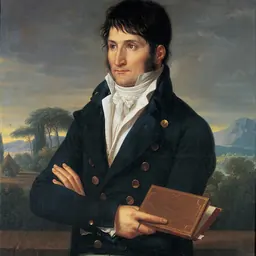

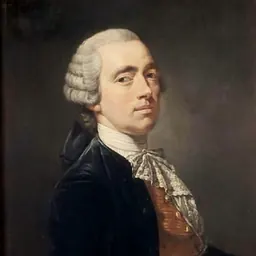
Related people
Same field, nearest in time
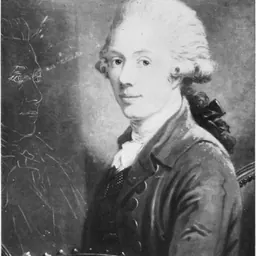





Contemporaries
People whose lives overlapped Guillaume Guillon-Lethière's




Frequently asked questions
Who was Guillaume Guillon-Lethière?
French painter (1760-1832)
When was Guillaume Guillon-Lethière born?
Guillaume Guillon-Lethière was born on 10 January 1760 in Sainte-Anne.
When did Guillaume Guillon-Lethière die?
Guillaume Guillon-Lethière died on 21 April 1832 in Paris.
What was Guillaume Guillon-Lethière's occupation?
Guillaume Guillon-Lethière was a painter and professor.
What nationality was Guillaume Guillon-Lethière?
Guillaume Guillon-Lethière was French.
Sources & further reading
· Wikipedia: Guillaume Guillon-Lethière
· DBpedia: Guillaume Guillon-Lethière
Cite this page
APA: Biography.guide. (2026). Guillaume Guillon-Lethière. https://biography.guide/guillaume-guillon-lethiere/
MLA: "Guillaume Guillon-Lethière." Biography.guide, https://biography.guide/guillaume-guillon-lethiere/.
Chicago: "Guillaume Guillon-Lethière." Biography.guide. https://biography.guide/guillaume-guillon-lethiere/.
Data last updated: 2026-09-20 · Spot an error? Report a correction.
Page generated 2026-09-27 05:32 UTC