
About Otto Huiswoud
Lived 1893 – 1961 (aged 67). Otto Huiswoud was an activist.
Otto Eduard Gerardus Majella Huiswoud (October 28, 1893 – February 20, 1961) was a Surinamese political activist who was a charter member of the Communist Party of America. Huiswoud is regarded as the first black member of the American communist movement. Huiswoud served briefly as the Communist Party's representative to the Executive Committee of the Communist International in 1922 and was a leading black Comintern functionary during the decade of the 1920s.
Biography
Early years Otto E. Huiswoud was born October 28, 1893, in Paramaribo, a South American coastal city in what was then the Dutch colony of Surinam and is today the capital of the independent country of Suriname. He was the son of Rudolf Huiswoud, a former slave who had gained his freedom as a boy of 11 and who learned the skills of a tailor, working at the trade until his death in 1920. His mother, Jacqueline Bernard Huiswoud, originally hailed from the island of Curaçao. with the educational system of the day conducted in the Dutch language and compulsory for children aged 7 to 12. Otto remained in school for five years, gaining exposure during this time not only to Dutch, but also the French and German languages.
During his school years Huiswoud participated in the Roman Catholic Church on Sundays as an altar boy.
During the summer of 1918, Huiswoud took a job working on a pleasure boat that was part of the Fall River Line. News of the young leader of this Boston strike reached Socialist Party leaders, who offered Huiswoud a one-year scholarship to attend the Rand School of Social Science, the SPA's training school for party activists and trade union workers. Huiswoud accepted this offer and did not return to Cornell. Although not a delegate to either founding convention, according to Comintern records Huiswoud's party membership dated to 1919, and he has been recognized by historians as the first black member of the American Communist Party.
In the summer of 1922, Huiswoud was chosen as the candidate of the Workers Party of America—the new "legal" political arm of what was then the underground Communist Party – as its candidate for the New York State Legislature in its 22nd Assembly District.
Comintern delegate Huiswoud was an official delegate of the Workers Party of America to the 4th World Congress of the Comintern, held in Moscow from November 5 to December 5, 1922, attending its sessions together the Caribbean poet Claude McKay. Huiswoud addressed the assembled delegates on the situation facing black workers in the United States.
Activity in the 1920s Huiswoud returned to America in 1923, entering the country on March 1 legally as a passenger on a ship called the Ryndam and being entered on the books as a permanent resident of the United States. Huiswoud was set to work as a functionary in the African Blood Brotherhood, by then a mass organization of the Communist Party targeted towards black workers. The two ABB delegates were joined by five others representing the Workers Party of America.
In October 1925, the Workers Party launched a new organization directed at American blacks to replace the by now defunct African Blood Brotherhood. The party's best-regarded black activists, including Huiswoud, James W. Ford, Harry Haywood, Cyril Briggs, Richard B. Moore were put to work as functionaries of this new group, called the American Negro Labor Congress.
During the bitter internal factional war which consumed the Workers Party during the decade of the 1920s, Huiswoud was a consistent supporter of the New York-based faction of Charles Ruthenberg, John Pepper, and Jay Lovestone against the Midwest-based faction of William Z. Foster, James P. Cannon, and Alexander Bittelman. With the New York group in control of the party apparatus for most of this period, Huiswoud remained one of the organization's top-ranking black leaders.
In March 1929, Huiswoud was elected as a delegate to the 6th National Convention of the Communist Party, held in New York City. He was at that time the party's highest ranking black member, sitting on the governing Central Executive Committee and the Political Committee ("Polcom") which guided the party's day-to-day operations. Although the delegates presented a united front arguing for a continuation of the Lovestone leadership, the powerful American Commission, which included such top Soviet leaders as Joseph Stalin, Vyacheslav Molotov, and Otto Kuusinen, ultimately decided to take decisive action against the factionalism which had plagued the American party throughout the decade of its existence by removing opposing factional leaders Lovestone and Alexander Bittelman and sending them to work in other communist parties abroad.
Lovestone refused to accept this decision and returned home without authorization, resulting in his expulsion from the Communist Party and his eventual formation of a rival organization, the Communist Party (Majority Group). Huiswoud, on the other hand, ultimately chose to accept the decisions of the Comintern and remained at its service.
In July 1928, the Red International of Labor Unions, the world communist movement's international trade union organization, had established a "Negro Section" dedicated to coordinating the activities of black workers from the Caribbean region and Sub-Saharan Africa. This would serve as the directing center for an organization called the International Trade Union Committee of Negro Workers (ITUCNW), established in Hamburg, Germany, in July 1930. Headed by Trinidadian George Padmore, Huiswoud was named the editor of the ITUCNW's monthly publication, The Negro Worker. Completing the core cadres of this Comintern initiative was the American-born James W. Ford, former vice presidential nominee of the Workers Party.
In 1933, The Negro Worker was headquartered in Hamburg. After the Nazi party came to power, Huiswoud moved to Copenhagen, Paris, the Netherlands and back to Paris. In 1941, he arrived in Suriname.
On January 31, 1941, Huiswoud was interned at Copieweg internment camp by Governor Johannes Kielstra as a communist propagandist. He was released on September 25, 1942, due to poor health and was not considered dangerous. In 1947, he moved to the Netherlands and worked for , the Dutch telephone company. He was an active member of , an organisation to promote the interests of Surinamese people living in the Netherlands.
Death and legacy Otto Huiswoud died February 20, 1961, in Amsterdam. He was 67 years old at the time of his death. Huiswoud's papers, archived under the name of his wife, Hermina "Hermie" Dumont Huiswoud, reside at the Tamiment Library at New York University in two archival boxes. Use of the collection is open to scholars without restriction.
Publications "Dutch Guiana: A Study in Colonial Exploitation," The Messenger, vol. 2, no. 11 (1919), pp. 22–23. "The Negro and the Trade Unions," The Communist, vol. 8, no. 12 (December 1928), pp. 770–775. "World Aspects of the Negro Question," The Communist, vol. 9, no. 2 (February 1930), pp. 132–147. How to Organize and Lead the Struggles of the Negro Toilers. (As "Charles Woodson.") Copenhagen: International Trade Union Committee of Negro Workers, n.d. [c. 1935].
Don’t just read it —
keep it.
Full-length biographies made to live with: read them, listen on the way to work, watch them tonight.
- E-book
- Audio
- Video
Instant download · yours to keep · every purchase keeps this site free
Important facts
People in Otto Huiswoud's life
Named in this biography and alive at the same time



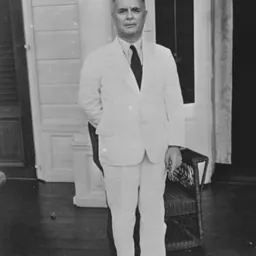


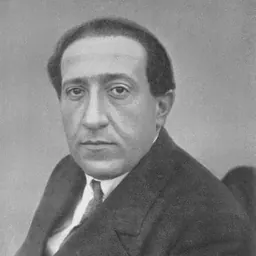
Related people
Same field, nearest in time
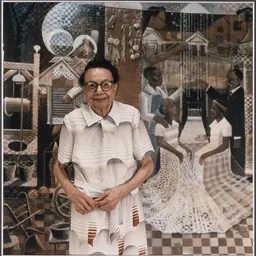
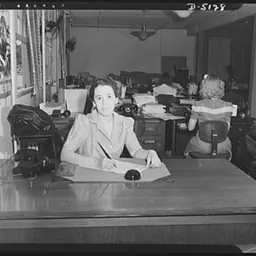

Contemporaries
People whose lives overlapped Otto Huiswoud's


Frequently asked questions
Who was Otto Huiswoud?
Surinamese political activist (1893–1961)
When was Otto Huiswoud born?
Otto Huiswoud was born on 28 October 1893 in Paramaribo.
When did Otto Huiswoud die?
Otto Huiswoud died on 20 February 1961 in Amsterdam.
What was Otto Huiswoud's occupation?
Otto Huiswoud was an activist.
What nationality was Otto Huiswoud?
Otto Huiswoud's recorded nationality: Surinam.
Sources & further reading
Cite this page
APA: Biography.guide. (2026). Otto Huiswoud. https://biography.guide/otto-huiswoud/
MLA: "Otto Huiswoud." Biography.guide, https://biography.guide/otto-huiswoud/.
Chicago: "Otto Huiswoud." Biography.guide. https://biography.guide/otto-huiswoud/.
Data last updated: 2026-09-22 · Spot an error? Report a correction.
Page generated 2026-09-27 05:27 UTC