
Isabel McCorkindale
(1885-1971) Australian temperance worker and women's activist
About Isabel McCorkindale
Lived 1885 – 1971 (aged 86). Isabel McCorkindale was an Australian activist and temperance worker, known for Women's Christian Temperance Union.
Isabella McCorkindale (1885–1971), known as Isabel McCorkindale, was a Scottish-born Australian temperance, women's suffrage and women's rights activist. She was a leader in both the Women's Christian Temperance Union of Australasia (WCTUA) and the World Women's Christian Temperance Union (WWCTU). As director of scientific temperance education for the WCTUA, she spent more than 40 years working to educate young people about the health and social consequences of alcohol abuse. She was international president of WWCTU from 1959 to 1962, after serving as vice-president from 1947 to 1959. She then served as national president for the Australian WCTU from 1963 to 1966. In 1961, she was appointed a Member of the Order of the British Empire for her work.
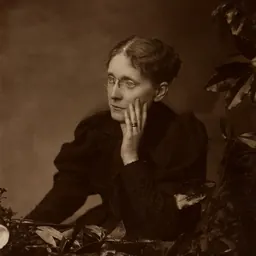
Early life and education Isabella McCorkindale was born on 5 January 1885 in Rutherglen, a town located three miles south-east of Glasgow in Scotland. Her parents were Archibald and Barbara McCorkindale; she was the couple's first child. When Isabella was only one year old, her parents emigrated to Brisbane, Queensland, Australia. It was here that Isbella spent her childhood and early adulthood. She was a life-long member of the Methodist Church. under the leadership of its second president, Frances Willard, the WCTU grew to become the largest women's organisation and most influential politically in the United States.
In 1883, an international organisation was established, the World's Woman's Christian Temperance Union. Influential in Britain, and later in many Commonwealth countries, the WWCTU served as a clearinghouse for information on temperance and related issues, and served as a network connecting women temperance advocates from countries around the globe.
The first WCTU branch in Australia was established in Sydney, New South Wales, in 1882. Additional branches were founded in other states in 1885, due to the influence of Mary Greenleaf Clement Leavitt, an American temperance advocate and WCTU leader who toured Australia that year. A national federation of Australia's many regional unions was established in 1891, and named the Woman's Christian Temperance Union of Australasia or WCTUA.
A main priority of the W.C.T.U was temperance, which was a movement to oppose the sale and use of alcohol because of its deleterious effects on individuals, the family and society. However, the organization also addressed itself to related issues that its women leaders felt were important to address for the improvement of society. These included support for women's suffrage, labor laws protecting women workers, and public health initiatives.
She then returned to Australia where she toured widely in the 1930s, again focusing on attracting youth to the movement. She continued to focus on the discussion of science and public health, and spoke widely to gatherings of both men and women. In 1934, she was a delegate to the WWCTU conference held in Sweden, traveling with her colleague and fellow delegate Ada Bromham.
In addition to being a speaker and organizer, McCorkindale was a writer and editor. For the centenary of Frances Willard's birth, in 1939, she authored a biography of Willard, entitled The Frances Willard Centenary Book. She also edited a collection of essays about the history of the WCTU, published in 1948 as Pioneer Pathways. That same year, McCorkindale also became the editor of the Australian WCTU's newspaper, known as the White Ribbon Signal. In 1949, she edited a third book of WCTU history, entitled the Torch Bearers: The Women's Christian Temperance Union of South Australia 1886-1948.
Believing that young adults should make up their own minds about alcohol, she established discussion groups and reading circles, where young adults could read and discuss literature about the issue. As an example of her dedication to the cause and her rigorous travel schedule, she spent six months in New Zealand establishing an educational program aimed at youth and young adults. Similarly, she set up programs in Australia, as when she traveled to Queensland for a three-month tour in 1933, visiting dozens of towns.
While McCorkindale focused on temperance in her work, she also addressed topics such as gambling, women's role in politics, peace and international relations. She saw all these issues as interconnected. In Toowoomba, she presented an address entitled "The Citizenship Challenge of the 20th Century to Youth", which touched on the need of youth to look to the future and to be physically and mentally fit to be leaders.
She was a supporter of the "Rainbow Campaign" of the Australian WCTU, which encompassed issues such as health, social justice, peace, temperance, citizenship, and aboriginal rights.
Women's rights In addition to being active in the temperance movement, McCorkindale was a staunch supporter of women's rights. In 1946, McCorkindale participated in advocacy efforts that led to the Australian Women's Charter. In 1950, she attended the gathering of the United Nations Commission on the Status of Women, held in New York, as one of the Australian delegates. Like many white members of the WCTU, she spoke about Aboriginal Australians and people from other parts of the world with paternalism and expressed a sense of racial superiority, even as she was participating in efforts to advocate for basic rights for Aboriginal Australians as part of the WCTU platform.
Honours
At the 1961 Queen's Birthday Honours, announced in June 1961, McCorkindale was appointed a Member of the Order of the British Empire. The citation, as announced in The London Gazette, read "or services rendered in connection with temperance and women's organizations".
Death McCorkindale died at home in Queensland on 24 February 1971. McCorkindale, Isabel, ed. Pioneer Pathways: Sixty years of citizenship (1948). McCorkindale, Isabel, ed. Torch Bearers: The Women's Christian Temperance Union of South Australia 1886-1948 (1949).
Don’t just read it —
keep it.
Full-length biographies made to live with: read them, listen on the way to work, watch them tonight.
- E-book
- Audio
- Video
Instant download · yours to keep · every purchase keeps this site free
Important facts
People in Isabel McCorkindale's life
Named in this biography and alive at the same time

Related people
Same field, nearest in time

Contemporaries
People whose lives overlapped Isabel McCorkindale's



Frequently asked questions
Who was Isabel McCorkindale?
(1885-1971) Australian temperance worker and women's activist
When was Isabel McCorkindale born?
Isabel McCorkindale was born on 5 January 1885 in Rutherglen.
When did Isabel McCorkindale die?
Isabel McCorkindale died on 24 February 1971 in Brisbane.
What was Isabel McCorkindale's occupation?
Isabel McCorkindale was an activist and temperance worker.
What was Isabel McCorkindale known for?
Isabel McCorkindale was known for Women's Christian Temperance Union.
What nationality was Isabel McCorkindale?
Isabel McCorkindale was Australian.
Sources & further reading
· Wikipedia: Isabel McCorkindale
· DBpedia: Isabel McCorkindale
Cite this page
APA: Biography.guide. (2026). Isabel McCorkindale. https://biography.guide/isabel-mccorkindale/
MLA: "Isabel McCorkindale." Biography.guide, https://biography.guide/isabel-mccorkindale/.
Chicago: "Isabel McCorkindale." Biography.guide. https://biography.guide/isabel-mccorkindale/.
Data last updated: 2026-09-22 · Spot an error? Report a correction.
Page generated 2026-09-27 05:28 UTC