
About Alexander Bittelman
Lived 1890 – 1982 (aged 91–92). Alexander Bittelman was an American and Russian writer.
Alexander "Alex" Bittelman (January 9, 1890 – April 1982) was a Russian-born Jewish-American communist political activist, Marxist theorist, influential theoretician of the Communist Party USA and writer. A founding member, Bittelman is best remembered as the chief factional lieutenant of William Z. Foster and as a longtime editor of The Communist, its monthly magazine.
Early years Alexander Bittelman was born in Berdichev (Berdychiv), in the Kiev Governorate of the Russian Empire (present-day Ukraine) on January 9, 1890. He was radicalized at an early age, joining the General Jewish Labour Bund in Lithuania, Poland and Russia (Yiddish: אַלגעמײַנער ײדישער אַרבעטער בּונד אין ליטע פוילין און רוסלאַנד, Algemeyner Yidisher Arbeter Bund in Lite, Poyln un Rusland) at just 13 years of age. Arrested by the Tsarist secret police for his revolutionary views, he served two years of political exile in Siberia.
Bittelman emigrated to the United States in 1912, settling in New York City.
First American years
Bittelman was active in the Jewish Socialist Federation of the Socialist Party of America from 1915. A committed Marxist and revolutionary, Bittelman was an adherent of the Left Wing Section of the Socialist Party when it emerged early in 1919. In September of that year, he was a founding member of the Communist Party of America (CPA) and editor of the Yiddish-language newspaper, Der Kampf (The Struggle).
At the convention in Chicago that founded the CPA, Bittelman was one of the nine members of the committee that wrote the program for the organization. He was a member of the governing Central Executive Committee of the Jewish Communist Federation from 1919 to 1920 and was elected a member of the Central Executive Committee of the CPA and its Executive Council in 1920. His most commonly used underground party name during this period was "A. Raphael." Bittelman also variously used the pseudonyms "Gabriel," "Williams," "Percy," "Ralph Barnes," and "Lentrov" in various circumstances.
According to the U.S. Department of Justice in 1948, Bittelman maintained as many as 14 aliases up to that time. Merger was finally accomplished at a convention held in May 1921, and Bittelman was welcomed back into the newly unified Communist Party of America.
Bittelman was put into the Central Executive of the unified Communist Party of America. In July 1922, he was sent with James P. Cannon to Moscow, as representatives there of the CPA. He returned later that same year to serve on the Executive Council of the Central Executive Committee of the Workers Party of America, the so-called "Legal Political Party" initiated and controlled by the secret CPA.
Bittelman was regularly a delegate to the conventions of the American Communist Party. He was a close factional associate of William Z. Foster and James P. Cannon against the faction headed by John Pepper and including C.E. Ruthenberg and Jay Lovestone, during the bitter faction fights of the 1920s.
Bittelman was editor of The Daily Worker Saturday magazine from 1926 to 1927.
Bittelman was a delegate to the 6th World Congress of the Comintern in 1928 and spoke in opposition to American Party leader Jay Lovestone. Summoned to Moscow in an effort to neutralize the factional war, Bittelman was named vicechairman of the Comintern's Far-Eastern Secretariat in 1929.
In 1930, Bittelman was dispatched to India as the Comintern Representative there. He was expelled by the British from the country for his activities, however, and returned to the United States in 1931, putting down roots in Southern California.
Bittelman returned to New York City in summer 1934 to work in the CPUSA's Propaganda Department. He took an active role in the editing of the monthly theoretical journal of the organization, The Communist, and he wrote the leading section of the magazine, "Review of the Month", from 1936.
Cold War years
Although the factional war was much more subterranean during the 1930s, there was still an ongoing battle. In this fight, Bittelman remained a close associate of National Chairman William Z. Foster in opposition to General Secretary Earl Browder. Despite his closeness, Browder's fall from grace in 1945 did not mark the end of Bittelman's tenure as a top leader of the Communist Party.
In September 1946, Bittelman authored a paper for the Communist Party's National Board predicting economic collapse and a return to depression-like conditions within two years, as wartime government spending was curtailed. This report, adopted by the Board, would remain the foundation of the CPUSA's economic analysis for the next five years. Imminent economic collapse and the rise of fascism in America was seen a likely scenario, and the Communist Party girded itself for a political assault. The most simple mechanism at the government's disposal was to make use of deportation proceedings against radical resident aliens, with a view to shattering the foreign-born leadership of the Communist Party and disrupting the organization.
Owing to his noncitizen status, Bittelman was selected by federal authorities as the first prominent American Communist to be subjected to this tactic. The government charged that Bittelman had repeatedly violated federal law during the 1930s by traveling to the Soviet Union by means of fraudulently obtained passports and that he had maintained illegal contact with the Communist International in Moscow.
Bittelman was soon released from jail on bail. He returned to New York City at the end of January 1948 and held a news conference to publicize what the Communist Party had characterized as a "witch-hunt," during which the 58-year-old Bittelman stoked the patriotic fire of conservative forces by declaring to reporters that he "would not fight against the Soviet Union in any war" since "any war against the Soviet Union would be an unjust war."
The wheels of the legal process turned slowly in Bittelman's deportation case, and it was not until September 1949 that a deportation hearing was held at which he was charged with illegal membership in an organization which taught the doctrine of violent overthrow of the United States government. At his hearing Bittelman emphasized the distinction between "teaching the Marxist-Leninist theory of social change, including the law of violent proletarian revolution" and "teaching the overthrow of a particular government by violence." The CPUSA's public image thereby sustained yet another blow and its isolation increased. Bittelman announced plans to publish his memoirs in 1959.
A hard-line faction headed by Gus Hall had by this time consolidated its hold of the CPUSA, however, and Bittelman's planned memoir was condemned by the new party leadership on October 14, 1959. Bittelman was expelled from the Communist Party in the aftermath of this decision.
Bittelman was formally expelled by his Communist Party club on November 14, 1960. This decision was confirmed by the National Committee of the CPUSA at its plenum held at the end of January 1961.
Bittelman was called before the House Un-American Activities Committee to provide testimony about his former organization on November 21, 1961, but he refused to testify, citing his rights under the First and Fifth Amendments to the U.S. Constitution.
Death and legacy Following his expulsion and refusal to testify in 1961, Alexander Bittelman lived out the last two decades of his life in quiet at Croton-on-Hudson, New York. He died in April 1982.
Bittelman left an unpublished memoir, Things I Have Learned, which resides at the Robert F. Wagner Labor Archives of Bobst Library at New York University. The manuscript is available there for use by researchers.
Don’t just read it —
keep it.
Full-length biographies made to live with: read them, listen on the way to work, watch them tonight.
- E-book
- Audio
- Video
Instant download · yours to keep · every purchase keeps this site free
Important facts
People in Alexander Bittelman's life
Named in this biography and alive at the same time



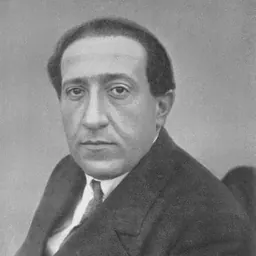
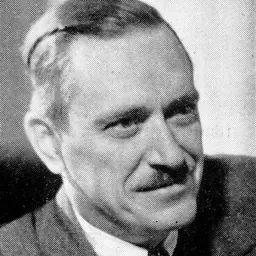

Related people
Same field, nearest in time
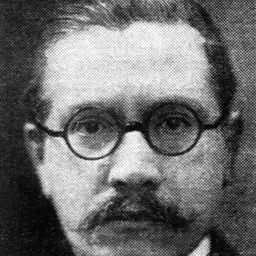
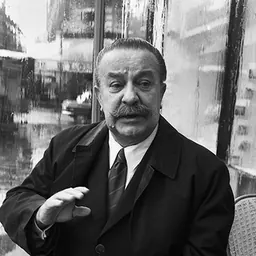


Contemporaries
People whose lives overlapped Alexander Bittelman's



Frequently asked questions
Who was Alexander Bittelman?
American political activist (1890–1982)
When was Alexander Bittelman born?
Alexander Bittelman was born in 1890.
When did Alexander Bittelman die?
Alexander Bittelman died in 1982.
What was Alexander Bittelman's occupation?
Alexander Bittelman was a writer.
What nationality was Alexander Bittelman?
Alexander Bittelman was American and Russian.
Sources & further reading
· Wikipedia: Alexander Bittelman
· DBpedia: Alexander Bittelman
Cite this page
APA: Biography.guide. (2026). Alexander Bittelman. https://biography.guide/alexander-bittelman/
MLA: "Alexander Bittelman." Biography.guide, https://biography.guide/alexander-bittelman/.
Chicago: "Alexander Bittelman." Biography.guide. https://biography.guide/alexander-bittelman/.
Data last updated: 2026-09-20 · Spot an error? Report a correction.
Page generated 2026-09-27 05:20 UTC