
Nāṣir al-Dīn Asad
Jordanian university professor, diplomat and writer
About Nāṣir al-Dīn Asad
Lived 1922 – 2015 (aged 92). Nāṣir al-Dīn Asad was a Jordanian university teacher, ambassador, writer and minister.
Nasir al-Din Muhammad Ahmad Jamil al-Asad (; born on December 13, 1922 – died on May 15, 2015) was a Jordanian writer, researcher, and literary critic, regarded as one of the most prominent figures in modern Arabic literature in Jordan and the Arab world. He contributed to the founding of the University of Jordan in 1962 and served as its first president, and served as Jordan's first Minister of Higher Education (1985–1989). Al-Asad was known for his seminal studies on pre-Islamic Arabic literature, particularly his renowned book "Sources of Pre-Islamic Poetry and Their Historical Value", in which he refuted the doubts surrounding the authenticity of pre-Islamic literature.
He was born in the city of Aqaba, Jordan in 1922 to a Jordanian father and a Lebanese mother. He pursued his university education and earned his Ph.D. with distinction from Cairo University in 1955. Al-Asad lectured at several universities and research institutes across Jordan, Libya, and Egypt. In addition to his academic career, he held high-ranking cultural and political positions, serving as a member of various Arabic language academies across several countries, as well as a diplomat and a member of the Jordanian Senate. This intellectual divergence ultimately led to academic and literary disputes between the two figures, but these disagreements eventually gave way to a strong friendship that lasted until Taha Hussein’s death. His mother, Mary Grace Shu'ayya, was a Lebanese woman from the Maronite Church, who converted to Islam upon her marriage and took the name Amina bint Abdullah.
During this period, al-Asad was struck by personal tragedy: he lost his mother in 1936 and his father in 1939, during his final year of secondary school. Forced to assume responsibility at a young age, he worked briefly as a clerk in the office of the Chief Islamic Judge and the Sharia Court in Amman to support himself until he completed his education. He graduated with honors, becoming the first Jordanian to earn a doctorate from Cairo University. and among his daughters is Sulafa al-Asad, who married the physician Mo’men al-Hadidi. It is said that he was so committed to the Arabic language that he would gently correct any linguistic mistakes he heard during formal gatherings. These personal qualities earned him widespread respect in both academic and social circles.
Career After completing his higher studies, Nasir al-Din al-Asad began his professional career in academia and teaching. He worked as a lecturer at Cairo University and at Arab institutions such as the Institute of Arab Research and Studies in Cairo during the mid-1950s. There, he contributed to the development of university curricula and laid the foundations for scientific research in the field of Arabic language and literature. In 1962, he returned to Jordan at the invitation of King Hussein bin Talal to help establish the University of Jordan (the first university in the country). During his tenure, he worked to develop university education policies, establish new universities, and promote scientific research. After leaving the ministry, al-Asad remained active in academic circles, serving as President of Al-Ahliyya Amman University (one of Jordan’s first private universities) between 1991 and 1993, and later as a member of the Jordanian Senate (the upper house of the Jordanian Parliament) from 1993 to 1997, where he contributed his expertise to the education and culture committees.
Nasir al-Din al-Asad was a member of several prestigious Arab and international academic institutions. He was selected as a member of the Academy of the Arabic Language in Cairo, the Academy of the Arabic Language in Damascus, and the Jordan Academy of Arabic (of which he was a founding member). This independence became especially clear in his famous study on pre-Islamic poetry, where he presented a perspective that differed from some of Taha Hussein's theses, supported by scientific evidence and systematic analysis. Taha Hussein himself later praised his student's objectivity despite their differences in viewpoints. thereby refuting claims of fabrication raised by the Orientalist David Margoliouth and adopted by Taha Hussein in his book On Pre-Islamic Poetry. Through these two works, he introduced Palestinian and Jordanian literature into the Arab academic sphere, establishing critical foundations for its study independent of Westernization or distortion.
In addition, al-Asad devoted efforts to studying various social and cultural phenomena in the classical Arab heritage. His book Slave Girls and Singing in the Pre-Islamic Era (published 1968) analyzed the role of singing women and the art of music in pre-Islamic society from both historical and literary perspectives. He consistently defended the integrity of Arabic and advocated its use across all fields of science and knowledge, viewing its neglect as a threat to the nation’s identity. Al-Asad enriched the Arabic library with more than 60 books and studies in language, literature, and history,
In addition to the above, al-Asad published dozens of other studies and articles in peer-reviewed journals and cultural magazines, in addition to editing important classical texts and translating several historical and intellectual works into Arabic.
Decorations In addition to his awards, Nasir al-Din al-Asad received several honors and decorations:
He was also honored by several academic institutions through honorary memberships and commemorative celebrations of his achievements. Al-Asad was often invited as a guest of honor at many Arab literary conferences and festivals.
Death Nasir al-Din al-Asad died in Amman on May 21, 2015, at the age of 93, after a brief illness. He died at Amman Surgical Hospital, where he had been receiving treatment. Jordan mourned his death both officially and popularly, and his funeral prayer was held following the Friday afternoon prayer at the University of Jordan Mosque before he was laid to rest in the family cemetery. A large crowd of government officials, intellectuals, students, and admirers attended the funeral, providing a farewell fitting for a major scientific and intellectual figure who served his nation and his Arab identity. The Arab Writers and Authors Union issued a statement mourning his loss, describing it as a profound loss for Arab thought and culture. Al-Asad left behind a rich scholarly legacy and hundreds of studies and articles, many of which were not yet compiled into books; it is reported that his family preserves several unpublished manuscripts. He also left a deep impact on the hearts of his students and colleagues, who remembered him for his composure, objectivity, and academic integrity. The University of Jordan, of which he was a founder and its first president, honored him by naming one of its library halls after him and displaying some of his personal library holdings that he had donated shortly before his death.
Don’t just read it —
keep it.
Full-length biographies made to live with: read them, listen on the way to work, watch them tonight.
- E-book
- Audio
- Video
Instant download · yours to keep · every purchase keeps this site free
Important facts
People in Nāṣir al-Dīn Asad's life
Named in this biography and alive at the same time
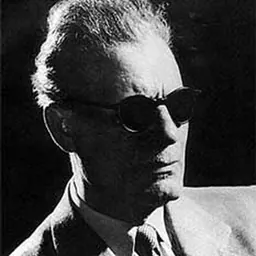

Related people
Same field, nearest in time





Contemporaries
People whose lives overlapped Nāṣir al-Dīn Asad's
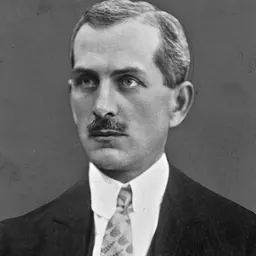
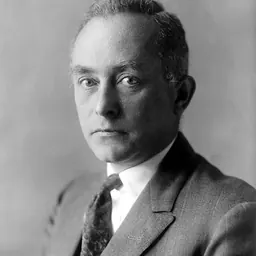


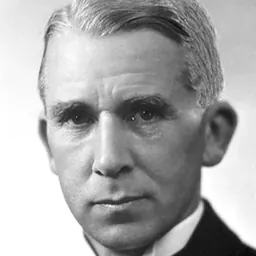
Frequently asked questions
Who was Nāṣir al-Dīn Asad?
Jordanian university professor, diplomat and writer (1922-2015)
When was Nāṣir al-Dīn Asad born?
Nāṣir al-Dīn Asad was born on 13 December 1922 in Aqaba.
When did Nāṣir al-Dīn Asad die?
Nāṣir al-Dīn Asad died on 21 May 2015 in Amman.
What was Nāṣir al-Dīn Asad's occupation?
Nāṣir al-Dīn Asad was a university teacher, ambassador, writer and minister.
What nationality was Nāṣir al-Dīn Asad?
Nāṣir al-Dīn Asad was Jordanian.
Sources & further reading
· Wikipedia: Nāṣir al-Dīn Asad
· DBpedia: Nasir al-Din al-Asad
Cite this page
APA: Biography.guide. (2026). Nāṣir al-Dīn Asad. https://biography.guide/nasir-al-din-asad/
MLA: "Nāṣir al-Dīn Asad." Biography.guide, https://biography.guide/nasir-al-din-asad/.
Chicago: "Nāṣir al-Dīn Asad." Biography.guide. https://biography.guide/nasir-al-din-asad/.
Data last updated: 2026-09-20 · Spot an error? Report a correction.
Page generated 2026-09-27 05:32 UTC