
About Taha Hussein
Lived 1889 – 1973 (aged 83). Taha Hussein was a Turkish linguist, translator, writer, literary critic, university teacher and politician.
Early life Taha Hussein was born in Izbet el Kilo, a village in the Minya Governorate in central Upper Egypt. After attending a kuttab, he studied religion and Arabic literature at El Azhar University; but from an early age, he was dissatisfied with the traditional education system.
When the secular Cairo University was founded in 1908, he was keen to be admitted, and despite being poor and blind, he won a place. In 1914, he received a PhD for his thesis on the sceptic poet and philosopher Abu al-ʿAlaʾ al-Maʿarri.
He was summoned to return to Egypt due to the poor conditions at then University of Cairo; but three months later, those conditions improved, and Taha Hussein returned to France. He also served as president of the academy.
Taha Hussein was a member of several scientific academies in Egypt and internationally. He was also the founding Rector of the University of Alexandria.
A work of literary criticism, On Pre-Islamic Poetry , published in 1926, brought him fame and some notoriety in the Arab world. In this book, Hussein expressed doubt about the authenticity of much early Arabic poetry, claiming it to have been falsified during ancient times due to tribal pride and inter-tribal rivalries. He also hinted indirectly that the Qur'an should not be taken as an objective source of history. In opposition to the Pan-Arabists, Hussein asserted that most Egyptians were descendants of the Ancient Egyptians and did not possess any Arab blood, and that Arabic as a daily language in Egypt should not determine the fate of a nation.
Hussein criticized the lack of freedom in Nazi Germany, writing: "They live like a society of insects. They must behave like ants in an anthill or like bees in a hive." Hussein urged the Egyptian government to reject neutrality and fight the Germans in the war.
In 1950, he was appointed Minister of Education, in which capacity he led a call for free education and the right of everyone to be educated.
Works In the West, he is best known for his autobiography, Al-Ayyam (, The Days) which was published in English as An Egyptian Childhood (1932) and The Stream of Days (1943).
The author of "more than sixty books (including six novels) and 1,300 articles", his major works include: The Memory of Abu al-Ala' al-Ma'arri (1915) Selected Poetical Texts of the Greek Drama (1924) Dramas by a Group of the Most Famous French Writers (1924) Ibn Khaldun's Philosophy (1925) Pioneers of Thoughts (1925) Wednesday Talk (1925) On Pre-Islamic Poetry (1926) In the Summer (1933) The Days (1926–1967) Hafez and Shawki (1933) The Prophet's Life (1933) Curlew's Prayers (1934) From a Distance (1935) Adeeb (1935) The Literary Life in the Arabian Peninsula (1935) Together with Abi El Alaa in His Prison (1935) Poetry and Prose (1936) Bewitched Palace (1937) Together with El Motanabi (1937) The Future of Culture in Egypt (1938) Moments (1942) The Voice of Paris (1943) Sheherzad's Dreams (1943) Tree of Misery (1944) Paradise of Thorn (1945) Chapters on Literature and Criticism (1945) The Voice of Abu El Alaa (1945) Al-Fitna al-Kubra (The Great Upheaval) (1947) Spring Journey (1948) The Stream Of Days (1948) The Tortured of Modern Conscience (1949) The Divine Promise (1950) The Paradise of Animals (1950) The Lost Love (1951) From There (1952) Varieties (1952) In The Midst (1952) Osman: The First Part of the Greater Sedition (1952) Ali and His Sons: The 2nd Part of the Greater Sedition (1953) Sharh Lozoum Mala Yalzm (1955) Anatagonism and Reform (1955) The Sufferers: Stories and Polemics (Published in Arabic in 1955), Translated by Mona El-Zayyat (1993), Published by The American University in Cairo, Criticism and Reform (1956) Our Contemporary Literature (1958) Mirror of Islam (1959) Summer Nonsense (1959) On the Western Drama (1959) Talks (1959) Al-Shaikhan (Abu Bakr and Omar Ibn al-Khattab) (1960) From Summer Nonsense to Winter Seriousness (1961) Reflections (1965) Beyond the River (1975) Words (1976) Tradition and Renovation (1978) Books and Author (1980) From the Other Shore (1980)
Translations Jules Simon's The Duty (1920–1921) Athenians System (1921) The Spirit of Pedagogy (1921) Dramatic Tales (1924) Jean Racine's Andromaque (1935) From the Greek Dramatic Literature (Sophocles) (1939) Voltaire's Zadig or (The Fate) (1947) André Gide: From Greek Legends' Heroes Sophocle-Oedipe
Tribute On November 14, 2010, Google celebrated Hussein's 121st birthday with a Google Doodle.
Honours
Don’t just read it —
keep it.
Full-length biographies made to live with: read them, listen on the way to work, watch them tonight.
- E-book
- Audio
- Video
Instant download · yours to keep · every purchase keeps this site free
Important facts
People in Taha Hussein's life
Named in this biography and alive at the same time




Related people
Same field, nearest in time
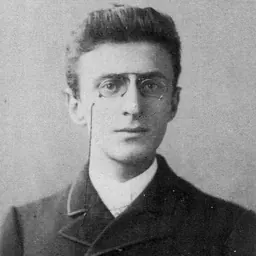
Contemporaries
People whose lives overlapped Taha Hussein's
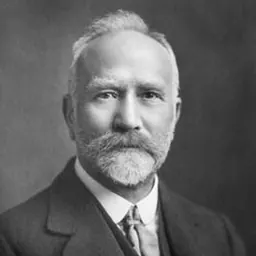


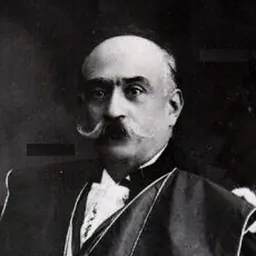

Frequently asked questions
Who was Taha Hussein?
Egyptian writer and literary critic (1889–1973)
When was Taha Hussein born?
Taha Hussein was born on 14 November 1889 in Minya Governorate.
When did Taha Hussein die?
Taha Hussein died on 28 October 1973 in Cairo.
What was Taha Hussein's occupation?
Taha Hussein was a linguist, translator, writer, literary critic, university teacher and politician.
What nationality was Taha Hussein?
Taha Hussein was Turkish.
Sources & further reading
Cite this page
APA: Biography.guide. (2026). Taha Hussein. https://biography.guide/taha-hussein/
MLA: "Taha Hussein." Biography.guide, https://biography.guide/taha-hussein/.
Chicago: "Taha Hussein." Biography.guide. https://biography.guide/taha-hussein/.
Data last updated: 2026-09-25 · Spot an error? Report a correction.
Page generated 2026-09-27 05:12 UTC